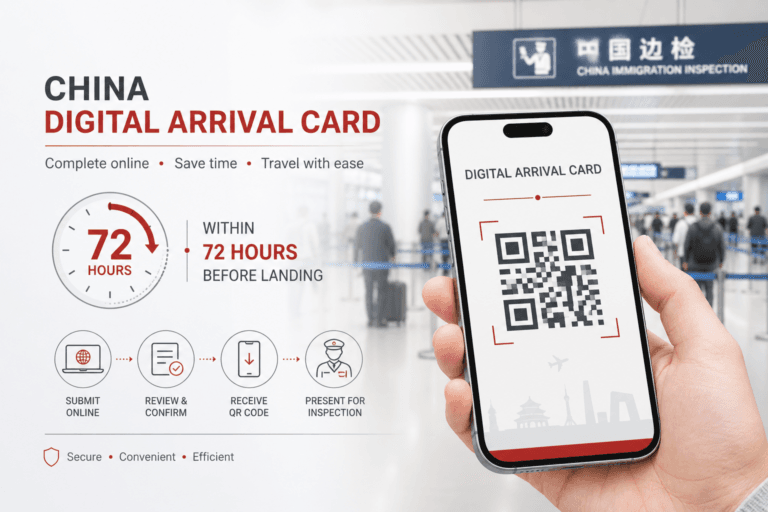
Transport pillar · 2026
How to Get Around China as a Foreigner (2026)
One decision tree for tourists: high-speed rail between cities, metro + DiDi inside them, Trip.com for trains and airport transfers, and four apps on your phone before landing. Deep dives link out—this page is the map.
Get around China is not one app or one ticket type. Tourists who feel lost usually mix up intercity (G trains, domestic flights) with last mile (metro QR, DiDi from the station). Nail the split and the country feels straightforward.
Same city: metro first, DiDi when tired or with luggage · ~100–1,500 km between cities: high-speed rail · Remote west / tight schedule / no rail line: domestic flight · Airport arrival: metro or airport rail if your terminal has it; DiDi or pre-booked transfer if not
Which mode when? (quick matrix)
| Situation | Best default | Book / pay with | Deeper guide |
|---|---|---|---|
| Beijing → Shanghai, Xi’an, Chengdu | G / D train | Trip.com trains | HSR overview |
| Across town, rush hour | Metro | Alipay / WeChat transit code | Metro payment |
| Hotel → restaurant, late night | DiDi | Alipay, WeChat, or card in app | Taxi & DiDi guide |
| Uber habit from home | Not on mainland | — | Does Uber work in China? |
| Kunming → Lhasa, tight 2-day window | Flight | Trip.com flights | Flights hub |
| PEK / PVG / CAN landing, heavy bags | Transfer or DiDi | Trip.com transfer or DiDi | Airport guides (below) |
Hong Kong and Macau use separate ride-hail and transit rules. This guide focuses on the mainland tourist loop (Beijing–Shanghai–Xi’an–Chengdu and similar).

China transportation apps (install before departure)
You do not need a dozen apps. These four cover most foreign itineraries:
- Amap (Gaode Maps) — navigation, metro exits, walking routes. Google Maps is unreliable on mainland data. Google Maps vs Amap.
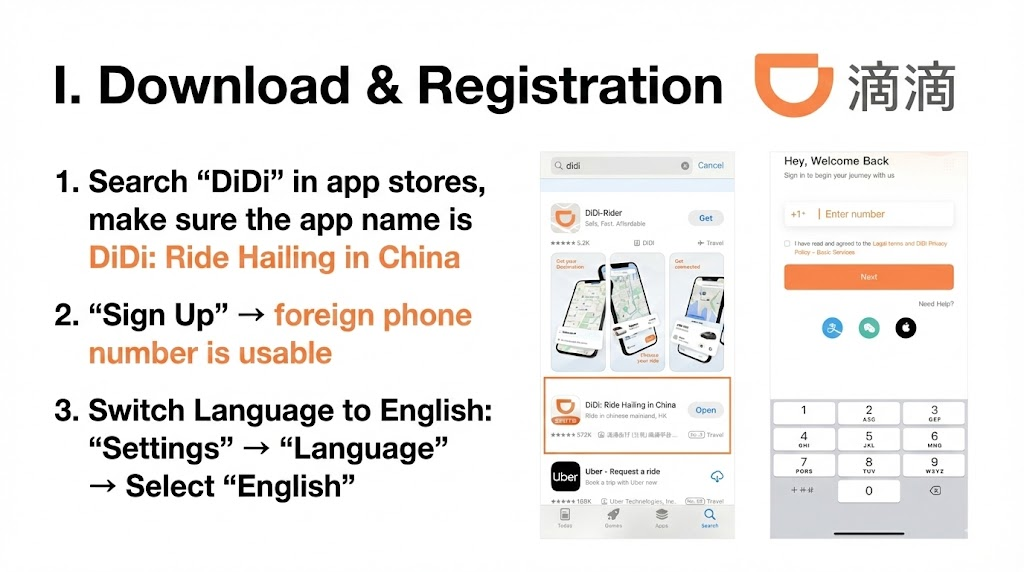
- DiDi — ride-hailing. Install DiDi: Ride Hailing in China from your app store before you fly.
- Trip.com — trains, hotels, domestic flights, airport transfers in English checkout. Bookmark the partner homepage after first open.
- Baidu Translate (or Apple Translate offline pack) — camera menu translation at stations and food courts.
Payment and VPN sit underneath every ride: Alipay & WeChat Pay setup, apps that work without VPN, first-timer checklist.

Intercity default
High-speed rail (G & D trains)
For Beijing–Shanghai, Beijing–Xi’an, Shanghai–Hangzhou, and Chengdu–Chongqing, rail is usually faster door-to-door than flying once you count security lines and airport transfers. Trains run city-center to city-center; passport is your ticket on most routes.
- Booking: Trip.com first for English and foreign cards. Optional 12306 app for repeat visitors—see train app for foreigners.
- Timing: Inventory often opens 15 days ahead (China calendar). Popular G trains sell out on holidays—book early for Chunyun or Golden Week.
- At the station: Arrive early; use manual passport lanes if e-gates fail. Same passport name as ticket.

Inside the city
Metro and buses
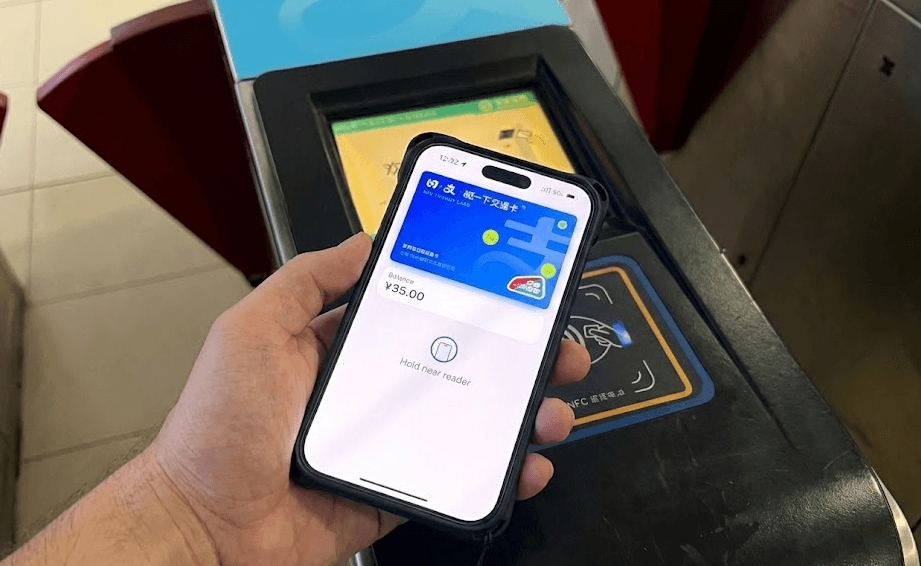
Tier-1 cities (Beijing, Shanghai, Guangzhou, Shenzhen, Chengdu, Chongqing, Xi’an, Hangzhou) have extensive metros. Fares are low; the hard part is setting up mobile transit pay in Alipay or WeChat before you hit a turnstile.
- Open the Transport / Metro tile in Alipay or WeChat and enable the city you are in.
- Many cities now support Tap (NFC) on Alipay—faster than QR at rush hour. If your build shows it, set it up in the hotel on Wi-Fi.
- Save your hotel and nearest station in Amap with the Chinese address visible to show staff.
Stuck at the gate? Walk through our metro payment troubleshooting guide before you queue for a taxi.
Door to door
DiDi, taxis, and street hail
DiDi is the mainland default for ride-hailing. Street taxis exist but many expect QR pay and little English. DiDi shows your route, supports English UI, and auto-translates driver chat.
- Request rides from the official 网约车 (ride-hail) zone at airports and stations—not random curbside touts.
- Paste your destination from Amap; keep a screenshot of the hotel name in Chinese.
- Trip under ~3 km with no luggage? Metro is often quicker than waiting for a car in peak traffic.
When rail is not enough
Domestic flights
Use flights when there is no convenient rail (many west/northwest routes), you are time-boxed, or weather cancels ground options. For classic east-corridor pairs (Beijing–Shanghai), rail usually wins on total travel time.
Book domestic legs on the same Trip.com account as your trains and hotels so names and passport numbers stay consistent. International arrival flights are a separate topic: flights into China.
First hour on the ground
Airport transfers
Major hubs (Beijing Capital/Daxing, Shanghai Pudong/Hongqiao, Guangzhou Baiyun) usually offer airport express metro or maglev into the city—cheapest and predictable if you can manage bags on stairs.
- Light bags + daytime: metro or airport rail + short DiDi from the city station.
- Late arrival or heavy luggage: pre-book a Trip.com airport transfer with fixed pickup text, or DiDi from the signed ride-hail area after eSIM + VPN are live.
- Save addresses in Chinese before immigration—taxi apps and drivers use Chinese pins, not English hotel names.
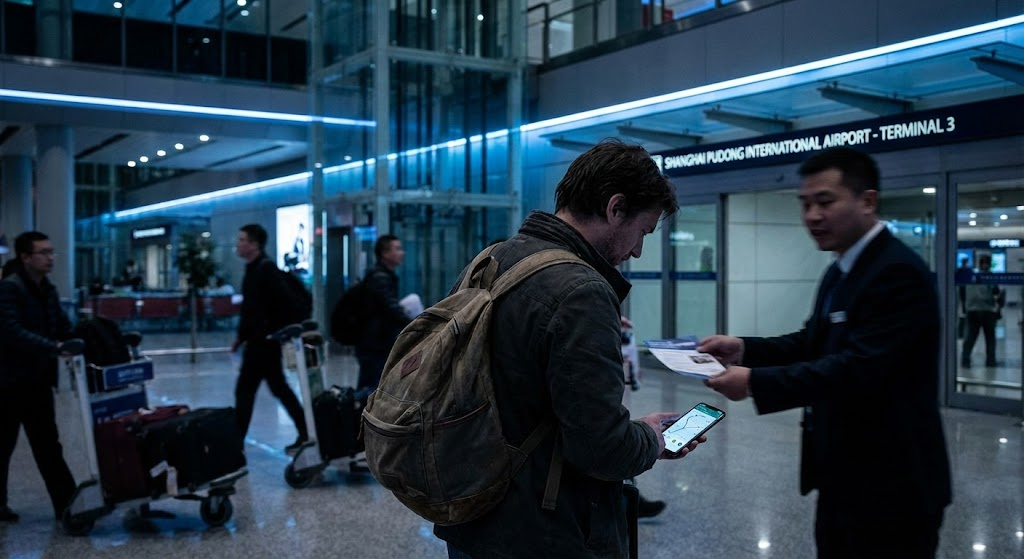
Dedicated terminal walkthroughs: Beijing airport guide and Shanghai Pudong guide (publishing next on this site).
Before any leg: payments, data, passport
- Payments: Link Visa/Mastercard to Alipay and WeChat before departure. Cash is backup only.
- Data: Activate a China eSIM on landing so DiDi and Amap work at the curb. Compare best eSIMs for China.
- Passport: Carry it for trains, hotels, and police registration—not just flights.
- VPN: Install and test before you fly if you need Gmail or WhatsApp at the hotel.
Sample week (Beijing + Shanghai)
Fly into Beijing · metro/DiDi locally · G train Beijing South → Shanghai Hongqiao · metro to Bund area · fly out PVG or SHA. Matches our 7-day first-timer itinerary.
Deep-dive hub (save these)
- What is the best way to get around China for tourists?
- High-speed rail between cities, metro inside cities, and DiDi for the last mile. Add domestic flights only when distance or geography makes rail impractical.
- Can I get around China without speaking Chinese?
- Yes, with Amap, DiDi English mode, and camera translation. You still need Chinese addresses saved for drivers and hotel check-in.
- Do I need a rental car?
- Almost never for first trips. International licenses, traffic, and parking make self-drive rare for tourists. Rail + metro + DiDi covers typical itineraries.
- Is Uber available in China?
- Not for mainland rides. Use DiDi. See Uber in China for Hong Kong exceptions.
- Train or plane: Beijing to Shanghai?
- Train is the default: roughly 4.5–5.5 hours city-center to city-center. Flights look shorter on paper but airport time often erases the gap.
- Which transportation apps work without VPN?
- Amap, DiDi, Alipay, WeChat, and Trip.com work on mainland networks. Gmail and Instagram do not—see blocked apps list.
Some links on this page are partner links (Trip.com and others). We may earn a commission at no extra cost to you. See our affiliate disclosure.