China Street Food & Ordering Guide
How to navigate QR menus, food delivery apps, night markets, and 30+ must-try dishes — even if you don’t speak a word of Chinese.
 Peter Wilson
·
Updated May 2026
·
14 min read
Peter Wilson
·
Updated May 2026
·
14 min read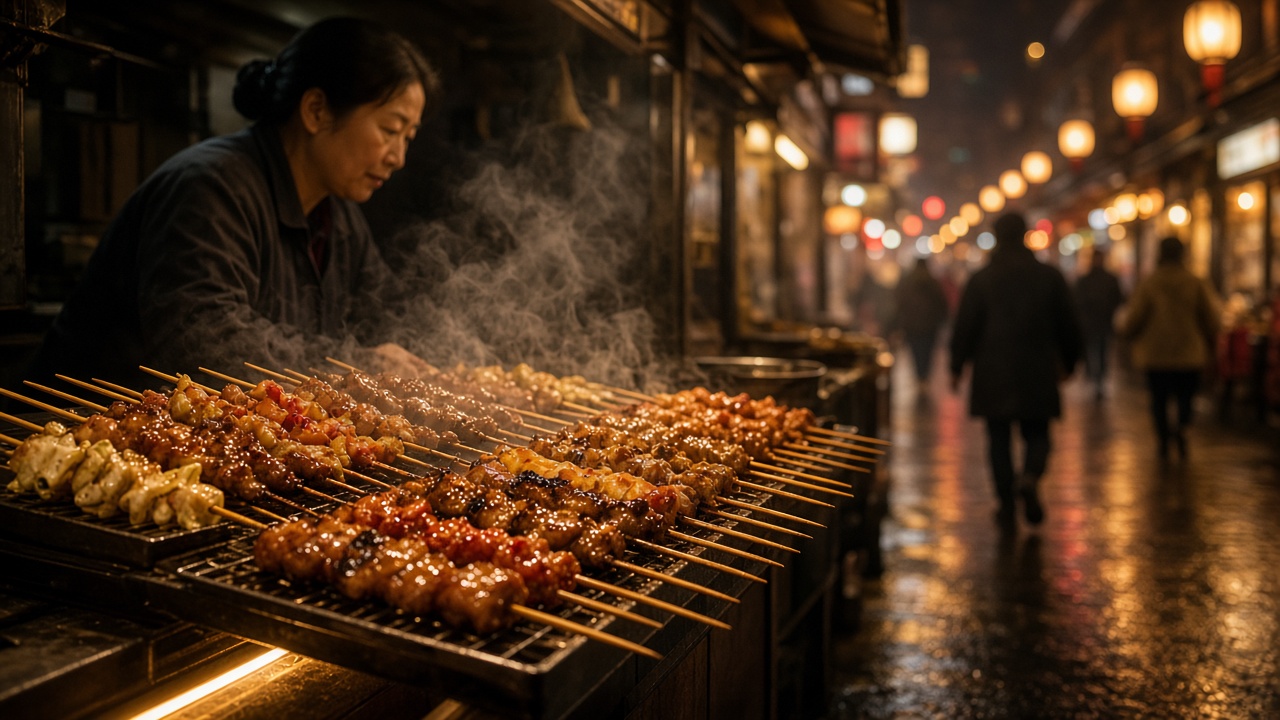
Trip funnel
1. The Reality: Ordering Food in China as a Foreigner
Let’s be honest: eating in China is the best part of any trip — but the ordering process can be intimidating. Most restaurants haveno English menus. Many have replaced paper menus entirely with QR code ordering systems that are100% in Chinese. Street food stalls have no menu at all — just point and pray.
But here’s the good news: once you understand the system, it’s actually easier than ordering in many Western countries. No tipping, no waiting for a server, and food arrives in minutes.
What to Expect in2026
- Tier 1 cities (Beijing, Shanghai, Guangzhou, Shenzhen): ~30% of restaurants have some English. Tourist areas are better.
- Tier 2 cities (Chengdu, Xi’an, Hangzhou, Chongqing): ~10% have English. QR ordering is universal.
- Smaller cities & rural areas: Zero English. But the food is often the best.
2. Five Ways to Order Food in China
From high-tech QR codes to old-school pointing, here are all the methods you’ll encounter — ranked from most common to least.
The default in80%+ of sit-down restaurants. Scan the QR code on your table, browse the menu, select items, and pay — all on your phone.
- 1 Open WeChat → scan the QR code on the table sticker
- 2 A mini-program menu loads (all in Chinese)
- 3 Use camera translate to read dish names
- 4 Tap “+” to add items to your cart
- 5 Confirm order → pay via WeChat Pay or Alipay
- 6 Food arrives at your table number
The classic method at street stalls, night markets, and small noodle shops. No menu needed — just point at what looks good.
- 1 Walk up to the stall and look at the display
- 2 Point at what you want (use fingers for quantity)
- 3 The vendor shows you the price on their phone calculator
- 4 Scan their Alipay / WeChat QR code to pay
- 5 Wait2 – 5 minutes for fresh preparation
China’s food delivery is insanely fast (15- 30 min) and cheap. Perfect for hotel meals or when you’re too tired to go out.
- 1 Open Meituan or Ele.me app
- 2 Allow location access → browse nearby restaurants
- 3 Use photo menus (most have dish photos)
- 4 Add items → checkout → pay
- 5 Track your rider in real-time on the map
- 6 Meet the rider at your hotel lobby
Used at chain restaurants, bakeries, and fast-food joints. Often have self-service kiosks with picture menus.
- 1 Queue at the counter or find the self-service kiosk
- 2 Kiosks usually have photos — tap to select
- 3 Some kiosks have English language toggle (check top-right)
- 4 Pay via mobile or card at the machine
- 5 Collect your order when your number is called
China’sYelp. Use it to find top-rated restaurants, read reviews (use translate), and sometimes order directly or get coupons.
- 1 Open Dianping → allow location
- 2 Browse “附近美食” (nearby food) with ratings
- 3 Look for restaurants rated 4.5+ with1000+ reviews
- 4 Check photos from real diners
- 5 Navigate there via the built-in map
3. Essential Food Apps
These are the apps you need on your phone to eat well in China. All work without a VPN.








4. Survival Chinese Phrases for Eating
You don’t need to be fluent. These 15 phrases will get you through 95% of food situations in China. Screenshot this table.
| Situation | Chinese | Pinyin | English |
|---|---|---|---|
| Getting a table | 几位? | How many people? (they’ll ask you) | |
| Answering | 两位 | Two people | |
| Ordering | 我要这个 | I want this one (point at menu / photo) | |
| Asking for recommendation | 推荐什么? | What do you recommend? | |
| No spicy | 不要辣 | No spicy please | |
| A little spicy | 微辣 | Mild spicy | |
| Very spicy | 特辣 | Extra spicy | |
| No meat | 不要肉 | No meat | |
| Vegetarian | 我吃素 | I’m vegetarian | |
| Allergic to peanuts | 我对花生过敏 | I’m allergic to peanuts | |
| Getting the bill | 买单 | Check please / Bill please | |
| How much? | 多少钱? | How much does it cost? | |
| Delicious! | 好吃! | Delicious! (instant friend-maker) | |
| Too full | 吃饱了 | I’m full | |
| Takeaway | 打包 | Pack it to go |
5.30+ Must-Try Street Foods & Dishes
These are the dishes that make China a food paradise. Organized by category so you know what to look for at every meal.
Noodles & Soups
Hand-pulled noodles in a clear beef broth with chili oil, radish, and cilantro. China’s most popular breakfast. ¥12-18.
Spicy, numbing noodles with chili oil, Sichuan pepper, peanuts, and scallions. The breakfast of 30million Chongqing locals. ¥8 – 15.
Yunnan rice noodles served with a boiling broth and raw ingredients you cook yourself at the table. ¥15 – 35.
Delicate pork or shrimp dumplings in a light broth. Every region has its own version. ¥10 – 20.
Xi’an’s famous belt-wide hand-torn noodles with chili oil, garlic, and vinegar poured sizzling over the top. ¥15 – 25.
Pick your own ingredients from a fridge, weigh them, and they’re cooked in a spicy broth. Customizable and cheap. ¥15 – 30.
Dumplings & Buns
Shanghai’s iconic soup-filled dumplings. Bite a small hole, sip the broth, then eat. Dip in black vinegar + ginger. ¥15 – 30.
China’s #1 breakfast street food. A crispy crepe with egg, scallions, cilantro, sweet sauce, and a crunchy cracker. ¥6 – 10.
Pan-fried soup buns with a crispy golden bottom. Juicy pork filling. Shanghai specialty. ¥10 – 18for4 pieces.
Fluffy steamed buns with pork, vegetables, or sweet red bean paste. Found at every breakfast stall. ¥2 – 5 each.
Pan-fried dumplings with a crispy lace skirt bottom. Pork and cabbage filling. Dip in vinegar. ¥10 – 15.
Xi’an’s 2,000-year-old “hamburger.” Slow-braised pork or beef stuffed in a crispy flatbread. ¥8 – 15.
Grilled & Fried
Cumin-spiced grilled lamb on metal skewers. The king of Chinese BBQ, originally from Xinjiang. ¥3 – 8per skewer.
Deep-fried fermented tofu. Smells terrible, tastes incredible. A night market rite of passage. ¥8 – 15.
Flaky, crispy layered pancake with scallions. Pan-fried to golden perfection. ¥3 – 6.
Anything on a stick — squid, chicken wings, vegetables, bread, even kidneys. Seasoned with cumin and chili. ¥2 – 10 per skewer.
Slow-roasted in a barreloven until caramelized. The ultimate winter street snack. ¥5 – 10.
Hard-boiled eggs simmered in tea, soy sauce, and spices. Found at every convenience store. ¥2 – 3.
Hot Pot & Shared Dishes
A bubbling pot of chili oil where you cook raw meats, vegetables, and tofu. Get the “鸳鸯锅” (half-and-half) for spicy + mild. ¥60 – 120 / person.
The real version — diced chicken with peanuts, dried chilies, and Sichuan pepper. Nothing like the Western version. ¥28 – 45.
Tender fish fillets swimming in a sea of chili oil, Sichuan peppercorns, and dried chilies. Looks terrifying, tastes amazing. ¥58 – 88.
Simple but perfect. Wok-fried rice with egg, scallions, and sometimes ham. The safe choice when nothing else makes sense. ¥12 – 20.
Simple garlic-fried seasonal greens. Order this at every meal to balance out the meat. ¥12 – 22.
Crispy-skinned roast duck carved tableside, wrapped in thin pancakes with scallion and hoisin sauce. ¥128 – 298.
Drinks & Desserts
China’s obsession. Try Heytea, Nayuki, or Mixue. Order “三分糖” (30% sugar) unless you want diabetes. ¥8 – 30.
Bitter herbal drink believed to reduce “inner heat.” Try Wanglaoji (王老吉) canned version first. ¥3 – 8.
Fruit skewers dipped in crackly sugar coating. Traditional hawthorn berries or modern strawberry / grape versions. ¥5 – 15.
Creamy mango dessert drink with pomelo pulp and sago pearls. Hong Kong origin, now everywhere. ¥15 – 28.
6. City-by-City Food Map
Every Chinese city has its own food identity. Here’s what to eat where.
- Peking Duck 北京烤鸭
- Zhajiangmian (Bean Paste Noodles) 炸酱面
- Tanghulu (Candied Fruit) 糖葫芦
- Douzhi (Fermented Mung Bean Drink) 豆汁
- Jianbing (Breakfast Crepe) 煎饼
- Xiaolongbao (Soup Dumplings) 小笼包
- Shengjianbao (Pan-Fried Buns) 生煎包
- Scallion Oil Noodles 葱油拌面
- Red-Braised Pork 红烧肉
- Crab Season (Oct – Dec) 大闸蟹
- Sichuan Hot Pot 四川火锅
- Mapo Tofu 麻婆豆腐
- Dan Dan Noodles 担担面
- Kung Pao Chicken 宫保鸡丁
- Rabbit Head (adventurous!) 兔头
- Chongqing Hot Pot 重庆火锅
- Chongqing Small Noodles 重庆小面
- Spicy Chicken辣子鸡
- Sour & Spicy Noodles 酸辣粉
- Grilled Fish 烤鱼
- Roujiamo (Chinese Burger) 肉夹馍
- Biangbiang Noodles Biángbiáng面
- Yangrou Paomo (Lamb Soup) 羊肉泡馍
- Liangpi (Cold Noodles) 凉皮
- Persimmon Cake 柿子饼
- Dim Sum (Yum Cha) 早茶 / 点心
- Char Siu (BBQ Pork) 叉烧
- Wonton Noodles 云吞面
- Rice Rolls 肠粉
- Double-Skin Milk Pudding 双皮奶
7. Night Market Survival Guide
Night markets (夜市, yèshì) are the ultimate China food experience. Here’s how to navigate them like a local.
Top Night Markets by City
- Xi’an: Muslim Quarter (回民街) — the most famous, but also the most touristy. Go deeper into the alleys for better food.
- Chengdu: Jianshe Road Night Market (建设路) — local favorite with authentic Sichuan snacks.
- Changsha: Pozi Street (坡子街) — stinky tofu capital of China.
- Beijing: Wangfujing Snack Street — touristy but fun for the spectacle (scorpions on sticks).
- Chongqing: Jiefangbei area — late-night BBQ culture at its finest.
Night Market Tips
- Go after 7 PM — most stalls don’t open until sunset.
- Bring a small bag — you’ll want both hands free for eating.
- Start small — buy one item at a time. There’s always more ahead.
- Follow the crowds — long lines = good food. Empty stalls = avoid.
- Cash is rarely needed — 99% of stalls accept Alipay / WeChat Pay.
8. Dietary Restrictions & Allergies
China is not the easiest country for dietary restrictions, but it’s manageable with preparation.
Vegetarian / Vegan
- Say“我吃素” (wǒ chī sù) — “I eat vegetarian”
- Be aware: many “vegetable” dishes use pork lard, chicken stock, or oyster sauce
- Buddhist restaurants (素食餐厅) are 100% vegetarian and found near temples
- Hot pot is great — just order the mushroom / tomato broth and pick your own veggies
Common Allergies — Show These to Your Server
- Peanut allergy: 我对花生过敏 (Wǒ duì huāshēng guòmǐn)
- Shellfish allergy: 我对海鲜过敏 (Wǒ duì hǎixiān guòmǐn)
- Lactose intolerant: 我不能喝牛奶 (Wǒ bù néng hē niúnǎi)
- Gluten-free: 我不能吃面粉 (Wǒ bù néng chī miànfěn) — very difficult in China
- Egg allergy: 我对鸡蛋过敏 (Wǒ duì jīdàn guòmǐn)
9. How to Pay for Food
Cash is almost dead in China’s food scene. Here’s the payment hierarchy:
- Alipay / WeChat Pay — works at99% of food vendors, from Michelin restaurants to street cart grandmas.Set up guide here →
- Visa / Mastercard tap — works at chain restaurants and malls, but NOT at street stalls or small restaurants.
- Cash (RMB) — accepted but increasingly awkward. Many vendors don’t have change.
10. Food Safety & Hygiene Tips
China’s street food is generally safe, but follow these common-sense rules:
- Eat where locals eat. High turnover = fresh ingredients. Avoid empty restaurants.
- Watch it being cooked. Street food cooked fresh in front of you is safer than pre-made buffet food.
- Drink bottled water. Tap water is NOT safe to drink anywhere in China.
- Avoid raw salads at cheap restaurants — they may be washed with tap water.
- Bring wet wipes. Many small restaurants don’t have soap in the bathroom.
- Start mild. Don’t go full Sichuan hot pot on day one. Let your stomach adjust.
- Pack Imodium. Traveler’s stomach is common in the first2- 3 days. It passes.
Frequently Asked Questions
Do I need to tip at restaurants in China?
Can I get English menus in China?
Is street food safe to eat?
What if I can’t eat spicy food?
How do QR code menus work?
Can I use chopsticks? What if I can’t?
What time do Chinese people eat?
How much does food cost in China?
Explore Culture & Tips
Everyday China Travel 2026: Rural Markets, Villages & What Foreigners Should Know
Travel trend · Rural & markets · 2026 Everyday China Travel: Rural Markets & Village Life (2026) Foreign travelers are…
China Golden Week 2026: Two Peak Weeks (Sep 25–Oct 7) Travel Guide
Crowd planning · Autumn 2026 China Golden Week 2026: Two Peak Weeks (Sep 25–Oct 7) China’s busiest domestic travel season…
Dragon Boat Festival in China (2026): Customs, Legends & Travel Guide
Culture & tips · Duanwu · 2026 Dragon Boat Festival in China (2026): Customs, Legends & Travel Guide Duanwu (Dragon…
China Travel Friction Points: Cashless, Crowds, Noise, Rules
China Travel Friction Points (2026): Cashless, Crowds, Noise, Rules — Survival Fixes Start China Travel • Field-tested survival China Travel…
Hanfu Photography in Suzhou and Hangzhou (2026 Guide to Rentals & Photo Spots)
Hanfu & Aesthetics · Jiangnan Hanfu Photography in Suzhou & Hangzhou (2026): Rentals & Photo Spots Pingjiang Road in full…
The Ultimate Hanfu Photography Guide to Beijing: Forbidden City, Red Walls & Snow
The popular snow aesthetic has made Hanfu photography in Beijing a logistical challenge in 2026. White snow against the Forbidden…