Culture & Tips · Business
China Corporate Dining Etiquette 2026: Business Banquet Protocol
The chair facing the door stays empty until the host invites someone—sit early and you signal ignorance of hierarchy. In 2026, seating, the Lazy Susan, and the bill fight still outweigh most contract talk at the table.
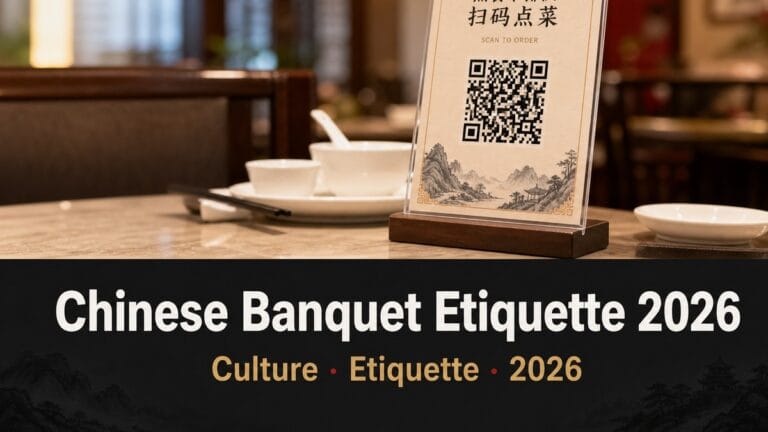
Corporate banquets in Shanghai, Beijing, and Shenzhen still map status to physical position—even when the menu is a QR code and the settlement is Alipay. Foreign guests who read the room earn trust faster than guests who only read the contract.
Policies, alcohol norms, and payment rails vary by city and venue. Confirm house rules with your host before the meal.
1. The power grid: seating hierarchy
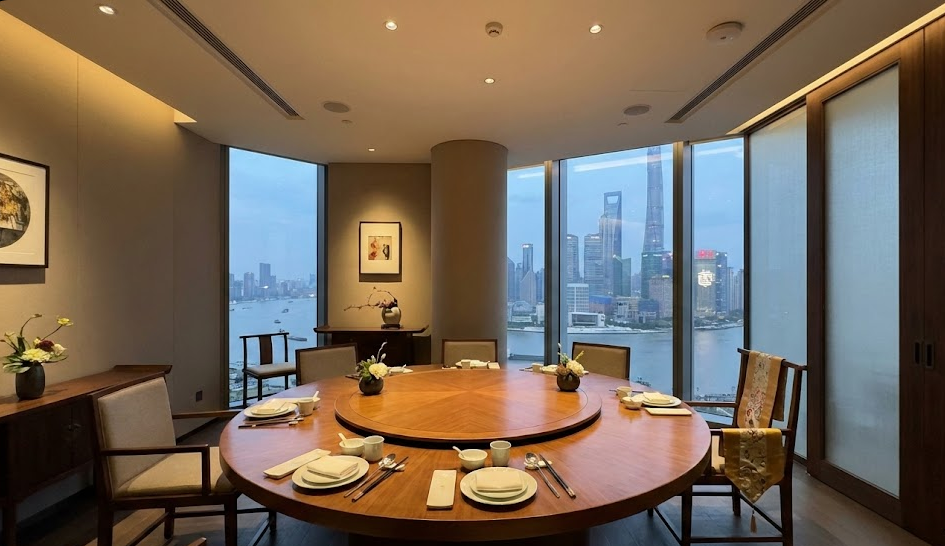
Table placement is a map of professional standing. Tech-forward offices still observe the honor seat protocol to signal respect to senior leadership and key clients. If you are on a short 240-hour visa-free transit for meetings, these basics are non-negotiable.
Guest of honor
The seat furthest from the entrance, facing the door, is reserved for the highest-ranking person. As an invited foreigner, do not take this chair until the host explicitly gestures you there.
Host position
Whoever pays usually sits closest to the door or service lane so they can coordinate staff and handle mobile payment without breaking the room’s rhythm.
| Role | Typical position | Social duty |
|---|---|---|
| Guest of honor | Facing the door | Receives first serving; sets the tone for the meal. |
| Host | Back to the door / service side | Orders menu; manages service and payment. |
| Second guest | Right of guest of honor | High-level engagement with the lead guest. |
Common mistake to avoid: Sitting down before the host or the Guest of Honor. If you are an observer or junior associate, wait at the side of the table until the senior members have chosen their seats.
2. The Lazy Susan: timing and rotation
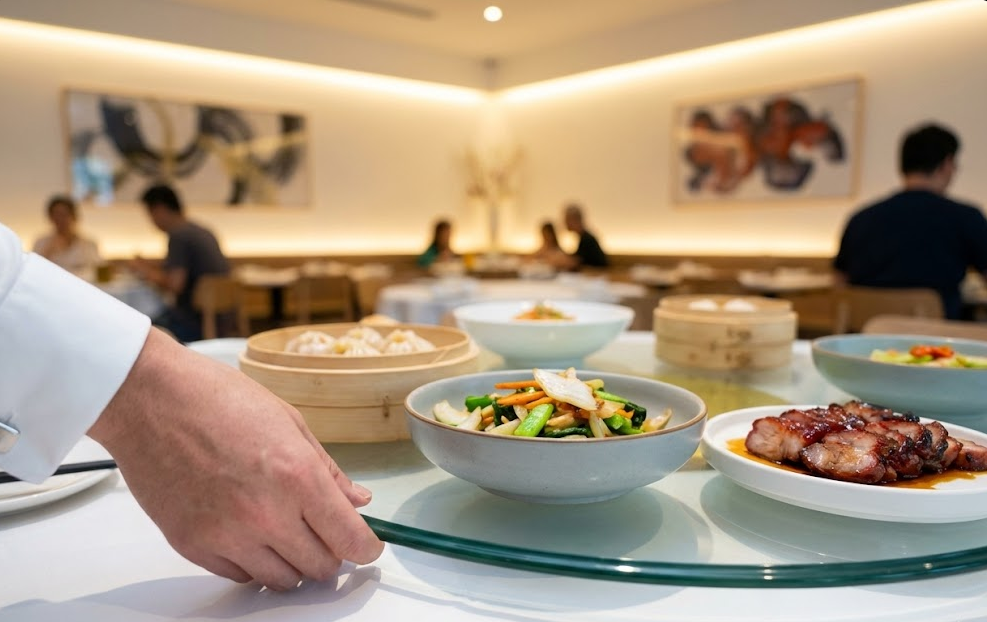
The turntable enables communal sharing but punishes clumsy timing—one of the most visible mistakes foreigners make in 2026.
Clockwise rotation
Rotate the tray clockwise. Counter-clockwise turns feel disruptive and create reach collisions. Never spin while someone is actively serving themselves.
Signature dishes
When a whole fish, Peking duck, or other prestige dish lands on the table, rotate it to face the guest of honor first. They take the first portion before the tray moves again. For hosted tastings in major cities, browse Klook experiences when your host books entertainment around the meal.
Local professionals in 2026 often rotate the Lazy Susan slightly for guests seated far from a specific dish—a subtle gesture of attentiveness.
3. QR ordering, payments, and the clean-plate norm
Paper menus are rare in urban corporate venues. One table QR often links menu, payment, and sometimes membership perks.
- Ordering: Many interfaces suggest an “N+1” dish count from headcount—confirm with the host before over-ordering.
- Payment: Link a foreign Visa or Mastercard inside Alipay and WeChat Pay before the banquet; run a small test charge on home Wi-Fi.
- Anti-waste: “Clean plate” expectations in major cities mean extravagant over-ordering to flash wealth reads as poor taste—trust the host’s quantity call.
Network lag stalls QR flows at peak dinner hours. A roaming Trip.com China eSIM or Airalo keeps translation and payment alive; see VPN vs eSIM if you split between roaming data and hotel Wi-Fi.
4. Chopsticks, gongkuai, and hygiene
Chopsticks are precision tools—misuse reads as careless or offensive.
- Incense taboo: Never stand chopsticks vertically in rice; it mirrors funeral incense.
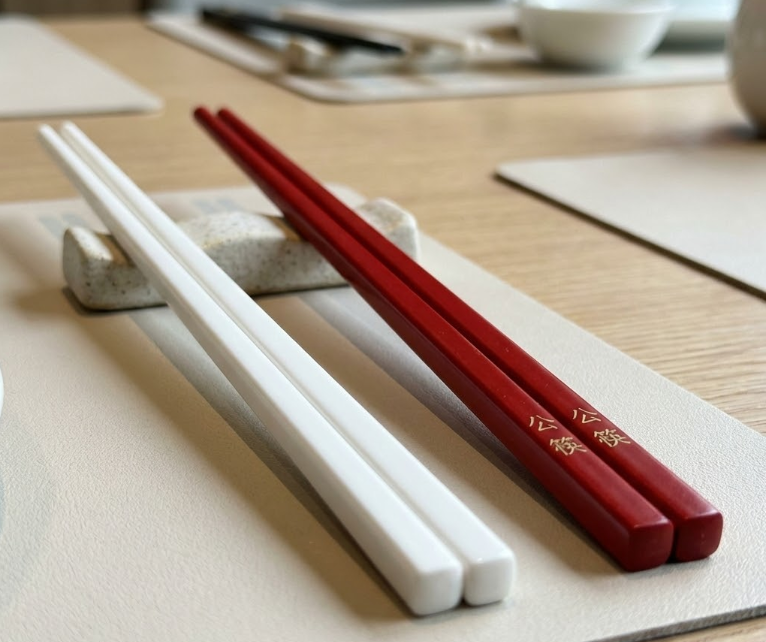
- Gongkuai (公筱): Use the colored serving chopsticks to move food to your bowl, then eat with your personal set. Do not touch communal food with chopsticks that have been in your mouth.
Common mistake to avoid: “Mining” for specific ingredients like shrimp in a communal dish. Take only what is on the surface and closest to you.
5. The bill ritual, tea taps, and toasts
Checkout is a choreographed performance tied to mianzi (face). Full social context: saving face in China.
- Guest’s offer: Politely offer to pay or ask for the check as the meal winds down.
- Host’s refusal: The host blocks the counter or phone screen—let them.
- Gracious acceptance: Thank them for hospitality and expense (pò fèi le, 破费了) without wrestling the bill back.
When someone refills your tea, tap your index and middle fingers twice on the table—a silent thank-you. If the host calls ganbei, participate in the gesture; non-drinkers may raise tea and say “Wǒ yǐ chá dài jiǔ” (我以茶代酒)—widely accepted in 2026 corporate circles.
Before your next business trip
Payments: Alipay & WeChat setup hub · Connectivity: Surfshark for hotel Wi-Fi · Logistics: Trip.com flights, hotels, trains.
FAQ
What if I drop a chopstick?
Signal staff for a replacement—do not retrieve it yourself from the floor in a formal setting.
How do I handle ganbei if I do not drink alcohol?
Raise your tea glass, participate in the toast, and use the tea-for-wine phrase. Declining the gesture entirely reads colder than substituting tea.
The QR menu is only in Chinese—now what?
Screenshot and use in-app translation; keep Surfshark or camera OCR as backup on hotel Wi-Fi.
Someone keeps refilling my tea—must I finish the cup?
Tap twice on the table, take a small sip, and continue conversation—gratitude without draining every pour.
Is a fork acceptable in 2026?
Forks exist in international hotels, but chopstick effort signals respect in business banquets—practice basics before the meal.