Visa & Entry / Transit
China 240-Hour Visa-Free Transit (2026): Rules, Eligibility & How It Works
Eligible passport holders can enter selected Chinese cities for up to 240 hours (10 days) without a tourist visa when they are genuinely en route to a third country or region. Border officers still deny sloppy itineraries—routing, onward proof, and port eligibility must line up before you board.
Official source: NIA Visa-Free Transit Policies (English, dated 20 August 2026) lists 57 countries and 65 ports. Kyrgyzstan and Vietnam were added the same day — see NIA Announcement No. 4 of 2026 and our Vietnam & Kyrgyzstan update.
 By Peter Wilson · StartChinaTravel · Updated 7 January 2026
The 240-hour scheme replaced the older 144-hour window for qualifying ports. That extra time helps long-haul travelers add a Shanghai or Beijing segment—but the A → B → C logic did not get softer. Treat the policy like a contract: if one leg fails the written rules, you fly on a wing and a prayer at check-in.
Ports, nationality lists, and internal province boundaries can change with little notice. Pair this page with your carrier’s latest circular and the Chinese mission that covers your residence. Nothing here replaces consular advice or an airline’s boarding decision.
For the full eligible-country table and NIA entry notes, bookmark our 2026 visa-free list and the 240-hour city and port index. Planning a longer visa-free holiday (not transit) is a different playbook—see how to plan visa-free China travel.
1. Who qualifies and what “transit” really means
As of late 2024 policy communications still cited in 2026 planning materials, travelers from 57 countries may use 240-hour visa-free transit at 65 designated ports across 24 provinces when every condition is satisfied. Your airline and the border inspection post make the final call at boarding and arrival.
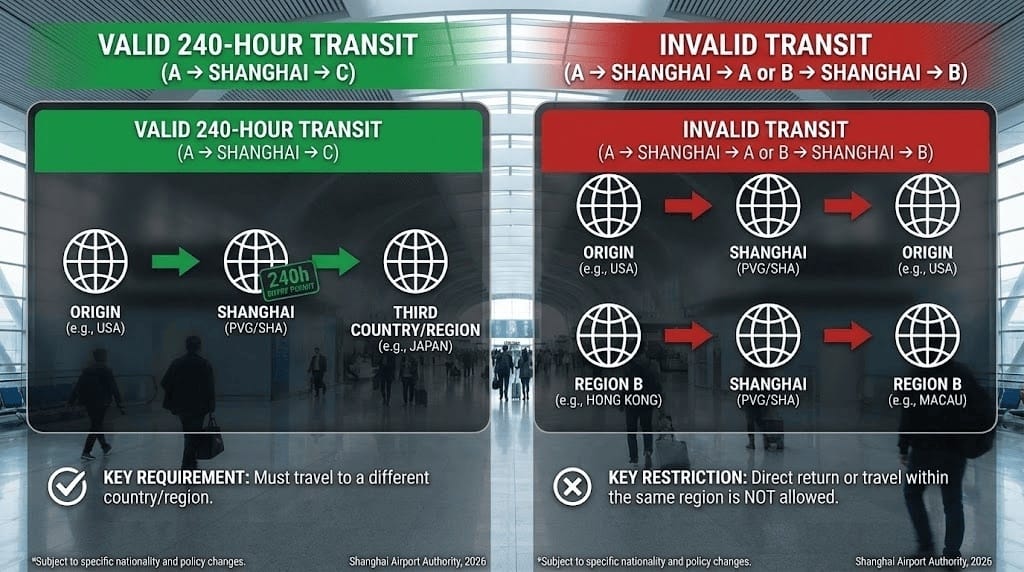
- Routing: You must arrive from country/region A, stay inside the approved zone for your port, and depart to a different country/region C. A → China → A is out. “Different” includes real third countries—not a cosmetic return via the same economic region when officers treat the trip as domestic-style movement.
- Clock: Up to 240 hours inside the permitted administrative area tied to your entry port. Do not assume you can freely hop every province on one stamp.
Valid example: London → Shanghai → Singapore.
Invalid example: London → Shanghai → London.
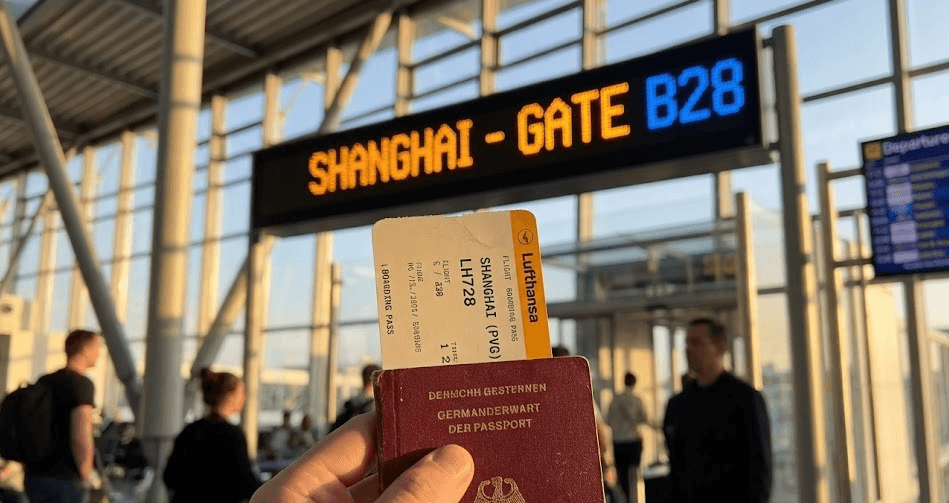
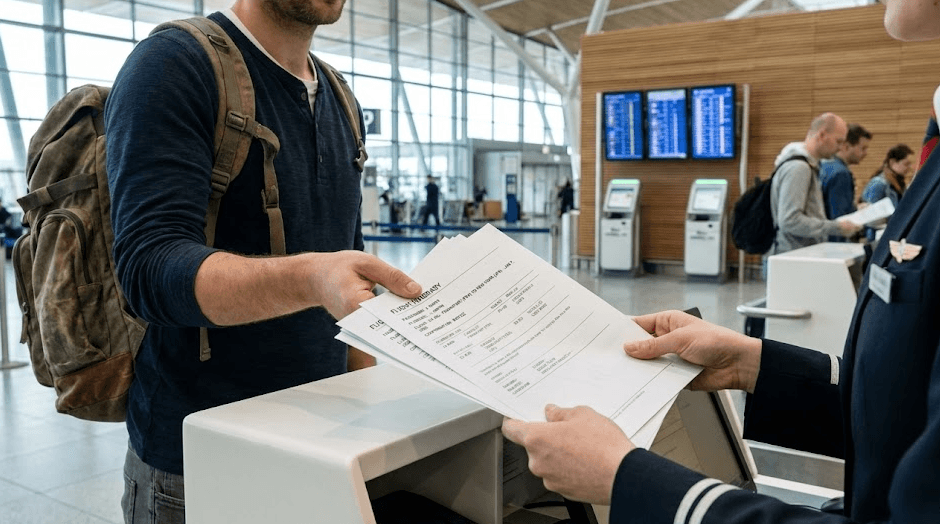
Always print your onward ticket with confirmed seat (PNR). Digital screenshots are often rejected if officers cannot verify immediately.
Eligible countries (high level)
Typical cohorts include Schengen/EU member states plus the UK, many European microstates, North America (Canada and the United States where transit rules apply—not the same as visa-free tourism), Oceania, and selected Asian passports such as Japan, South Korea, Malaysia, and Singapore. Because the published list shifts, use our living country list before you ticket.
Special note for US, UK, Canada: Standard visa rules still apply for ordinary tourism or long stays. Recent single- or double-entry visas sometimes qualify for fingerprint waivers and mail-in drops through authorized visa centers—confirm the current circular for your passport, because transit eligibility and tourist visa policy are not interchangeable.
2. Mistakes that void 240-hour transit
- Stopover trap: Returning straight to your origin after China breaks the third-country logic.
- Split PNR chaos: Separate record locators make it harder to prove a coherent A → China → C story under time pressure.
- Illegal region hopping: Entering through one approved cluster then traveling outside the permitted administrative area (for example treating a Shanghai stamp as permission for an unapproved domestic leg) is a common self-sabotage pattern.
Recommended action: Use Trip.com multi-city or open-jaw flight booking so international legs share one coherent reference where possible, then export the official itinerary PDF for your folder.
3. Payments, data, and firewall reality before you land
China rewards travelers who finish wallet and connectivity setup 48 hours before wheels up. Cash alone will not unlock DiDi, metro QR gates, or most street-level services.
Phase 1 — Alipay and WeChat Pay
Install both apps, complete identity verification with a passport scan (approval can take anywhere from minutes to a day), and link a foreign Visa or Mastercard. Confirm your phone’s app store region allows the download before you depart. Walkthroughs: Alipay · WeChat Pay.
Phase 2 — eSIM data
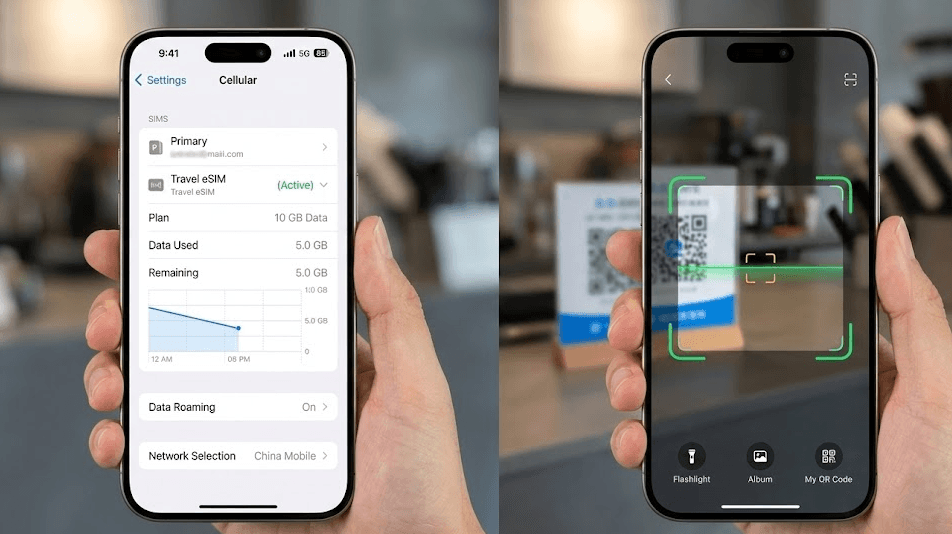
Buy a China-capable eSIM before departure, scan the QR once on stable Wi-Fi, and activate data roaming only on that line after touchdown.
Phase 3 — VPN for Wi-Fi sessions
Action: Install Surfshark or another audited VPN before departure. Do not rely on hotel Wi-Fi alone; it is unencrypted and monitored.
4. Hotels, hostels, and police registration
Licensed hotels register foreigners electronically at check-in. Budget properties without a foreign-guest license can refuse you even after a prepaid booking. Filter for international guests accepted on Trip.com hotels and read Policies before you pay—our seven-step hotel guide shows exactly where to click.
Private stays (friends, relatives, some short rentals): If nobody registers you digitally, walk the rental contract, host ID, and passport to the local PSB within 24 hours. Skipping registration can trigger fines (historically up to roughly CNY 2,000) at exit audits.
Print the hotel’s Chinese name and address in large characters—many drivers cannot parse English street strings.
5. Hainan and cruise-specific carve-outs
Hainan (separate visa-free tourism scheme): Routing rules differ from 240-hour transit. A common compliant pattern is flying into Haikou (HAK) or Sanya (SYX) directly from outside mainland China (for example via Hong Kong). A misconnect such as London → Beijing → Sanya typically requires a visa because you already entered mainland China under different rules.
After landing, follow airport signage for kiosks: scan the passport, enter your hotel address, and keep the printed receipt with your travel folder.
Shanghai cruise port (15-day group scheme): Some cruise products only qualify when organized through a registered Chinese travel agency with minimum group sizes—solo cruisers should assume a visa unless an agency confirms coverage in writing.
Warning: Hainan entry policies can change rapidly in 2026. Verify requirements with your airline 48 hours before flying.

6. Booking windows that still bite in 2026
High-speed rail inventory for trunk routes (Shanghai–Beijing, Chengdu–Xi’an) can vanish the moment the 14-day sales window opens on busy dates. Hold trains on Trip.com trains, then stack timed attractions:
- Forbidden City: book timed entry roughly seven days ahead (policy subject to museum notices).
- Shanghai Disney: peak weekends reward early “early bird” purchases.
Carry-on checklist
Paper: Printed onward ticket with seat and PNR; hotel confirmation in Chinese characters.
Digital: Alipay/WeChat verified; eSIM QR unused until activation; VPN installed for Wi-Fi.
Legal: Stay inside your port’s permitted zone; register at PSB if no hotel does it for you.
FAQ: China visa-free transit 2026
Can I use a digital ticket for 240-hour transit at Shanghai airport?
Assume no until an officer explicitly waves you through. Carry a printed onward boarding pass or airline itinerary with a confirmed seat and PNR. Phone screenshots fail often enough that paper is cheap insurance.
Do all hotels register international guests automatically?
Only properties with the correct license. Budget hostels frequently cannot host foreigners. Use Trip.com filters plus the Policies tab—see the hotel walkthrough linked above.
Is the Germany / France unilateral visa waiver the same as 240-hour transit?
No. Unilateral 30-day visa-free tourism for select European passports is a separate track with its own entry stamps. Transit passengers still need a qualifying A → China → C ticket pattern unless they switch schemes legally at the border under published rules.
What if my eSIM QR fails?
Most failures come from scanning twice—codes are usually single-use. Screenshot the QR before you scan, keep support chat IDs offline, and carry a second brand’s plan if the trip is mission-critical.
Do I need a VPN if I already use roaming eSIM?
Roaming data often exits via Hong Kong or Singapore POPs, which bypasses many blocks. You still want a VPN installed for captive hotel portals, laptop tethering, and café Wi-Fi where behavior is less predictable.
Do I need to visit the police station for an Airbnb?
Yes, when the host cannot complete digital registration on your behalf. Bring passport, host ID, and lease or property paperwork; finish within 24 hours of arrival when PSB registration is required.
How this page was built: Editorial (not a live immigration desk test). Counts and eligibility wording follow the NIA English pages linked above as of 20 August 2026. Airline check-in and local stay maps can still vary—confirm before travel.