
Visa & Entry · Trip Planning
How to Plan a Trip to China Visa Free (2026)
The smoothest China departures in 2026 share one paper trail: a confirmed onward ticket, a passport that matches NIA rules, and a phone already running Alipay plus travel data—not airport Wi-Fi panic.
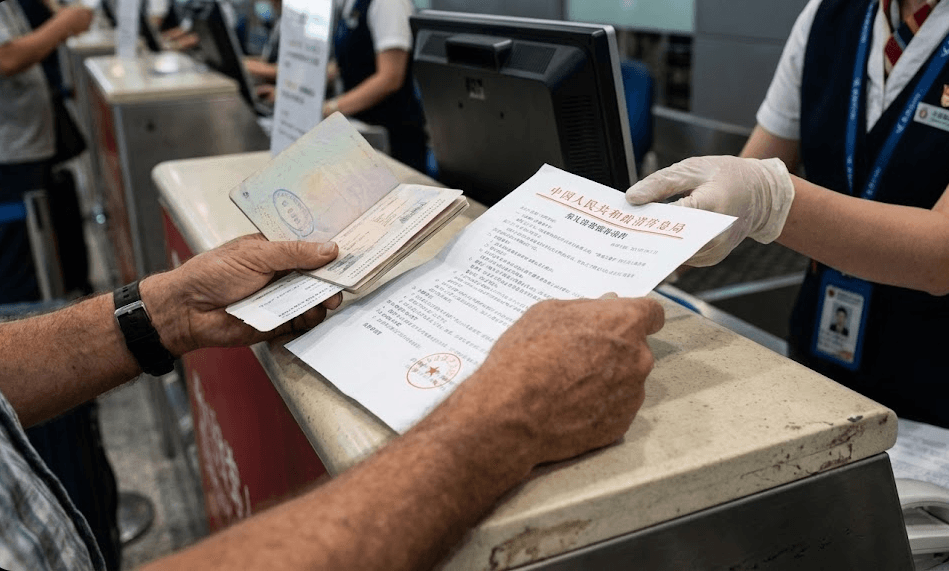
At the Shanghai check-in counter, stress usually traces to one missing printout: proof you leave China on schedule. If you want to plan a trip to China visa free in 2026, eligibility is wider than a few years ago—but border officers and airline agents still enforce the details.
Two paths dominate: 30-day unilateral entry for listed passports, and transit without visa (TWOV) for everyone else who routes through China between two different countries. This guide covers both, plus the digital setup that makes short stays workable.
For a week-by-week prep timeline, see How to Prepare for China in 2026.
Traveler advisory: This page reflects policies available as of early 2026. The border immigration officer makes the final entry decision. Rules change without notice.
Action: Confirm eligibility with your airline and official sources—National Immigration Administration (NIA) and your local Chinese embassy—before you book non-refundable tickets.
1. Which countries get 30-day visa-free entry in 2026?
China’s pilot programs allow tourism, business, or family visits up to 30 days for passport holders from selected countries—no pre-application for most eligible travelers.
Eligible regions (verify before booking)
- Europe: France, Germany, Italy, Netherlands, Spain, Switzerland, Ireland, Hungary, Austria, Belgium, Luxembourg, Poland, Portugal, Greece, Cyprus, Slovenia, Slovakia, Norway, Finland, Denmark, Iceland.
- Asia & Oceania: Australia, New Zealand, Malaysia, Singapore.
Passport rule: Carry at least six months validity. Present your passport at immigration; no sticker required for standard tourist entry under published lists.
Full country tables and NIA footnotes: China visa-free country list 2026 and 30-day visa-free countries guide.
2. 144-hour and 240-hour transit (TWOV)
Travelers from the USA, UK, Canada, and 50+ other nations not on the 30-day list typically use Transit Without Visa to plan a trip to China visa free.
Which flight routes qualify?
You must transit: fly from Country A → stop in China → continue to a different Country B.
- Valid: London → Shanghai → Sydney.
- Invalid: London → Shanghai → London (round-trip home does not count as a third region).
City-specific port rules: China visa policy 2026: 240-hour cities. Deep dive: 240-hour visa-free transit guide.
144-hour vs 240-hour zones
144 hours (6 days) is standard at major hubs. 240-hour (10-day) pilots exist but are often limited to specific corridors—do not assume nationwide travel on a 10-day clock without checking your arrival city.
Airline boarding risk: Carriers pay to fly inadmissible passengers back. If your TWOV eligibility is ambiguous, check-in staff may deny boarding at your origin.
Print English confirmation of your confirmed onward flight to Region B and keep hotel addresses handy.
Pro tip
Before you fly, ensure your international flight segment is booked with a reliable carrier. You can check international flight schedules to China to confirm routes that qualify for transit.
3. Alipay and WeChat Pay: non-negotiable in 2026
Cash is legal, but street vendors, metro gates, and most taxis expect QR pay. Set up wallets before immigration.
- Download Alipay and WeChat; register with your home mobile number.
- Link Visa, Mastercard, JCB, or Discover inside the app.
- Verify passport identity in-app while you still have stable Wi-Fi.
Transactions under 200 RMB often avoid Alipay’s foreign-card service fee; above that, budget ~3% or split payments politely.
Full walkthrough: How to Use Alipay in China (2026) · Backup: WeChat Pay for foreigners · Hub: Alipay & WeChat Pay setup.
4. Stay connected: eSIM labeling, offline maps, VPN
Navigation, translation, and payment OTPs all need data. Airport Wi-Fi is slow, SMS-gated, and unreliable for first-hour setup.
Option A (recommended): travel eSIM
Roaming eSIMs route through Hong Kong or Singapore carriers, so Instagram, Google, and WhatsApp often work without manual VPN configuration. Activate the plan before you fly.
- On iPhone: Settings → Cellular → Add eSIM → Use QR Code.
- Label the line “China Travel” so iOS does not default to your home carrier.
Insider tip
This prevents you from accidentally using your home number and incurring massive roaming fees (often $10/MB).
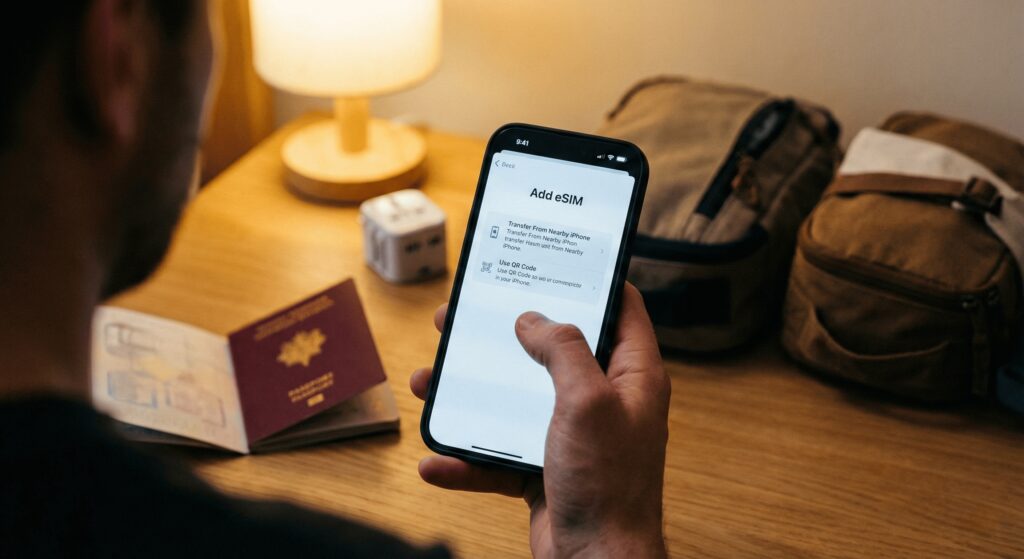
Step-by-step iPhone activation: Activate eSIM for China on iPhone. Firewall context: eSIM vs VPN in China.
Option B: VPN on hotel Wi-Fi
Free VPNs rarely work on mainland networks. If you rely on laptop browsing at hotels, install a paid VPN before arrival—Surfshark is our 2026 field pick.
Offline maps (do this on Wi-Fi)
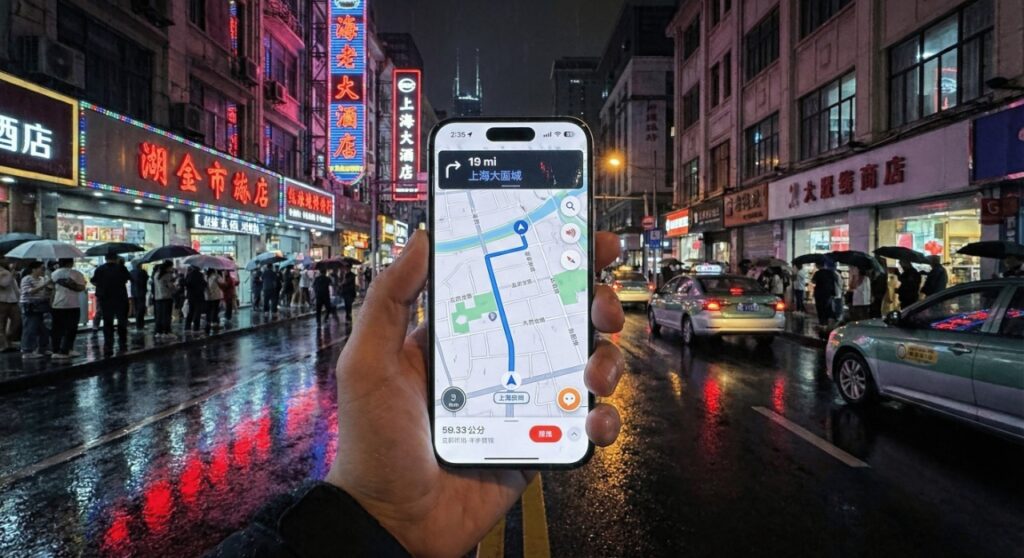
- Download offline maps: Since Google Maps is unreliable, download offline areas on Apple Maps or Amap (Gaode).
- Turn off iCloud backup over cellular so you do not burn your data plan uploading photos at the hotel.
- Disable cellular data switching on your home line after landing.
5. Trains, hotels, and attraction tickets
High-speed trains
- Tickets open 15 days ahead; popular routes (Beijing–Shanghai) sell out fast.
- Your passport is the ticket—name order must match exactly.
- Book early: How to book China trains on Trip.com or Trip.com trains.
Foreign guest hotel registration
Hotels register you with police within 24 hours. Budget hostels sometimes cannot scan foreign passports—book 3-star and above or verified foreigner-friendly properties via foreigner-friendly hotels guide and Trip.com hotels.
Attraction tickets (no walk-ins)
“Walk-in” tickets are virtually gone at major sites. Slots release online and sell out fast.
- Forbidden City (Beijing): Tickets release 7 days ahead at 8:00 PM Beijing time—gone in seconds. Browse Forbidden City tickets on Klook
- Universal Beijing Resort: Popular for 144-hour transit visitors. Book Universal Studios Beijing
- Other attractions: For everything else (like the Li River Cruise or Zhangjiajie National Park), always book at least 3 days ahead. Browse China attraction tickets on Klook

Ground transport: DiDi taxi guide for foreigners. Sample route: Beijing–Xi’an–Shanghai 10-day visa-free itinerary.
Bottom line
Confirm visa-free path (30-day vs TWOV), print onward proof for airlines, bind Alipay before landing, label your eSIM line, download offline maps, and pre-book trains plus marquee tickets on one bookmarked Trip.com tab.
FAQ: plan a trip to China visa free (2026)
Can I visit Tibet on visa-free entry?
Generally no. Tibet requires a Tibet Travel Permit arranged via a licensed agency—separate from visa-free or TWOV programs.
What counts as a valid third region for transit?
Hong Kong, Macau, and Taiwan count. Example: Los Angeles → Shanghai → Hong Kong qualifies for 144-hour TWOV if other rules are met.
How do I register if I stay with friends?
Register at the local police station (PSB) for that neighborhood within 24 hours of arrival. Hotels handle this automatically.
Do I need a paper train ticket?
No. Your passport is the ticket—match the booking name order exactly (surname first if that is how it appears on your passport).
Are Google Maps and Uber available?
Google Maps loads inconsistently without roaming data; use Amap. Uber is not available—use DiDi with international cards.
Klook promo codes (via our links; enter at checkout):
• SUMMER1CNATT — 5% off China attractions (max ~USD 3). Valid through 31 May 2026. Philippines & Singapore residents only.
• S1CNRAIL — 10% off Mainland China rail on Klook. Valid through 31 May 2026. Not for residents of China, Hong Kong, Malaysia, or Indonesia.