
Hanfu & Chinese Aesthetics — A Traveler’s Guide to Traditional Clothing
Rent a Tang dynasty gown, pose at ancient water towns, and understand the cultural revival sweeping China — here’s everything you need to know.
 Peter Wilson·Updated July 2026·14 min read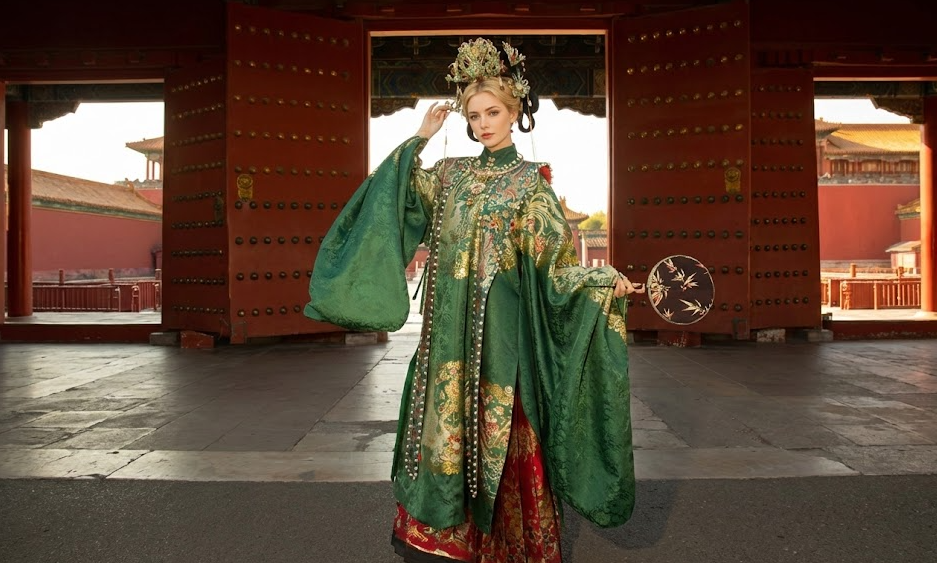
Trip funnel
What Is Hanfu?
Hanfu refers to the traditional clothing of the Han Chinese people, spanning over 3,000 years of history. It’s not a single outfit — it’s an entire system of garments that evolved across dynasties, from the flowing robes of the Han dynasty to the structured elegance of the Ming.
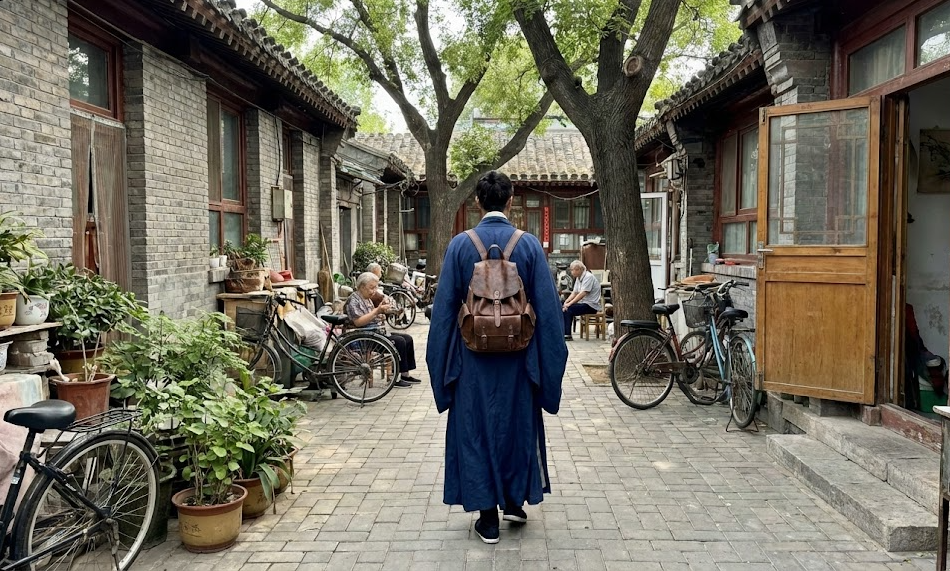
In 2026, hanfu is experiencing a massive cultural revival. Walk through any major tourist site — Xi’an city walls, Hangzhou’s West Lake, the Forbidden City — and you’ll see hundreds of young Chinese people in elaborate traditional outfits. Foreigners are absolutely welcome to join in.
Why Hanfu Is Trending Now
- Cultural confidence — China’s “guochao” movement celebrates homegrown aesthetics over Western fashion
- Social media — Douyin and Xiaohongshu are filled with hanfu content, driving millions to try it
- Government support — March 3 is officially designated “China Huafu Day”
- Tourism infrastructure — professional photo studios and rental shops at every major historical site
- Accessibility — affordable rental from ¥50 makes it easy for anyone to participate
Hanfu by Dynasty — The 4 Major Styles
Each dynasty had its own distinct aesthetic. Understanding the differences helps you choose what to rent and appreciate what you see:
Ruqun & Shenyi — Classical Elegance
The original hanfu. Flowing cross-collar robes with wide sleeves and sash belts. Simple, elegant, and the foundation for all later styles.
- Cross-collar wrapping left over right
- Shenyi — a one-piece wrapped robe
- Minimal embroidery, natural colors
- Best for: scholarly, minimalist aesthetic
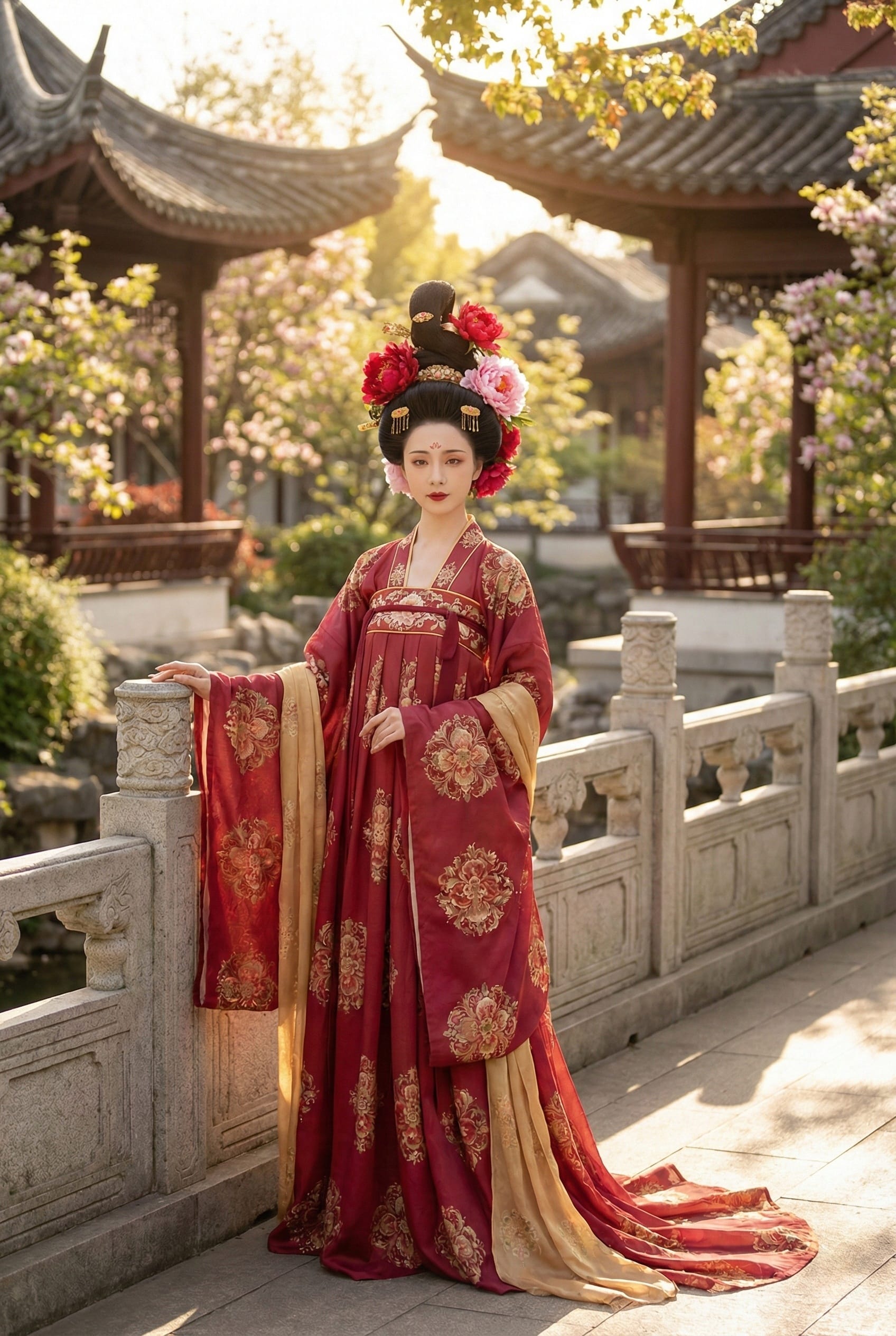
Qixiong Ruqun — Opulent & Bold
The most glamorous era. High-waisted skirts, vibrant colors, and elaborate hair accessories. Think: empress energy.
- Chest-height skirt — signature look
- Bold reds, golds, and greens
- Heavy makeup: flower forehead designs
- Best for: dramatic photo shoots
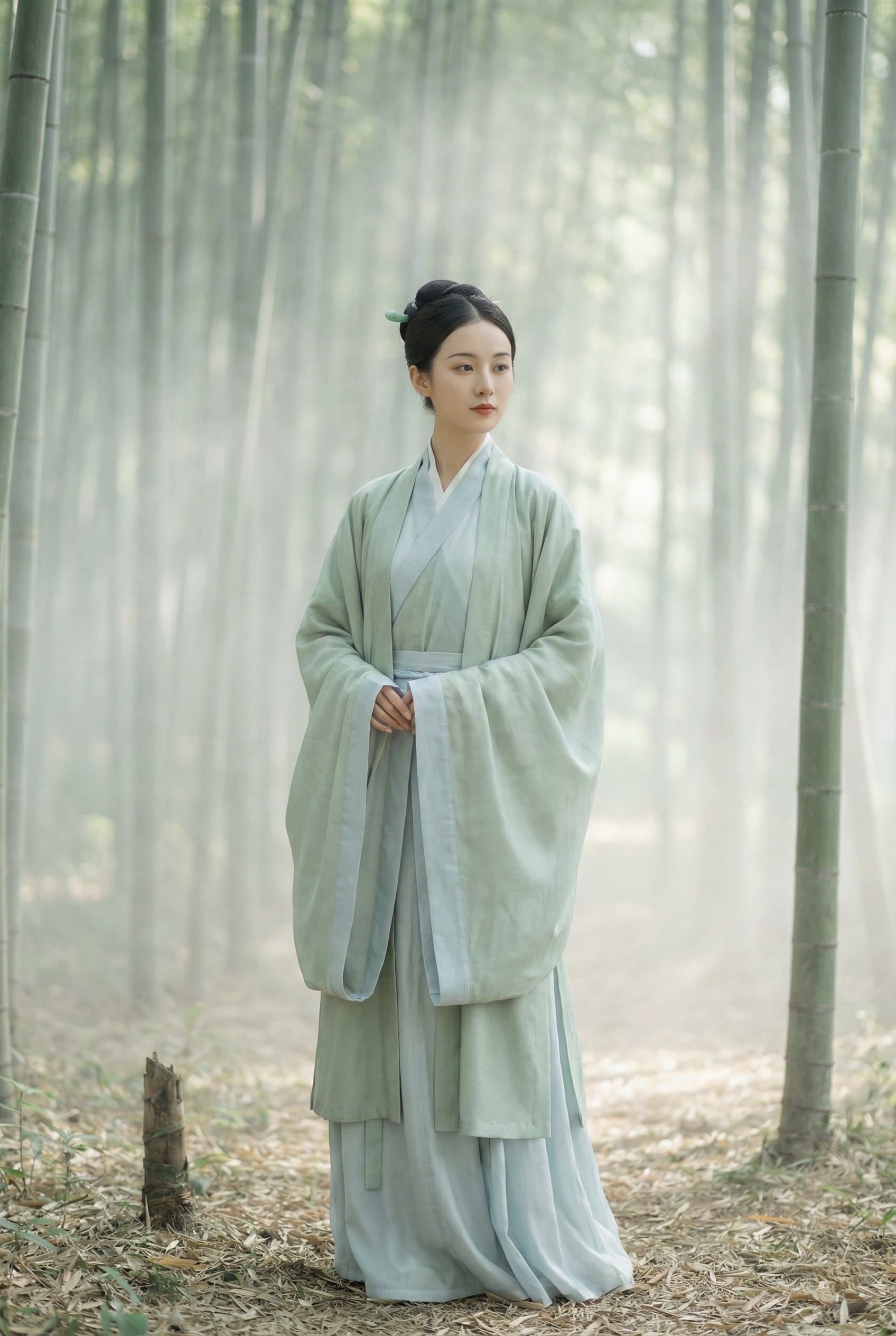
Song-Style Hanfu — Quiet Luxury
The minimalist movement. Understated elegance with muted colors, layered fabrics, and refined simplicity.
- Narrow sleeves, more practical design
- Muted pastels: sage, cream, dusty blue
- Beizi — a casual open jacket
- Best for: everyday wear, water towns
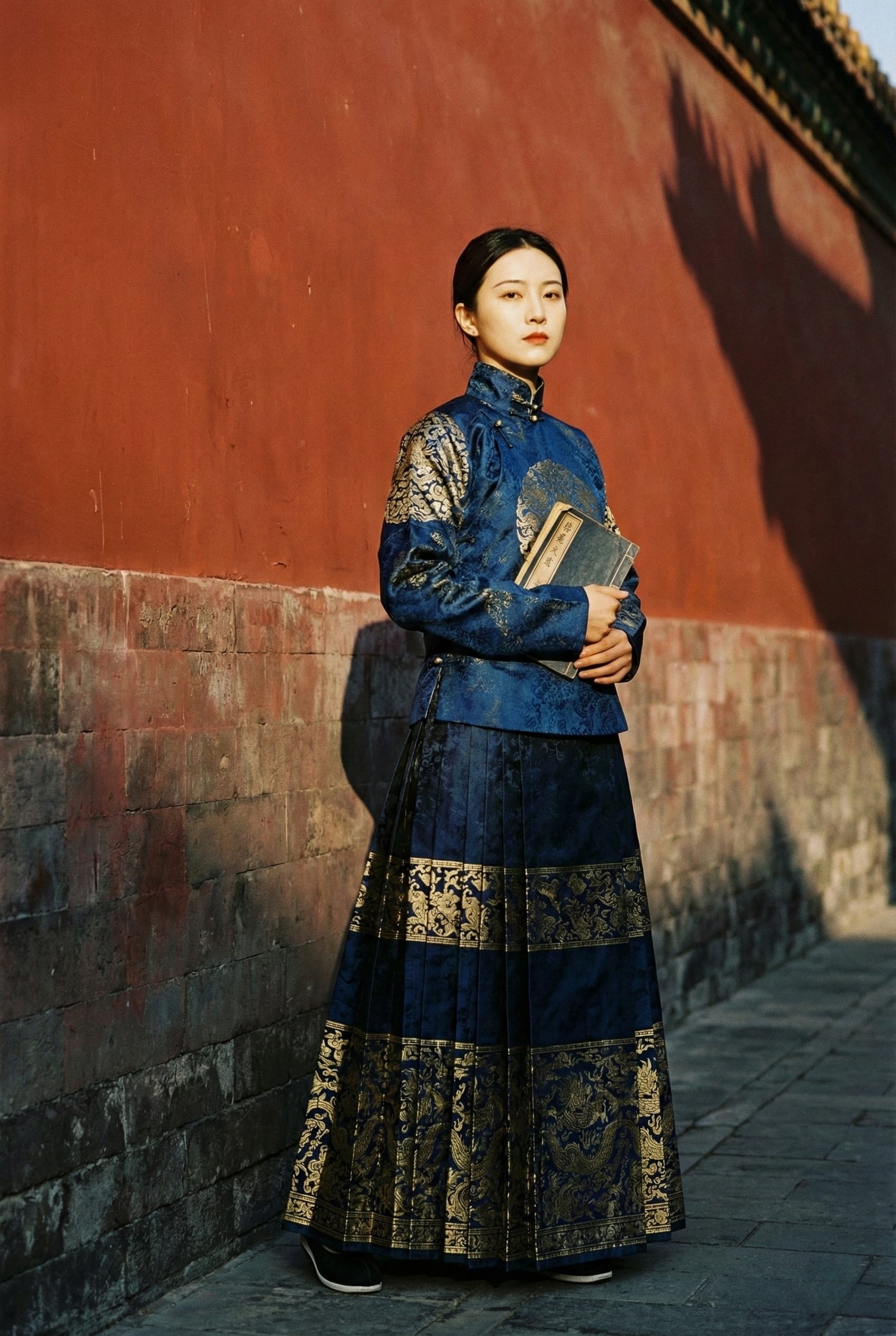
Mamianqun & Aoqun — Structured Grandeur
The horse-face skirt era — currently the most viral hanfu style on global social media. Structured, pleated, unmistakably Chinese.
- Mamianqun — pleated panel skirt
- Standing collar jackets, structured silhouettes
- Rich brocade fabrics, dragon/phoenix motifs
- Best for: modern street style, fashion-forward
How to Rent Hanfu in China
Rental is the standard for travelers — you don’t need to buy. Here’s exactly how the process works:
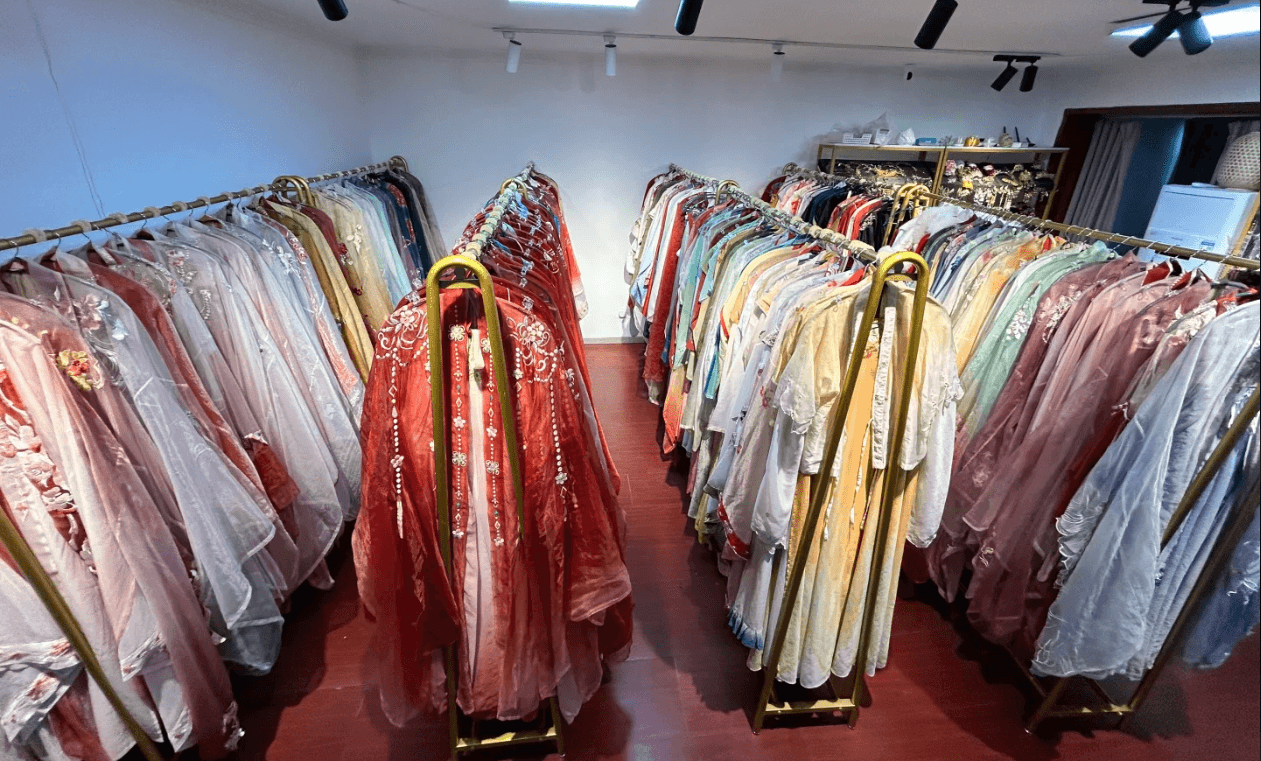
Find a Rental Shop
Search “汉服租赁” + city name on Dianping or Xiaohongshu. Shops cluster near major historical sites — Xi’an city wall, Luoyang old town, Hangzhou West Lake.
Choose Your Dynasty & Outfit
Shops display outfits by dynasty style. Staff help you select based on preference, body type, and photo location. Most stock sizes up to Western XL.
Get Dressed & Styled
Dressing takes 15–30 minutes. Staff handle the complex layers and sashes. Hair styling and makeup are available as add-ons (¥50–150 extra).
Shoot Photos
Self-shoot or book a photographer. Most shops offer photography packages (¥200–800 for 1–2 hours, 30–100 edited photos).
Return by Closing Time
Standard rental is a full day until shop closing (usually 6–8pm). Some shops offer half-day rates.
Booking Tips
- Book in advance on weekends and holidays — popular shops sell out, especially during Golden Week and summer
- Morning slots are best — softer light for photos, fewer crowds at scenic spots
- Communicate via WeChat — most shops have a WeChat account for reservations
- Bring your own shoes — rental shoes may be limited in larger sizes
- Arrive with a clean face if getting professional makeup done
Best Photo Spots for Hanfu
Location makes the photo. These are the most photogenic places for hanfu photography, with the best dynasty-style pairings:
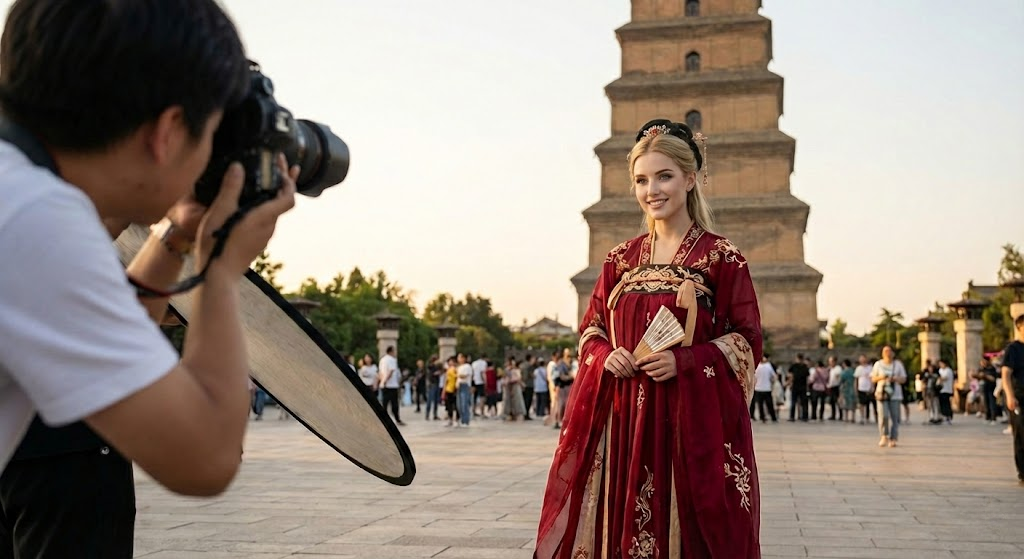
City Wall & Tang Paradise
The #1 hanfu destination in China. Ancient city wall backdrops and Tang Paradise with nightly light shows.
West Lake & Hefang Street
Song dynasty minimalism meets misty lake scenery. Broken Bridge and Su Causeway are iconic spots.
Classical Gardens & Pingjiang Road
UNESCO gardens with moon gates and covered corridors. Perfect for intimate, refined compositions.
Luoyi Ancient City
Emerging hanfu capital rivaling Xi’an. Highest concentration of hanfu shops in China. Peony season (April) is magical.
Forbidden City & Summer Palace
Imperial grandeur meets Ming aesthetics. Red walls, golden roofs, stone bridges. Best in autumn.
Water Towns (Wuzhen, Xitang)
Whitewashed walls, stone bridges over canals, willow trees. The quintessential “ancient China” postcard.
Modern Chinese Aesthetics & Fashion
Hanfu isn’t just historical cosplay — it’s influencing mainstream Chinese fashion in ways travelers can appreciate and even bring home:
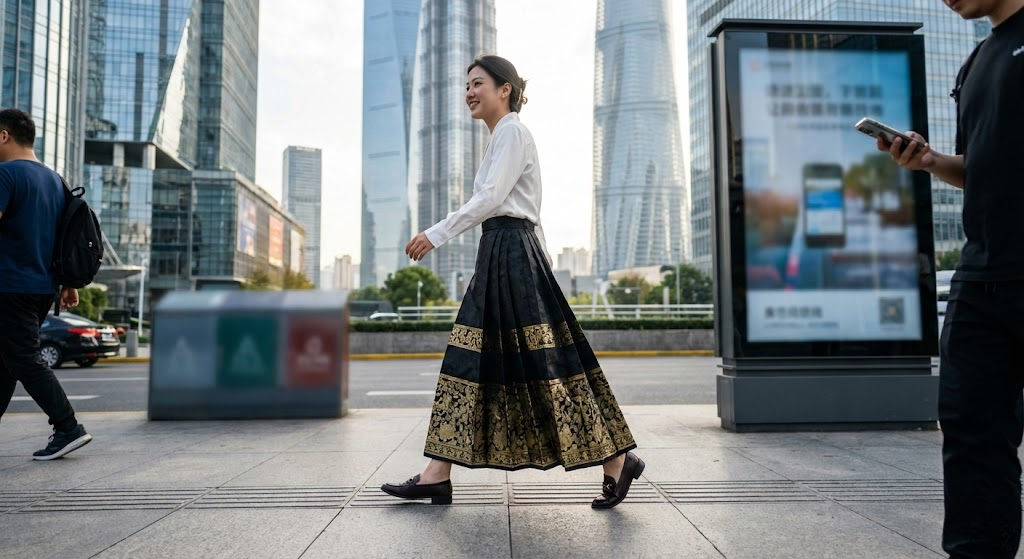
Guochao — The National Trend
Chinese brands incorporating traditional motifs into modern products. From Li-Ning sneakers with Tang dynasty patterns to Florasis makeup inspired by ancient cosmetics. You’ll see guochao everywhere in Chinese malls.
New Chinese Style
A wearable, everyday fusion: mandarin collar blouses, modified mamianqun worn with sneakers, traditional fabric patterns on modern silhouettes. This is what young Chinese people actually wear — not just for photos.
What You Can Buy & Bring Home
- Mamianqun (horse-face skirt) — the most wearable hanfu piece as modern fashion, ¥100–500
- Hanfu accessories — hairpins, embroidered fans, jade pendants, ¥20–200
- Tea ceremony sets — modern takes on traditional gongfu tea, ¥50–300
- Florasis makeup — beautifully packaged cosmetics with carved traditional motifs, ¥100–400
- Embroidered bags and pouches — Suzhou silk embroidery souvenirs, ¥30–200
Etiquette & Tips for Wearing Hanfu
- Left over right — the front collar always wraps left side over right. Right over left is for dressing the deceased. This is the most important rule.
- Ask before photographing others — a smile and gestured camera is enough
- Mind the hem — long robes can drag. Lift slightly when walking on stairs or rough surfaces
- Don’t mix dynasty styles — wearing a Tang top with Ming skirt is a fashion faux pas in the hanfu community
- Restrooms are tricky — multiple layers make bathroom breaks an adventure. Practice the layering system before heading out
- Weather matters — spring and autumn are the sweet spot for comfort
How Much Does It Cost?
Hanfu experiences range from budget-friendly to premium:
| Experience | Price Range | What’s Included |
|---|---|---|
| Basic Rental (self-service) | ¥50–100 ($7–14) | Outfit only, no styling, full day |
| Standard Rental + Hair | ¥100–200 ($14–28) | Outfit + basic hairstyle, full day |
| Premium Rental + Full Styling | ¥200–400 ($28–56) | Outfit + professional hair + makeup + accessories |
| Photography Package | ¥300–800 ($42–112) | Above + 1–2 hour shoot + 30–100 edited photos |
| Luxury Studio Experience | ¥800–2000+ ($112–280+) | Premium outfit + full styling + professional photographer |
| Buy Your Own (basic) | ¥100–300 ($14–42) | Simple hanfu set from Taobao |
| Buy Your Own (quality) | ¥500–2000+ ($70–280+) | Authentic fabrics from specialty brands |
Frequently Asked Questions
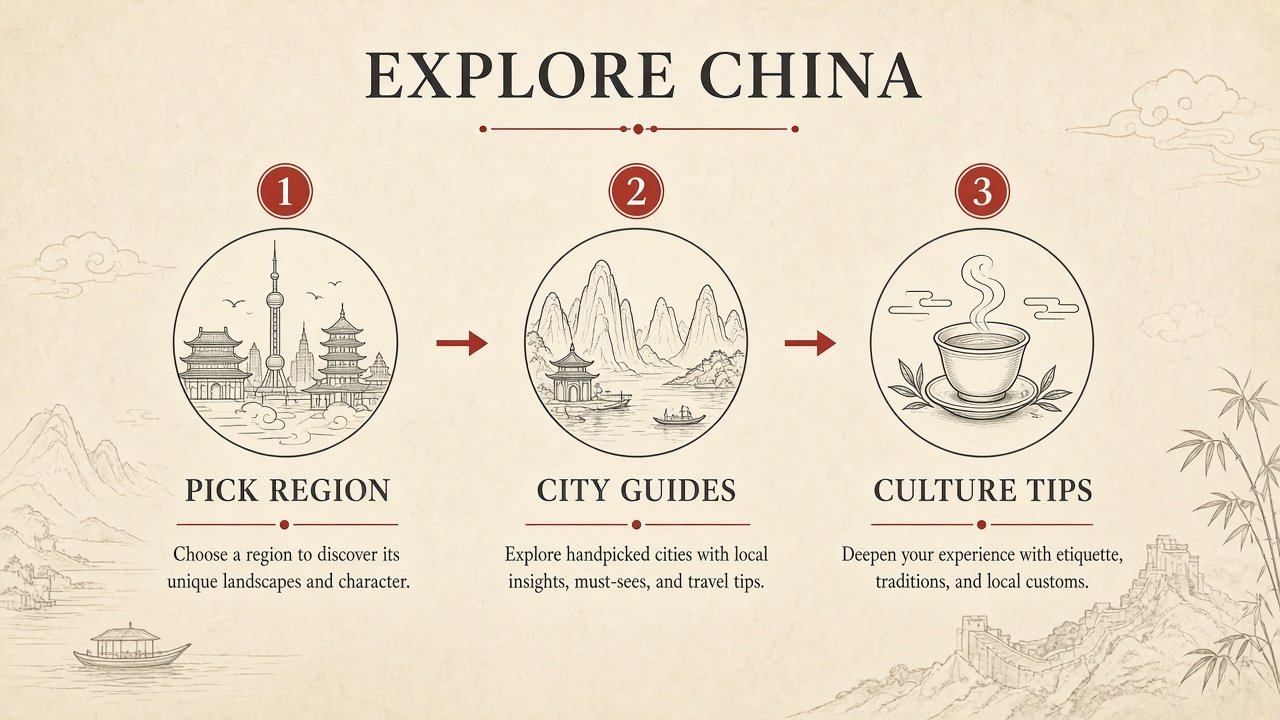
Explore Culture & Tips
Related Guides
Hanfu Photography in Suzhou and Hangzhou (2026 Guide to Rentals & Photo Spots)
Hanfu & Aesthetics · Jiangnan Hanfu Photography in Suzhou & Hangzhou (2026): Rentals & Photo Spots Pingjiang Road in full…
The Ultimate Hanfu Photography Guide to Beijing: Forbidden City, Red Walls & Snow
The popular snow aesthetic has made Hanfu photography in Beijing a logistical challenge in 2026. White snow against the Forbidden…
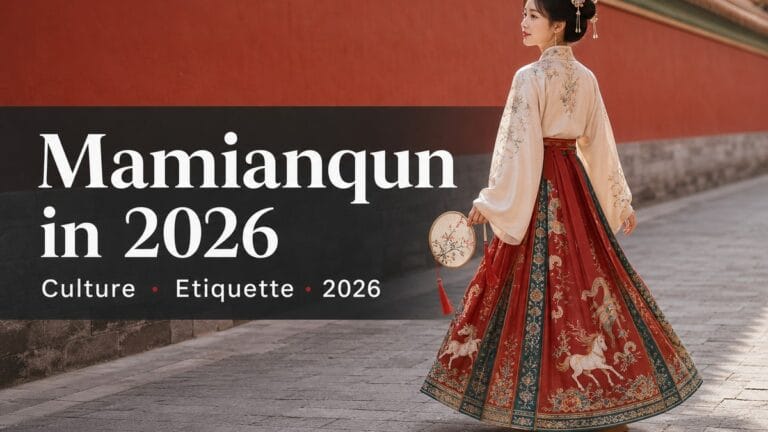
Mamianqun in 2026: How to Buy, Style, and Avoid Tourist Mistakes in China
The Mamianqun, also known as the Horse-Face Skirt, has become one of the most recognizable fashion pieces in China in…
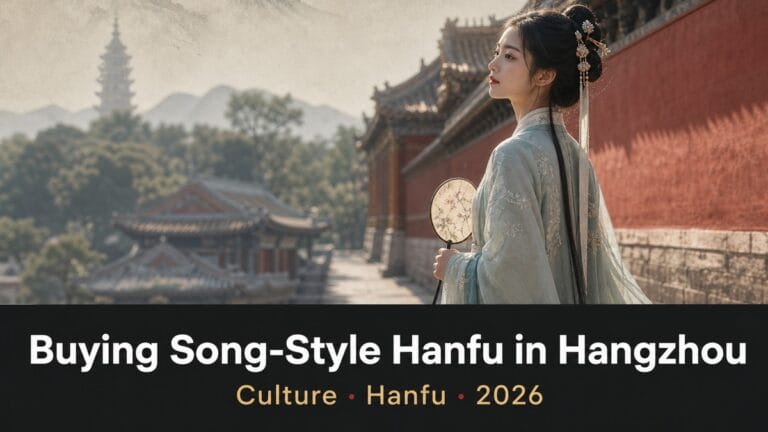
Buying Song-Style Hanfu in Hangzhou, China: Price Guide & What to Look For (2026)
Hanfu & Aesthetics · Hangzhou Buying Song-Style Hanfu in Hangzhou (2026): Price & Fabric Guide Hubin Pedestrian Street in 2026…
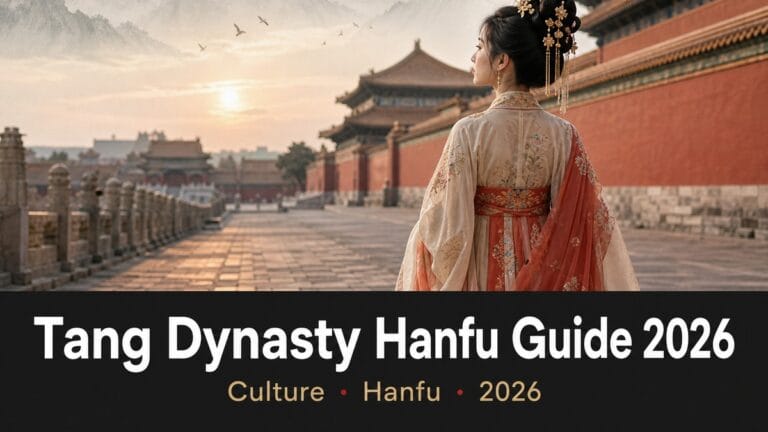
The Tang Dynasty Hanfu Guide: Opulence, Makeup, and How to Wear the “Empress” Look
Hanfu & Aesthetics · Tang Tang Dynasty Hanfu Guide 2026: Empress Look, Makeup & Xi’an Rentals Xi’an in 2026 is…
Why You Must Try “Blind Massage” in China: Authentic Tui Na Guide (2026)
The 2026 Reality of Physical Travel in China Daily walking totals often exceed 25,000 steps for travelers navigating the vertical…

Get Weekly China Travel Tips
Hanfu spots, cultural insights, and practical advice — straight to your inbox.
Free forever. No spam. Unsubscribe anytime.