Visa & Entry · Transit
Which Cities Allow 240-Hour Visa-Free Transit in China? (2026)
240-hour TWOV is port- and cluster-locked: your entry stamp ties you to a defined province group. Shanghai’s cluster is not a blanket permission to finish in Beijing—cross-cluster movement needs a regular visa or a different lawful entry category.
Airline departure control systems and border posts do not always show the same policy revision date. Implementation still varies by gateway, crew training, and whether your itinerary reads as a clean A → China → C transit. Plan for paper proof and a single visible PNR before you rely on a connection.
Disclaimer: Port lists and cluster boundaries change. Confirm with your carrier and the Chinese mission that covers your passport before non-refundable spend. Border inspection has final say.
30-day unilateral entry vs 240-hour transit
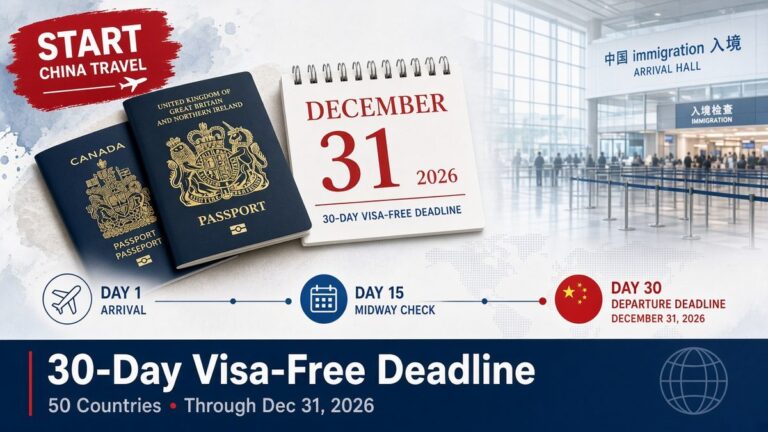
At major hubs, many European and Asia-Pacific passports now clear under the unilateral 30-day visa-free track through late 2026—when NIA admits you under that category you are not “transit” in the TWOV sense. Full country tables live in our China visa-free list 2026 and 30-day visa-free countries hub.
Travelers from these nations typically use standard immigration lanes. Holding a printed copy of the latest official announcement in Chinese can assist in resolving disputes with airline agents who may not see the 2026 extension in their local systems.
Is 240-hour transit still the right tool?
For passports not on the 30-day unilateral list—think USA, UK, Canada for many itineraries—TWOV remains the practical way to add a China segment without a tourist sticker, when every gate condition is satisfied. Legacy signage at some airports still says “144-hour”; boarding and entry decisions in 2026 increasingly reference the 240-hour (10-day) window at primary hubs such as Shanghai, Beijing, and Guangzhou. Anchor concepts live in the 240-hour visa-free transit policy guide.
A → B → C routing
- Region A (origin): where your flight into China begins.
- Region B (China): the approved transit cluster tied to your entry port.
- Region C (onward): a different country or region from A. Hong Kong, Macau, and Taiwan are commonly treated as separate from mainland China for this purpose.
Rejected pattern: London → Shanghai → London (round trip disguised as transit).
Greater Bay Area routing: If your TWOV story includes Hong Kong or Shenzhen, pre-book cross-border buses in English on Klook—Shenzhen Bay → Hong Kong Airport, Hong Kong ↔ Guangzhou, or Hong Kong ↔ Panyu (Chimelong). Beijing layovers can pair city tickets with a Mutianyu Great Wall round-trip bus.
To keep the whole story visible on one passenger record where possible, build multi-city tickets on Trip.com flights before you split across separate airlines.
Who should not use TWOV?
Even eligible passports fail when the operational story breaks:
- Separate tickets + checked bags: If bags are not checked through to Region C, you may need to clear immigration to reclaim them—while the first carrier may refuse boarding if they cannot see TWOV eligibility in their tools.
- Technical stops: A domestic tag-on before your declared hub (for example a stop in a city that is not an approved TWOV port) can start—or break—the transit clock in ways you did not intend.
- You plan to visit multiple zones: You cannot enter via Shanghai and fly out of Beijing. This requires a standard tourist visa.

Region locking: where you may actually travel
TWOV permits bind you to provincial administrative clusters. Leaving that cluster on the same transit admission is an immigration violation—fines, bans, and exit audits are on the table.
| Transit cluster | Typical permitted area | Port examples |
|---|---|---|
| Yangtze Delta | Shanghai, Jiangsu, Zhejiang | PVG, SHA, HGH, NKG |
| Jing-Jin-Ji | Beijing, Tianjin, Hebei | PEK, PKX, TSN |
| Pearl River Delta | Guangdong Province | CAN, SZX |
Additional ports and inland hubs are rolled out on NIA schedules—when your route depends on a secondary airport, verify it against the current official list before ticketing.
Intra-cluster high-speed rail sells out on holidays; hold seats as soon as your date enters the sales window via Trip.com China trains (booking walkthrough).
Step-by-step arrival discipline
- Find the desk: Follow blue “24/240-hour transit” style signage to the correct counter.
- Digital pre-filing: Complete passport scan and any electronic arrival card steps at kiosks when directed.
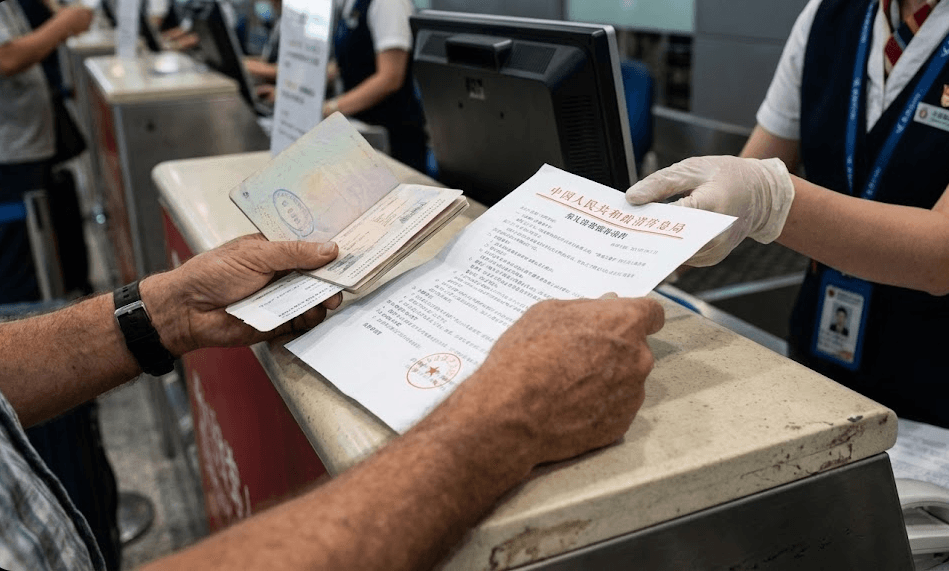
- Paper: Carry printed hotel and onward flight records—officers may refuse to adjudicate from a phone gallery if PNR lookup fails.
- PSB registration: Licensed hotels register guests electronically; private stays usually require a PSB visit within 24 hours with host documents.
Book properties that accept foreign passports on Trip.com hotels and verify Policies → Guests accepted—see foreigner-friendly hotel steps.
Digital readiness: Alipay, eSIM, VPN
Mainland services assume QR wallets. Link Visa or Mastercard inside Alipay and WeChat Pay before departure; run a tiny test charge on home Wi-Fi so your bank does not block China.
Connectivity: Roaming Trip.com eSIM or Airalo keeps maps and messaging alive without fighting hotel captive portals.
VPN: If hotel Wi-Fi forces local routing, a pre-installed VPN prevents access interruptions. Check Surfshark for 2026 setup and read VPN legality for tourists before you rely on it for anything sensitive.

Bottom line
Pick the right port for your cluster, prove A → China → C on paper, and never treat TWOV as a nationwide visa. When in doubt, pivot to an L visa through China tourist visa guide or confirm routing with visa-free planning hub.
FAQ
Can I buy a separate Shanghai–Beijing ticket and cross zones?
No. A paid ticket does not override cluster limits on a TWOV stay. That movement normally requires a visa that covers both areas.
Are back-to-back TWOV “visa runs” safe?
Some travelers report Hong Kong turnarounds, but officers may challenge purpose of stay if patterns look abusive. Treat it as discretionary—not a hack with guarantees.
Do infants need PSB registration?
Yes—every foreign national needs lawful registration. Licensed hotels scan all passports in the room; private hosts must follow local PSB rules.
Is a VPN required if I use roaming eSIM?
Usually no for daily messaging while roaming data exits overseas. VPN still helps on hotel Wi-Fi and for laptop workflows.
What if I overstay because of a delay?
Contact exit-entry administration before the permit expires with airline documentation. Extensions are discretionary—never assume automatic grace.
StartChinaTravel earns commissions from some links on this page (Trip.com, Klook, Surfshark, Airalo) at no extra cost to you. See Affiliate disclosure and How we test.