Planning · China 2026
Is It Safe to Travel to China in 2026?
Most short tourist trips to Beijing, Shanghai, and other major hubs are routine for millions of visitors each year. Safety questions online mix real issues (traffic, scams, visa rules) with politics and outdated news. This page separates what tourists actually face on the ground from what you should verify with your government before you book.
Is it safe to travel to China in 2026? For a typical 1–2 week sightseeing trip on a valid visa or visa-free entry, following local laws and using normal city precautions, many travelers find China physically secure in major cities—with the bigger headaches being language, payments, and digital setup, not violent street crime. Your passport country’s official travel advisory may still recommend extra caution or restrictions; read that separately (see below).
Street violence against tourists in tier-1 cities is relatively uncommon compared with many global destinations, but traffic, scams, and administrative mistakes (visa overstay, wrong hotel registration) cause more real trip damage than mugging. Political and legal risk rises if you break immigration rules, work without permission, or engage in sensitive activities—not from visiting the Forbidden City on a tourist visa.
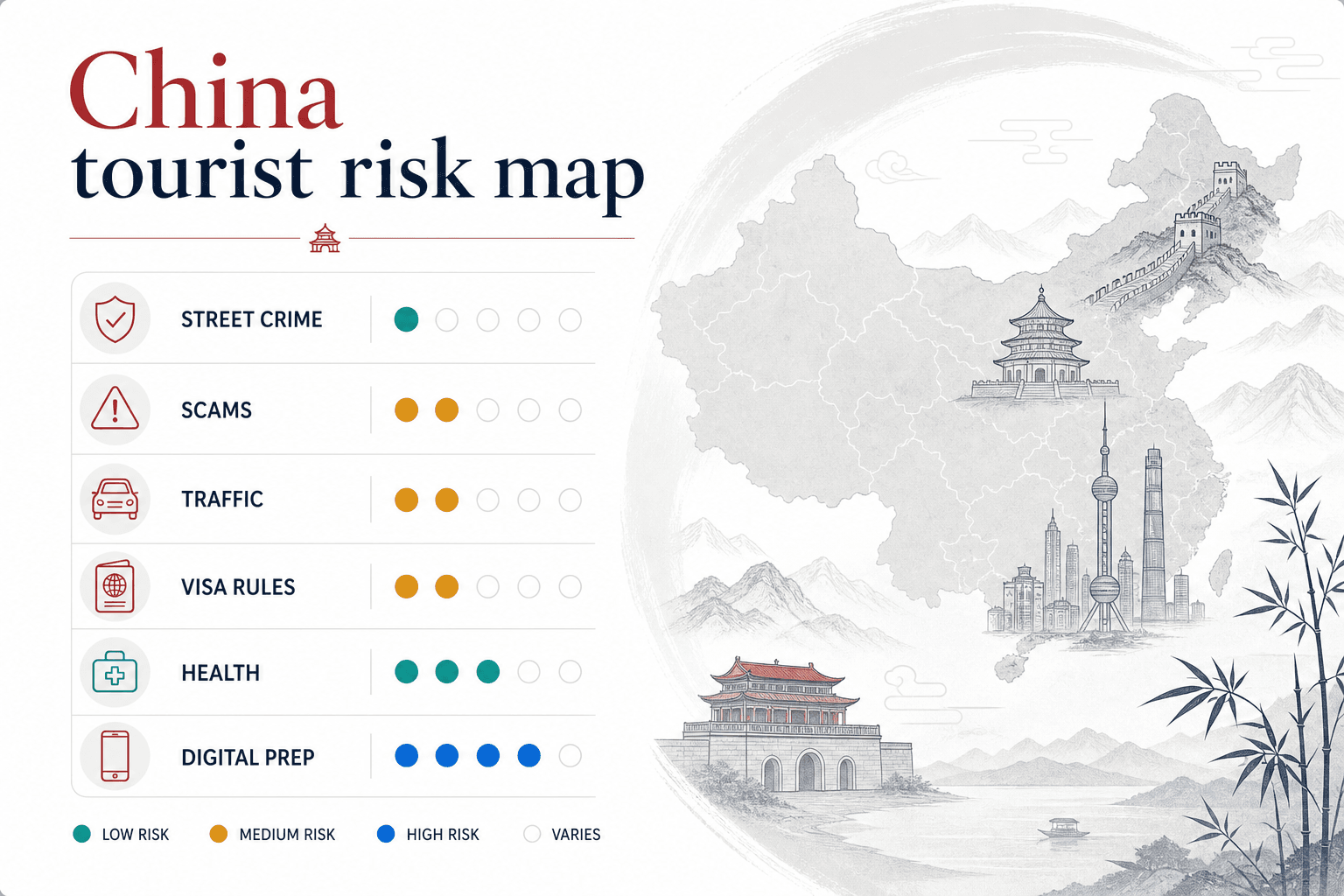
Risk map for ordinary tourists (2026)
Use this table to prioritize prep—not to scare yourself out of a trip you are legally allowed to take.
| Risk type | Typical level | What actually happens | What reduces it |
|---|---|---|---|
| Violent street crime | Low in major tourist areas | Pickpocketing in crowds; rare assaults | Normal urban awareness; secure phone/wallet |
| Tourist scams | Medium | Tea-house / art-student invites, fake “official” tour desks | Decline unsolicited invites; book via known OTAs |
| Traffic & road culture | Medium–high | Scooters on sidewalks; zebra crossings not always respected | Use metro where possible; look both ways twice |
| Visa / registration errors | Medium if careless | Overstay, wrong entry type, hotel not registering foreign guests | Match itinerary to visa rules; licensed hotels only |
| Health (food, air, altitude) | Varies by person | Stomach adjustment; smog in winter; altitude in west | Bottled water; pace yourself; check AQI apps |
| Digital / payment failure | High if unprepared | No Alipay, no maps, no train ticket without phone setup | Digital Survival Kit before flight |
| Political / legal enforcement | Low for compliant tourists; severe if non-compliant | Penalties for visa violations, prohibited activities, sensitive photography | Tourist visa scope only; follow signs; avoid protests |
Crime, scams, and harassment
Forum posts swing between “safest country I visited” and horror stories. Both can be true in different neighborhoods and years. For violent crime targeting foreigners, major tourism cities are generally reported as calmer than many Western downtowns at night—but statistics vary by source and definition, so treat superlatives skeptically.
Scams that still show up in 2026
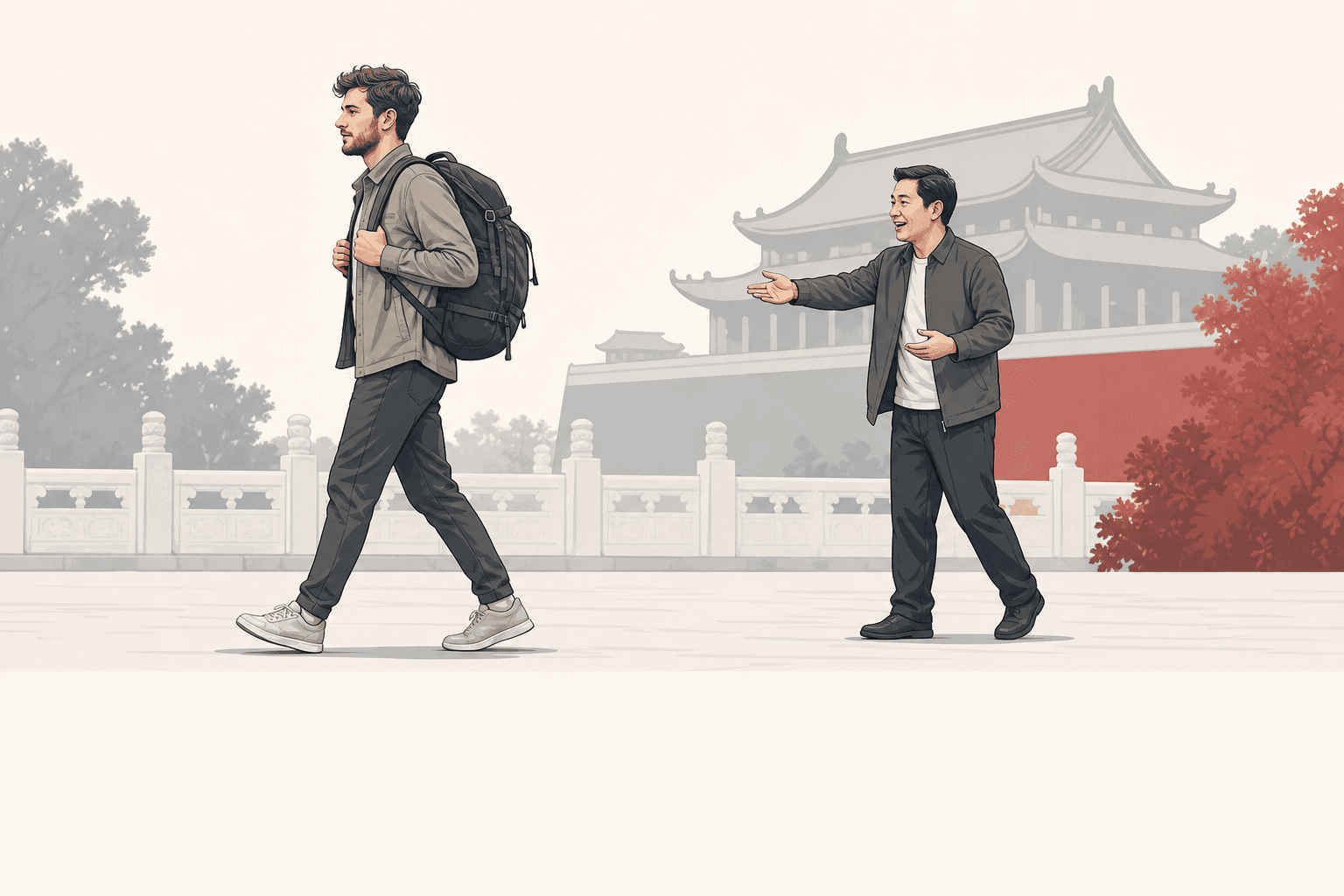
- Tea house / art student: Friendly English speaker invites you to tea or an exhibition; large bill follows. Walk away from cold approaches near tourist landmarks.
- Black taxis at airports: Unlicensed drivers at the curb. Use signed ride-hail zones or a pre-booked transfer—see DiDi & taxi guide.
- Fake “official” help desks: Especially near stations. Book trains and hotels through your own logged-in OTA tab, not a stranger’s tablet.
- Counterfeit cash (rare now): Mobile pay dominates; if you carry cash, use ATMs at major banks.
Cultural friction is not the same as crime. Read saving face (mianzi) so small disputes do not escalate.
Traffic and public space
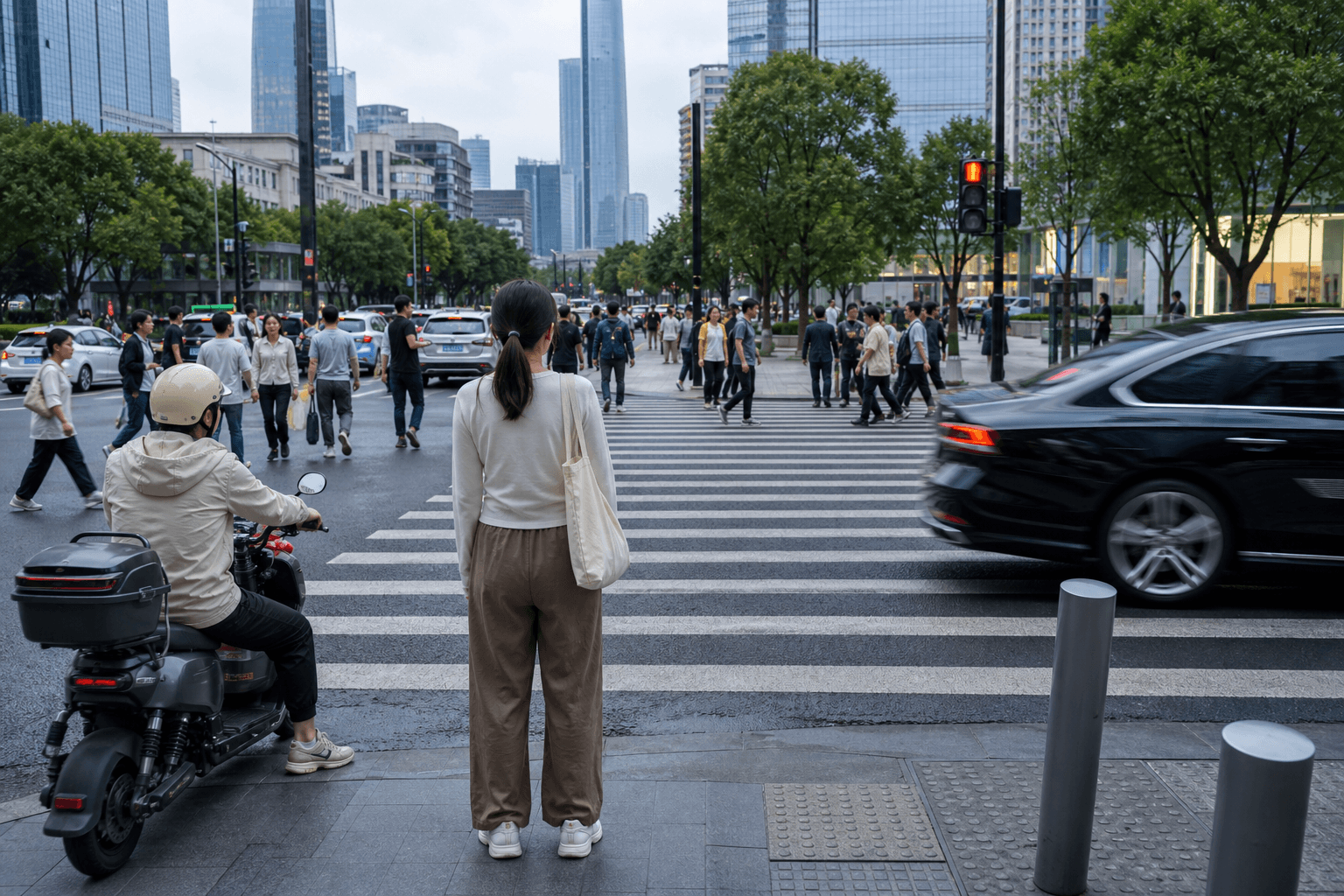
The injury risk many tourists underestimate is vehicles and e-bikes, not robbery. Crosswalks exist; yielding behavior differs from Europe or the US. Stand back from curb cuts, assume scooters may ride on the sidewalk, and use metro where your route allows—metro payment guide.
Crowds during Golden Week and Lunar New Year travel peaks add pickpocket risk and stress, not necessarily violence. See 2026 festival calendar before you lock nonrefundable hotels.
Rules, police registration, and “doing something wrong”
Tourists worry about surveillance. Cameras are widespread in cities; that is normal infrastructure, not a signal that you are a target. What does create serious problems is breaking immigration or public-order rules.
- Enter on the right document: Tourist visa, 30-day visa-free, or 240-hour transit each has different city and duration limits—visa-free country list, 240-hour transit rules.
- Stay in hotels that can register foreigners: Police registration happens through the hotel system. Unlicensed Airbnbs can leave you without legal lodging—does Airbnb work in China?
- Carry passport or secure copy: Hotels and some checkpoints may ask. Losing a passport is a bigger crisis than street crime—keep embassy contacts saved offline.
- Photography: Avoid military installations, airports beyond public areas, and police operations. When in doubt, stop filming.
- Drugs, weapons, unauthorized work: Zero-tolerance territory. Tourist activities only.
- VPNs: Tourists commonly use VPN apps for email and maps; understand limits—is using a VPN illegal for tourists?
High-profile cases often involve business disputes, immigration violations, or activities outside tourist visas—not ordinary museum itineraries. That does not mean risk is zero: comply with your entry conditions, keep embassy registration optional programs in mind, and avoid political demonstrations as a foreign visitor.
Health and environmental safety
- Tap water: Drink bottled or hotel-kettle boiled water unless locals tell you otherwise for that building.
- Food: Busy stalls with high turnover are usually safer than empty buffets. Stomach adjustment in the first 48 hours is common—ordering food guide.
- Air quality: Winter northern cities can have heavy smog; check daily AQI and pack masks if you are sensitive.
- Altitude: Trips to Tibet or high passes need acclimatization planning—not a casual weekend add-on.
- Medical care: International clinics exist in tier-1 cities; carry travel insurance that covers evacuation if you have chronic conditions.
Emergency numbers (mainland): 110 police · 120 ambulance · 119 fire. English ability on these lines varies; hotel front desks often coordinate faster for tourists.
Solo travelers and women traveling alone
Many solo travelers—including women—report feeling comfortable walking in central districts of Beijing, Shanghai, and Shenzhen at night, especially compared with cities where street harassment is common. That is anecdotal, not a guarantee for every person or neighborhood.
Practical issues matter more than dramatic crime stats: language barriers, Alipay/WeChat setup, and getting lost without offline maps. Reduce those with our first-hour app setup and first-timer checklist.
Use licensed ride-hail with in-app trip sharing where available; avoid empty alleys late at night the same way you would in any megacity. For family-specific notes, see China family travel.
Government travel advisories (read yours, not a blog)
Advisory levels change with diplomacy, health events, and regional incidents. A travel blog cannot replace your foreign ministry’s current text.
- United States: Check the U.S. State Department China Travel Advisory before booking.
- United Kingdom: UK foreign travel advice for China.
- Australia: Smartraveller China.
- Canada: Government of Canada travel advice for China.
If your employer or insurer references a higher advisory level, that may affect coverage even when tourists still enter daily. Resolve that before nonrefundable tickets.
Practical prep that actually improves safety
Safety for China trips is mostly operational readiness:
- Match visa type to cities and dates (including 240-hour transit zone rules if applicable).
- Book cancellable hotels on platforms that show foreign-guest policies—foreigner-friendly hotels. If the desk cannot find your booking, use front desk not found steps.
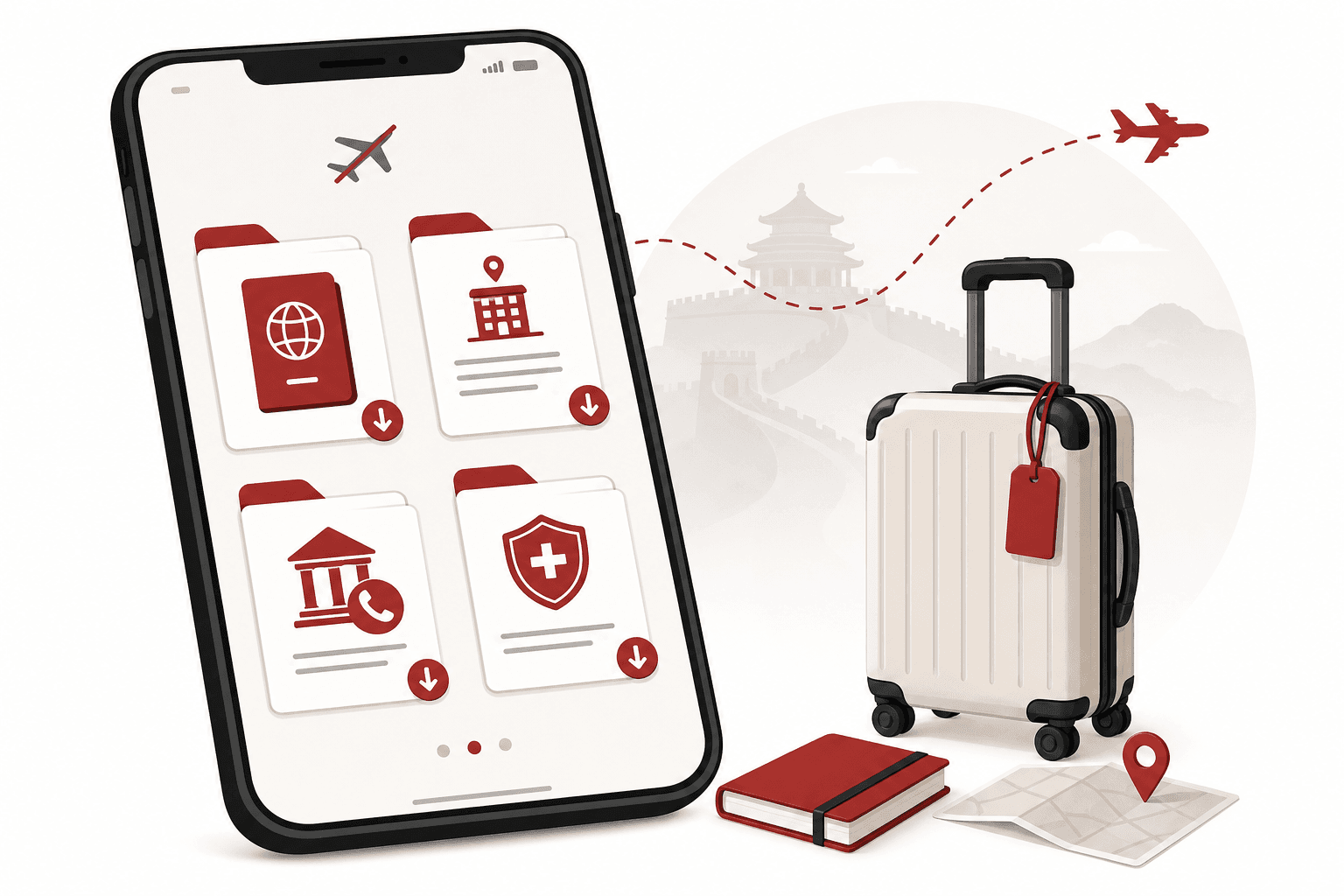
- Install VPN + eSIM + Alipay before departure via Digital Survival Kit.
- Save offline: passport scan, hotel addresses in Chinese, embassy phone, insurance policy number.
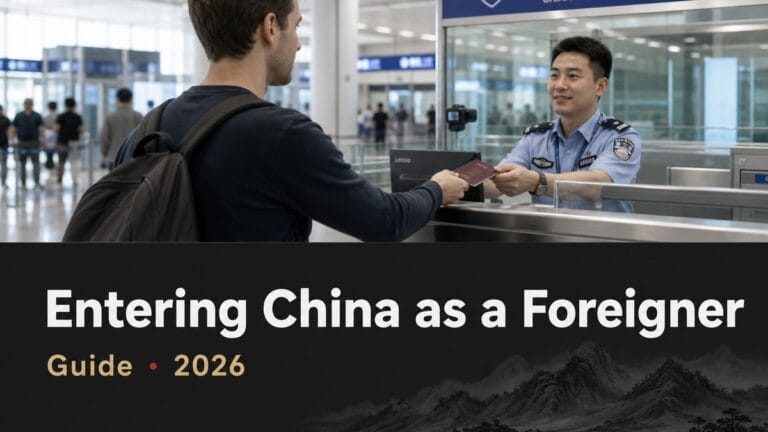
- Follow airport entry flow on landing—entering China as a foreigner.
- Timeline: how to prepare week-by-week.
Political headlines rarely cancel your flight the day before—personal illness or visa paperwork does. Favor refundable rates when advisories are in flux. Search Trip.com flights and Trip.com hotels from a bookmarked partner tab; compare policies on the checkout screen.
FAQ
- Is China safe for American tourists in 2026?
- Many Americans visit without incident on valid tourist entry. Check the current U.S. travel advisory, enroll in STEP if you want embassy alerts, and separate street-crime risk (generally low in tourist cores) from compliance risk (visa, registration, prohibited conduct).
- Is China safe for solo female travelers?
- Often yes in central districts of major cities, based on widespread traveler reports—but harassment and crime vary by place and hour. Prioritize payment/app setup, licensed transport, and the same urban instincts you use in any large Asian megacity.
- Is it safe to travel to China right now with the news?
- News cycles spike anxiety faster than on-the-ground tourist conditions change. Read your government advisory, talk to your insurer, and avoid nonrefundable spend until your visa and documents are confirmed—not because a headline scared you into canceling a lawful trip without checking facts.
- What is the most dangerous part of visiting China?
- For typical tourists, traffic and administrative mistakes (wrong visa, unregistered lodging) cause more harm than random violence. Remote adventure travel and border areas carry different physical risks than a Shanghai–Beijing loop.
- Do I need travel insurance for China?
- Strongly recommended. Public hospitals may require upfront payment; evacuation is expensive. Verify your policy does not exclude China at your advisory level.
- Are protests or political tension a tourist safety issue?
- Foreign tourists should avoid demonstrations and sensitive photography. Day-to-day tourism in approved areas continues for millions of visitors; your obligation is to stay within your visa scope and local law.
We may earn a commission from Trip.com partner links. Advisory levels and laws change—verify with official sources before you travel. See How we test.