
Travel trend · Rural & markets · 2026
Everyday China Travel: Rural Markets & Village Life (2026)
Foreign travelers are sharing more morning markets, county towns, and tea hills under the label “Everyday China.” It is an emerging, social-media-amplified interest—not yet a standardized mass-tourism product. Here is what is realistic, respectful, and logistically doable.
Bottom line: treat “Everyday China” as curiosity about ordinary life—wet markets, small restaurants, village lanes—not a packaged “authentic China” tour category. Plan around payments, language, and getting back to a city hub; do not assume rural areas are set up for foreign visitors the way major scenic zones are.
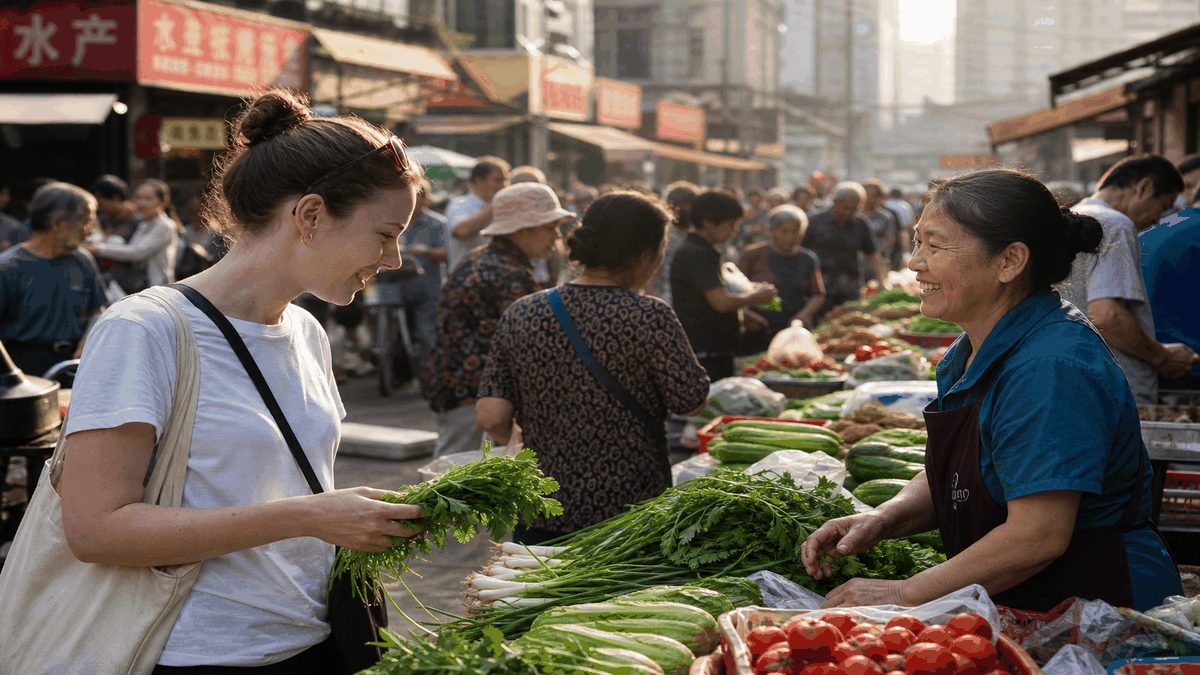
What travelers mean by “Everyday China”
On short-video platforms and travel blogs, “Everyday China” usually means life outside the landmark checklist: breakfast noodles at a neighborhood shop, a county-level morning market, a bus ride through rice terraces, or a family-run tea farm visit arranged informally.
It overlaps with—but is not the same as—official rural revitalization tourism (农家乐, homestays, designated scenic villages). Government and provincial campaigns promote countryside travel; foreign-facing inventory is still patchy compared with tier-one city hotels and A-level scenic sites.
If your goal is efficient sightseeing, stay with city hubs and day trips. If your goal is texture and food, layer one or two “everyday” stops onto an existing route rather than building a whole trip around remote villages without a local contact.
Social-media trend, not a mass industry (yet)
Several signals suggest this is growing in attention but not yet a mature, foreigner-ready sector:
- Content-led demand: many posts are filmed in cities or well-known towns (Chongqing alleys, Yunnan old towns, Fujian tea areas) where transport and mobile pay already work.
- Limited English infrastructure: rural bus apps, clinic signs, and market scales are often Chinese-only; expect more gesture and translation app use than in Shanghai or Beijing.
- No single booking standard: unlike high-speed rail or chain hotels, village homestays may be booked via WeChat, phone, or walk-in—terms vary by host.
- Seasonality: harvest festivals and holiday weekends can crowd county towns; mid-week mornings are often calmer for markets.
Where foreigners realistically add an “everyday” day
You do not need to disappear into remote mountains to see ordinary life. Common additions that match the trend without extreme logistics:
| Base city / hub | Everyday-style stop (examples) | Why it works for foreigners |
|---|---|---|
| Hangzhou / Suzhou | Tea villages (Longjing, Biluochun areas), suburban wet markets | Metro + taxi range; tea tastings often marketed to visitors |
| Chengdu / Chongqing | People’s Park tea house, neighborhood hotpot, nearby county markets | Strong food culture; many hosts used to tourists |
| Kunming / Dali / Lijiang corridor | Village markets, farm-to-table meals (book via guesthouse) | Established backpacker path; English more common in guesthouses |
| Xi’an | Morning market near residential blocks (not only Muslim Quarter) | Walkable from city center with map apps |
| Guangzhou / Foshan | Dim sum at local teahouses, wholesale market edges (watch belongings) | Cantonese food scene; good rail links across Pearl River Delta |
Deeper countryside—single-bus-per-day townships, homestays without online listings—can be rewarding with a trusted local contact or licensed guide. Without that, keep a same-day return plan to a city with hotels and transport desks.
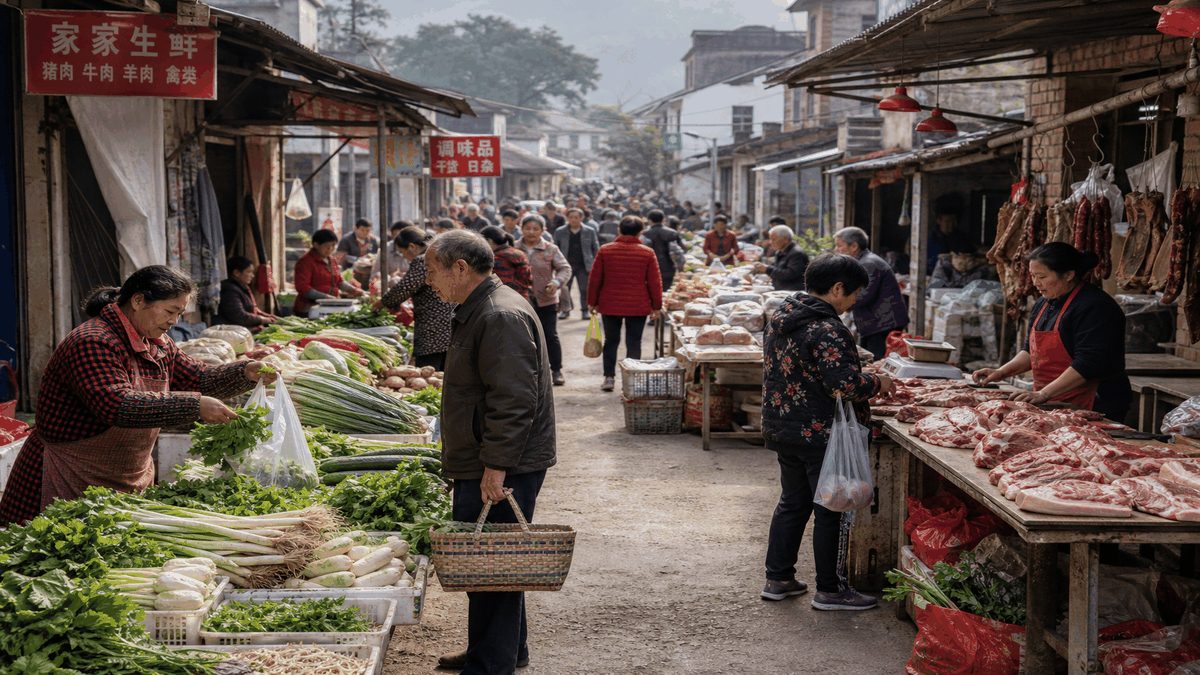
Morning markets: what to expect
Wet markets (菜市场) are the backbone of “everyday” content: live fish, butcher counters, seasonal fruit, pickled vegetables, and cheap breakfast stalls. For foreign visitors:
- Go early (often 6:00–9:00 local time) for the busiest, most photogenic hour—check locally; hours are not standardized nationwide.
- Pay by mobile at many stalls; small change helps at the oldest cash-only vendors. See our China payment guide.
- Point-and-buy for fruit and snacks; use translation for allergens if you have restrictions.
- Ask before filming people; close-ups of faces and children draw more pushback than wide stall shots.
- Food safety: busy stalls with high turnover are a common traveler heuristic; it is not a guarantee—use your judgment on raw vs cooked items.
For sit-down meals ordered from QR menus at market-adjacent eateries, our ordering food in China guide covers Scan flows and delivery apps.
Transport, maps, and payments
Rural legs usually stack high-speed rail or intercity bus + taxi/Didi + walking. County towns may have no English at the bus station window; screenshot your destination in Chinese characters and show the clerk.
- Rail first: book intercity trains early on holiday weeks; see our transportation guide for foreigners.
- Maps: Baidu or Amap (Gaode) often beat Google Maps for village roads inside China.
- Cash backup: keep some RMB; not every tea farmer or minibus accepts foreign cards.
- Connectivity: rural LTE can be weak; download offline maps and payment screenshots before you leave the hotel.

Etiquette, safety, and what not to romanticize
- Drone rules vary by locality; assume restrictions near military zones, airports, and some scenic authorities.
- Alcohol and altitude: some mountain counties have limited clinic English; travel insurance with medical evacuation is prudent.
- Scams: unofficial “tea ceremony” or art-shop pressure still appears in tourist-adjacent areas—polite refusal is normal.
- Waste: carry out litter where bins are sparse; it affects how welcome future visitors will be.
Visa rules still apply: a 240-hour transit or city-focused visa-free stay does not automatically mean you should cross into restricted areas without checking your permitted movement. Use our 240-hour visa-free transit hub if you are stacking a countryside day onto a layover.
FAQ
Is “Everyday China” an official tourism brand?
Not as a single foreign-facing product. You may see related domestic rural-tourism promotion, but the English hashtag trend is mostly creator-driven, not a unified national campaign aimed at inbound package tours.
Can I visit a village without speaking Chinese?
Near major cities, often yes for a short market or tea visit—especially with translation apps and a mapped taxi route. Deeper villages are easier with a bilingual guide or local host.
Do rural stalls take Alipay / WeChat Pay?
Many do, but not all. Set up mobile pay before you leave your hotel; keep cash for older vendors. Troubleshooting: Alipay / WeChat Pay not working.
Is it safe to eat street food at county markets?
Millions of locals eat there daily; travelers usually focus on busy cooked-food stalls and personal tolerance. We are not giving medical advice—use common sense and any dietary restrictions you have.
How many “everyday” days should I add to a first China trip?
For a first visit, one or two half-days (market + neighborhood meal, or tea village) often deliver the mood without risking missed trains or visa-area mistakes. Build the skeleton in a city hub first.
This page has no commercial booking links. For trains, hotels, and apps after you pick a base city, see our site hub and transportation guide linked above.