
China Travel Friction Points (2026): Cashless, Crowds, Noise, Rules — Survival Fixes
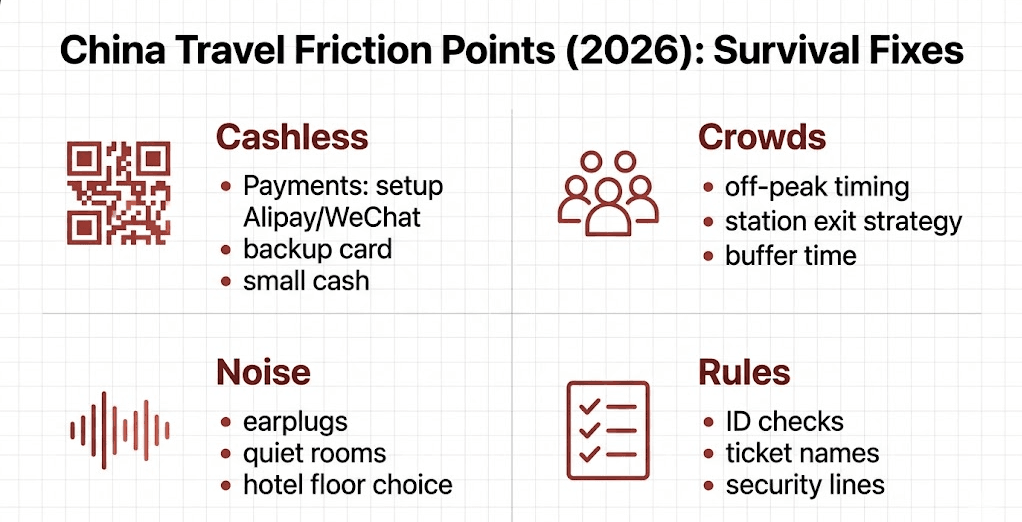
Your goal isn’t to “figure out China” on day one. Your goal is to get online, pay once, navigate once, and sleep. Everything else can wait.
The 30-second reality check (run this before you leave Wi‑Fi)
Run this once and you’ll dodge most day-one chaos. It’s not glamorous. It’s effective.
Friction #1: Cashless by default (your phone becomes your wallet)
This isn’t a “cash vs card” argument. It’s a timing problem. If your payment app won’t load, everything slows down.
Survival fixes (do these in order)
If you want the simplest day-one setup: stable mobile data before you rely on payments, maps, or bookings.
Not for you if your phone doesn’t support eSIM or you already have a working local SIM.
Friction #2: Crowds (the crowd is the delay)
China’s infrastructure is excellent. The shock is scale. A “normal” line can be 40 people. A “normal” station can have five exits that all look correct.
Survival fixes
- Add buffer time: 30–60 minutes for stations, security lines, and major attractions.
- Plan the exit, not just the station: your map should end at “Exit B,” not “the station.”
- Go off-peak: do your “must-do” early; leave flexible items for mid-day.
Friction #3: Noise (the city doesn’t whisper)
If you’re from a “quiet by default” country, the first week can feel loud. This isn’t a moral issue. It’s a sleep issue.
Survival fixes
- Pack earplugs. Small, cheap, effective.
- Ask for a higher floor, away from elevators. Hotels understand this request.
- Pay for quiet if you need it. The cheapest room is often the loudest one.
Friction #4: Rules (ID checks, security, and name matching)
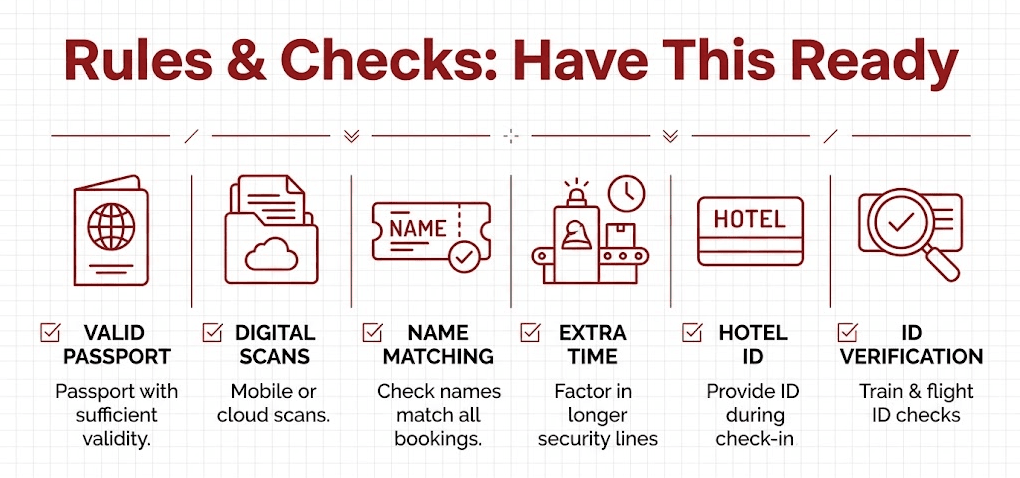
“Rules” doesn’t mean you’re in trouble. It means the system expects paperwork and time.
Survival fixes
- Name matching: your booking name should match your passport. Middle names and spacing can matter.
- Passport access: don’t bury it at the bottom of your luggage.
- Expect screening: add time for security lines and ticket checks.
Cheat sheet: Friction → Fix
If you remember nothing else, remember this table. It turns “culture shock” into “oh, I have a plan.”
Do you need a VPN for this topic?
Not for payments. Not for trains. Not for most Chinese apps. You want a VPN if you depend on blocked services (WhatsApp, many Google services, etc.).
Install and test before you fly. Doing it after landing can be annoying when you’re tired.
Not for you if you never use blocked apps and you only need logistics (payments, transport, food, hotels).
Frequently Asked Questions
What are the biggest China travel friction points for first-timers?
For most foreigners in 2026: cashless payments, crowds and queues, noise, and rules (ID checks and security screening). The fixes are mostly logistics—stable data, payment setup, buffer time, and documents ready.
Do I need cash in China in 2026?
Carry a small backup amount for day one. China is heavily cashless, but when verification or cards fail, cash buys time while you fix Alipay/WeChat.
How much buffer time should I add in China?
Add 30–60 minutes for stations, security lines, and major attractions—especially on weekends and holidays.
What documents should I keep ready?
Keep your passport accessible, have digital scans offline, ensure booking names match your passport, and plan extra time for security screening and ID checks at hotels and transport hubs.