
Finding a Job in China (2026): Platforms, Keywords & Work-Visa Basics
Living & Working · Expat Careers
Finding a Job in China (2026): Platforms, Keywords & What to Ask
If you are looking for a job in China and getting silence, the issue is often channel mix—not effort. Match the platform to your target (multinational, local employer, or English-first entry role), then tighten profile, keywords, and work-permit questions before you accept.
Bottom line: Pick the right job pool first, then go deep. Multinationals live on LinkedIn and company career pages; many local roles appear only on Chinese apps such as BOSS Zhipin and Liepin; English-friendly entry pipelines cluster on expat boards. Tourist or visa-free entry is not a substitute for legal employment authorization.
Not legal advice. Employment in China generally requires employer-sponsored work authorization and a work-type residence permit—not a tourist visa or visa-free transit used for sightseeing. Official framework: Rules on Employment of Foreigners in China (gov.cn) and the foreign work permit service guide published via competent authorities. Rules and salary thresholds change by city—confirm with your employer and immigration counsel before relocating.
Why applications go unanswered
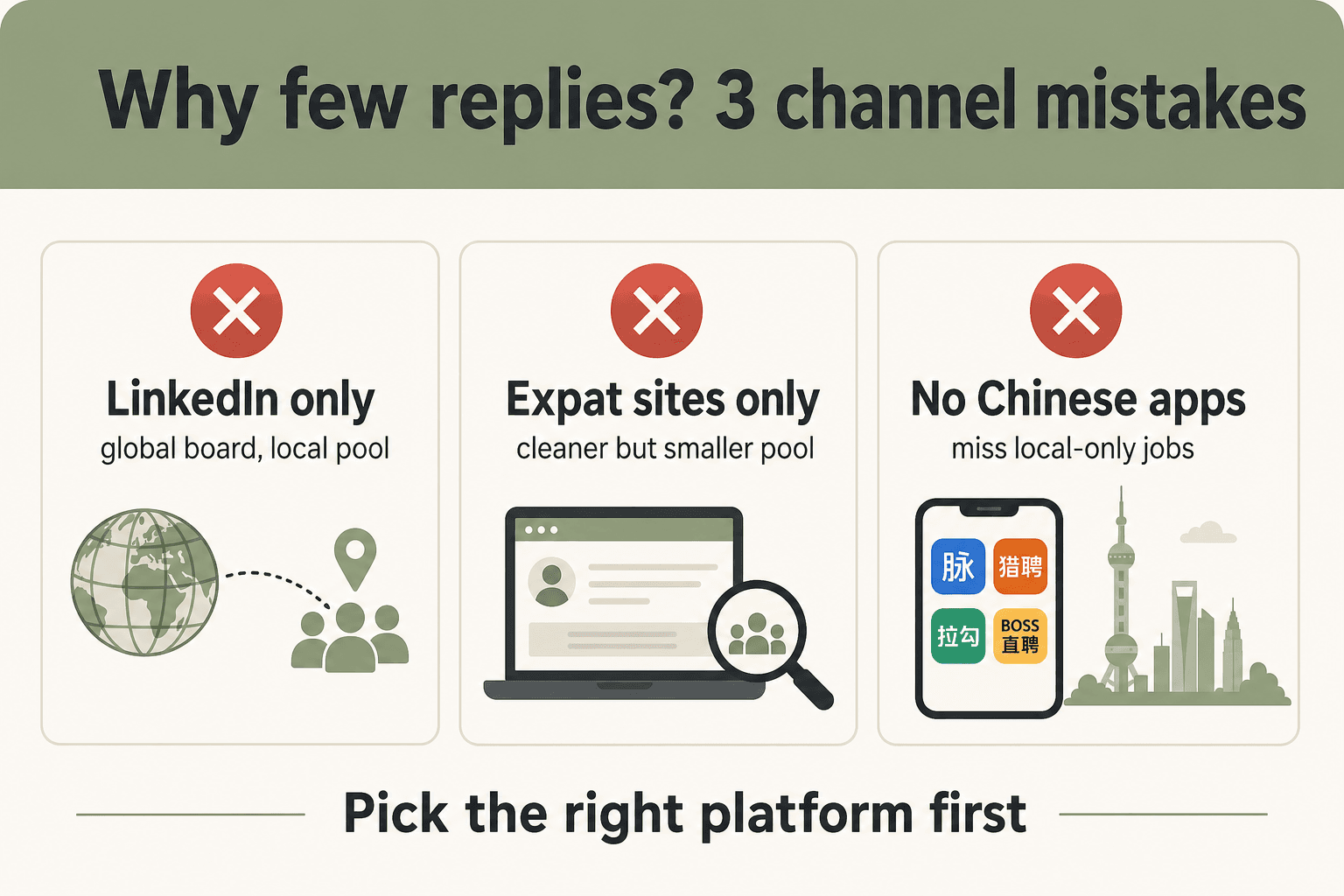
Three patterns show up again and again when foreigners are looking for a job in China but only hear crickets:
- LinkedIn only. Strong for global brands and senior roles; weak as your only channel for many onshore openings that never get posted there.
- Expat boards only. Cleaner English and filters, but a smaller inventory—fine as a lane, not as the whole strategy.
- Skipping Chinese apps. A large share of local hiring still runs on domestic platforms. If you never open them, you never see those listings.
Low reply rates often reflect where you search, not how hard you apply. Fix the platform mix, then scale volume.
Pick platforms by your situation
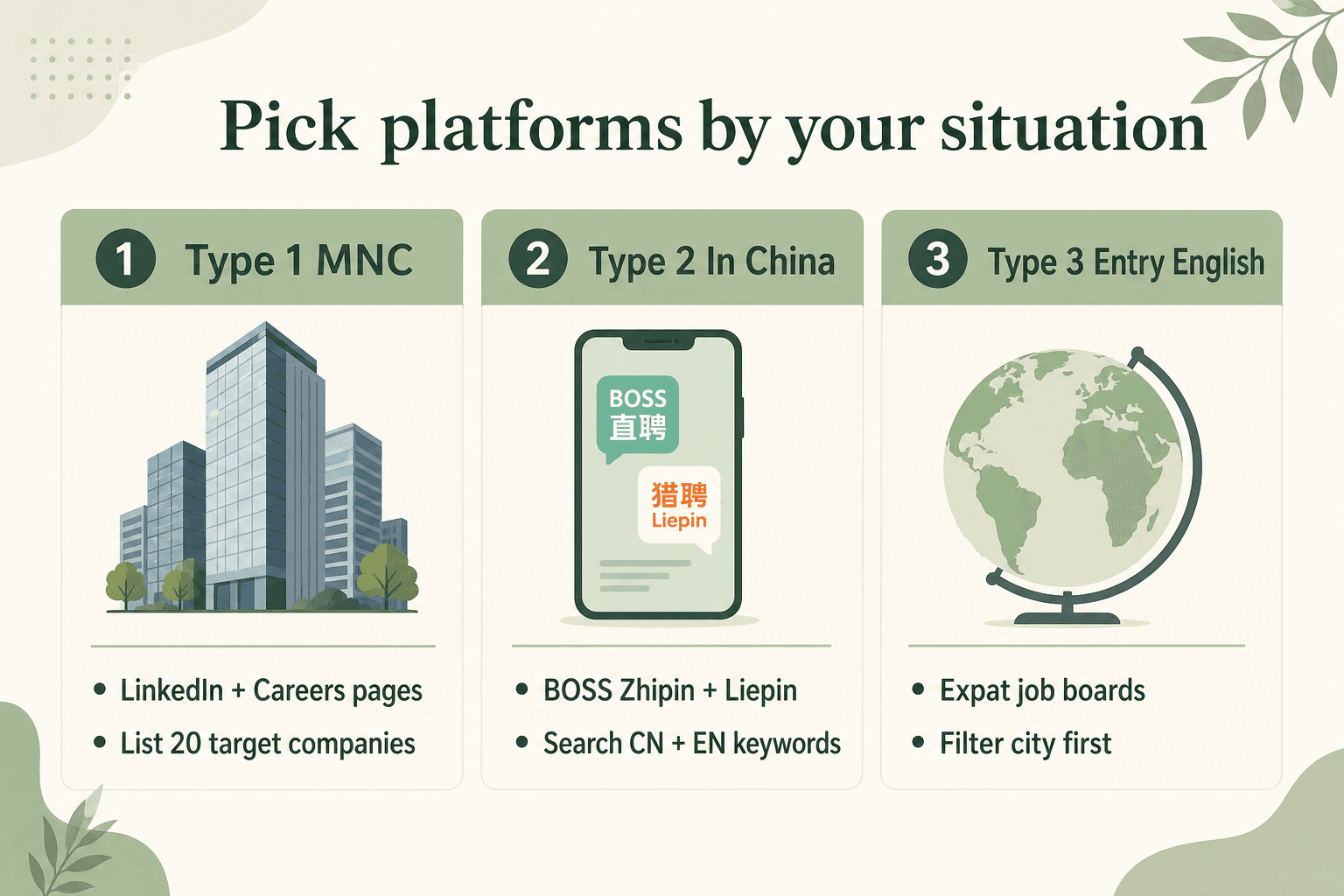
Use this routing before you mass-apply. UI labels on apps change; treat names below as common English labels recruiters use.
| Your profile | Start here | Practical move |
|---|---|---|
| Type 1 — MNC / global team Formal hiring, English process | LinkedIn + target employers’ Careers pages | List ~20 target companies; copy exact job titles from their sites into your alerts. |
| Type 2 — Already in (or moving to) China Comfortable with local apps | BOSS Zhipin (Zhipin) + Liepin | Search the same role in Chinese and English (e.g. 市场 + Marketing, 运营 + Operations). |
| Type 3 — Entry / English-first | eChinacities, LaowaiCareer, SmartShanghai (if Shanghai-based) | Filter city first, then title—cuts noise on smaller boards. |
Five foreigner-friendly websites (how to use each)
These boards are useful when you are looking for a job with English-friendly screening—but treat them as part of a stack, not the entire market.
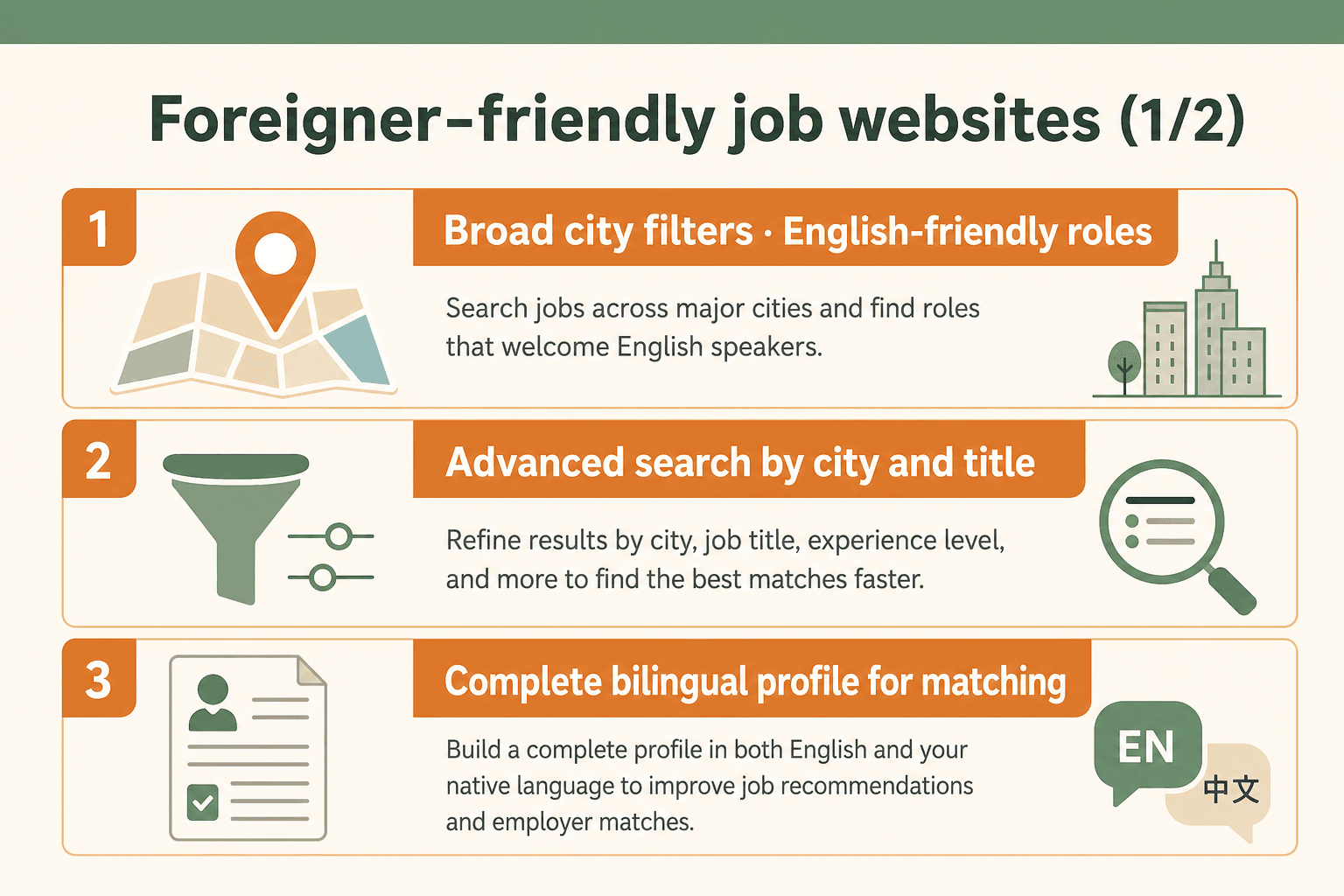
1) eChinacities
Broad city coverage; many listings assume English in the workplace. Filter by city and category, then prioritize posts that mention an English environment or international team.
2) LaowaiCareer
Smaller volume than mega-boards, but filters are straightforward when you already know your title. If your app shows an advanced search, narrow by city, industry, and role together.
3) HiredChina
Works best when you can maintain both English and Chinese CV versions and a complete profile (education, experience, certifications) so matching tools have signal.
4) SmartShanghai
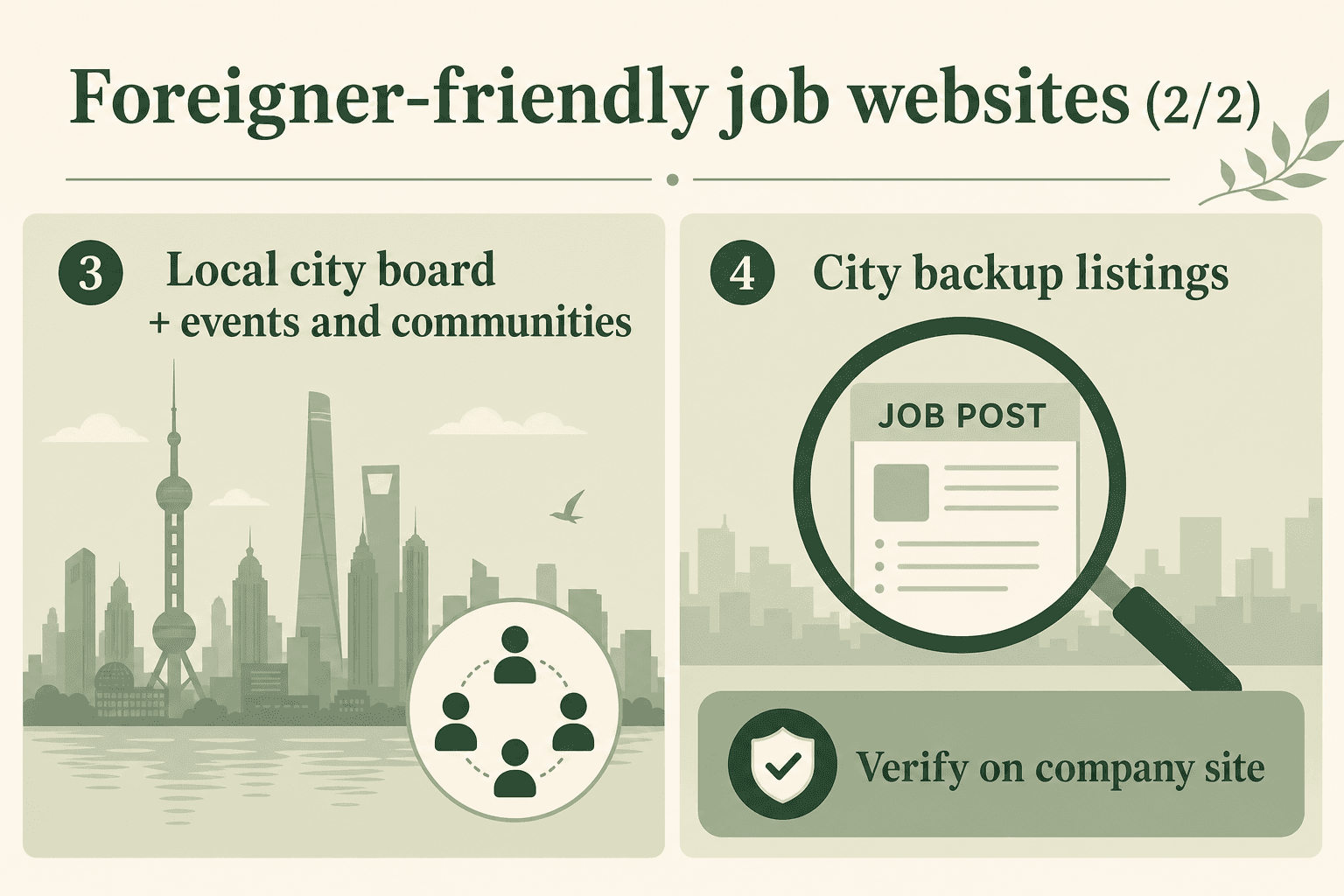
Strong Shanghai local context—jobs, events, and community. Do not stop at the Jobs tab; events and community posts sometimes surface roles that never hit a board.
5) JobsInShanghai / JobsInBeijing (and similar city sites)
Use as a backup pool, not your only source. After you find a post, cross-check the employer’s site or LinkedIn in case the listing is stale or reposted.
Chinese apps: what to expect
BOSS Zhipin and Liepin are chat-heavy. Recruiters often expect fast back-and-forth in-app. If your phone shows Chinese-only menus, pair the app with translation and ensure wallets/maps are set up for interviews on the ground—see WeChat Pay setup for foreigners and first-hour app setup in China if you are flying in for face-to-face rounds.
Interview & relocation trips (booking stack)
Face-to-face rounds and apartment hunts still need the same infrastructure tourists use—just with stricter hotel rules and a clear line between visitor status and work authorization. Before you fly for interviews, line up refundable transport and a hotel that accepts foreign passports; install data and payment tools before immigration.
- Flights: Book on a major OTA you can manage changes in—interview dates slip often.
- Hotels: Filter for properties licensed to host foreigners; keep confirmation PDFs offline.
- Ground transport: Preload DiDi and a China-capable map; airport pickup reduces day-one stress.
- Data & blocked apps: Travel eSIM plus VPN if you rely on Gmail, LinkedIn, or company email on hotel Wi-Fi.
Step-by-step filters and red flags: foreigner-friendly hotels in China · how to prepare for China in 2026 · first-hour app setup.
Use the official Trip.com app from your phone’s store or bookmark the partner links above—avoid “official” links in cold DMs. Prices and cancellation rules are shown at checkout.
Tips to get more replies
- Complete your profile: current city, immigration status (if the form asks), earliest start date.
- Tailor each application: align job title, three keywords from the posting, and one line tying your experience to the role.
- Use JD wording: mirror skill terms from the job description for screening systems—do not invent a separate keyword list.
- Reply quickly on chat apps: many local flows are real-time; same-day responses are commonly expected (exact UI varies by platform).
- Track in a spreadsheet: role, date, channel, stage, and outcome—review weekly so you double down on what converts.
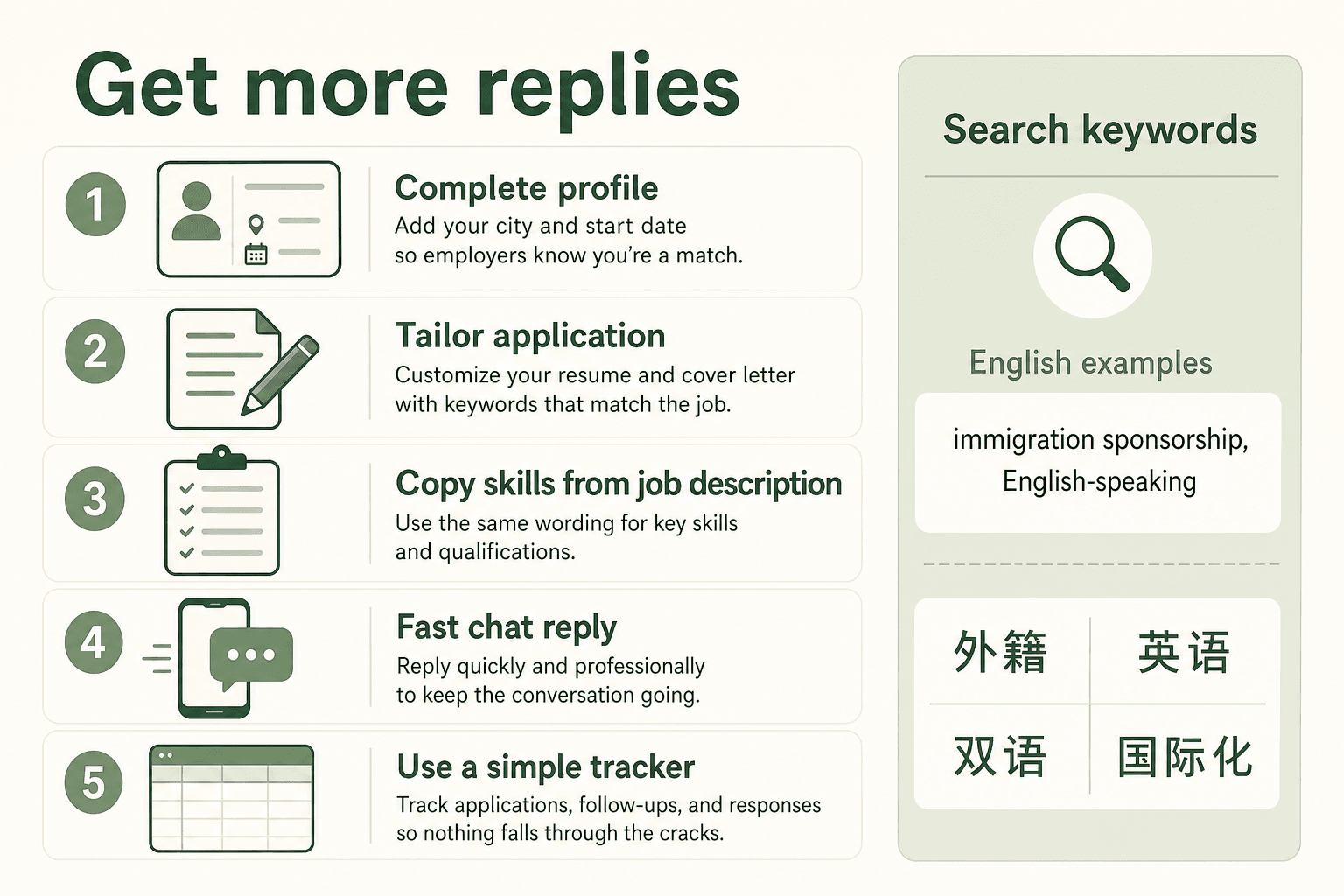
Search keywords (English + Chinese)
When finding a job in China, combine city + role + one signal word. Examples travelers and recruiters often use in postings (wording varies; not an official dictionary):
| English (examples) | Chinese (examples) |
|---|---|
| immigration sponsorship · job permit · English-speaking · relocation | 外籍 · 英语 · 双语 · 国际化 |
Sample pattern: Shanghai + Marketing + English-speaking or 上海 + 市场 + 双语. Run both languages on local apps if you read either.
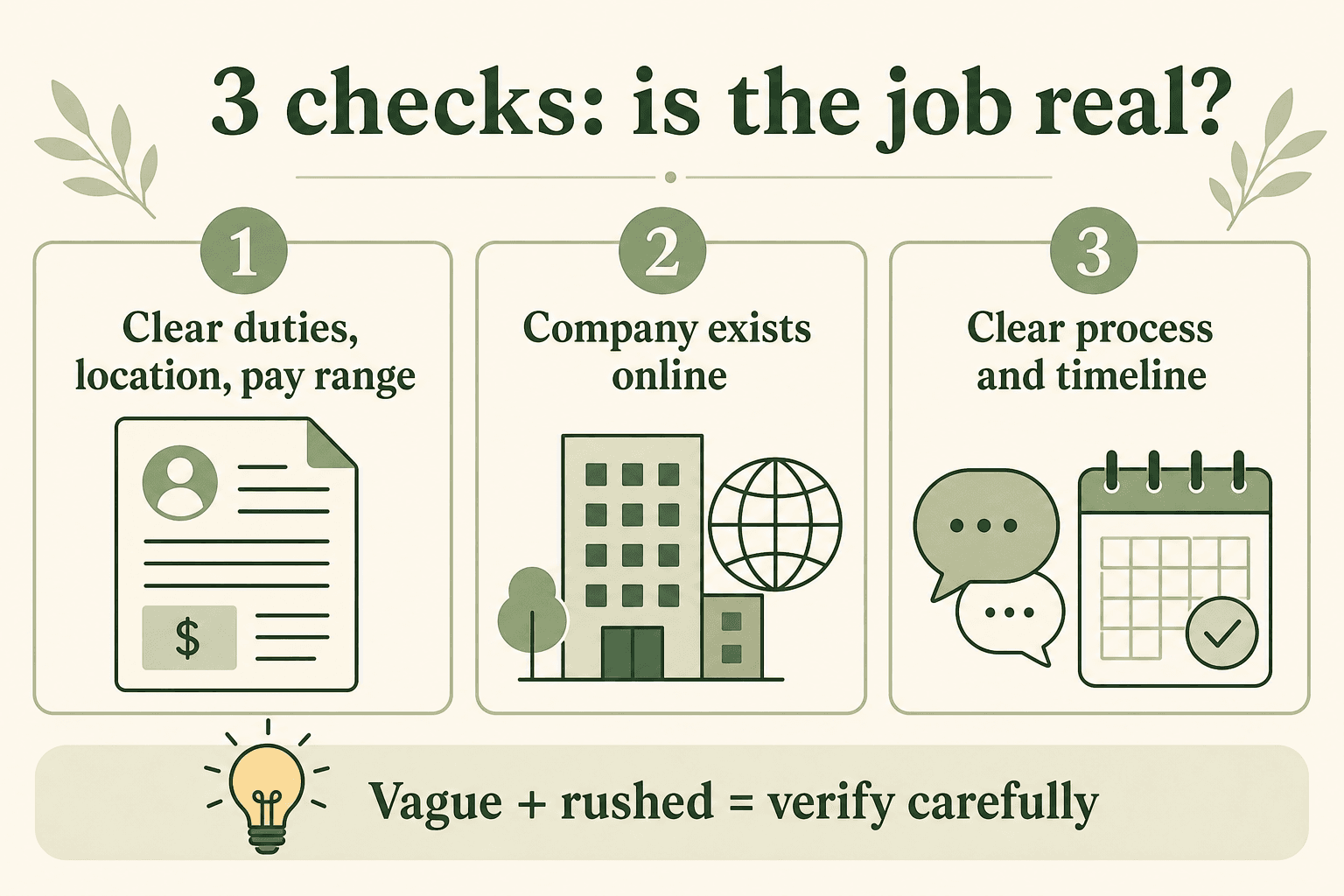
Three checks: is the listing credible?
- Job description: Are duties, requirements, location, and pay range stated clearly?
- Company: Do they exist on an official site or LinkedIn? Any verifiable footprint beyond the ad?
- Communication: Can they explain process, documents, and timeline without pressure or vagueness?
Quick rule: the vaguer and more rushed it feels, the more carefully you verify—especially before sharing passport scans, paying “training fees,” or quitting your current job.
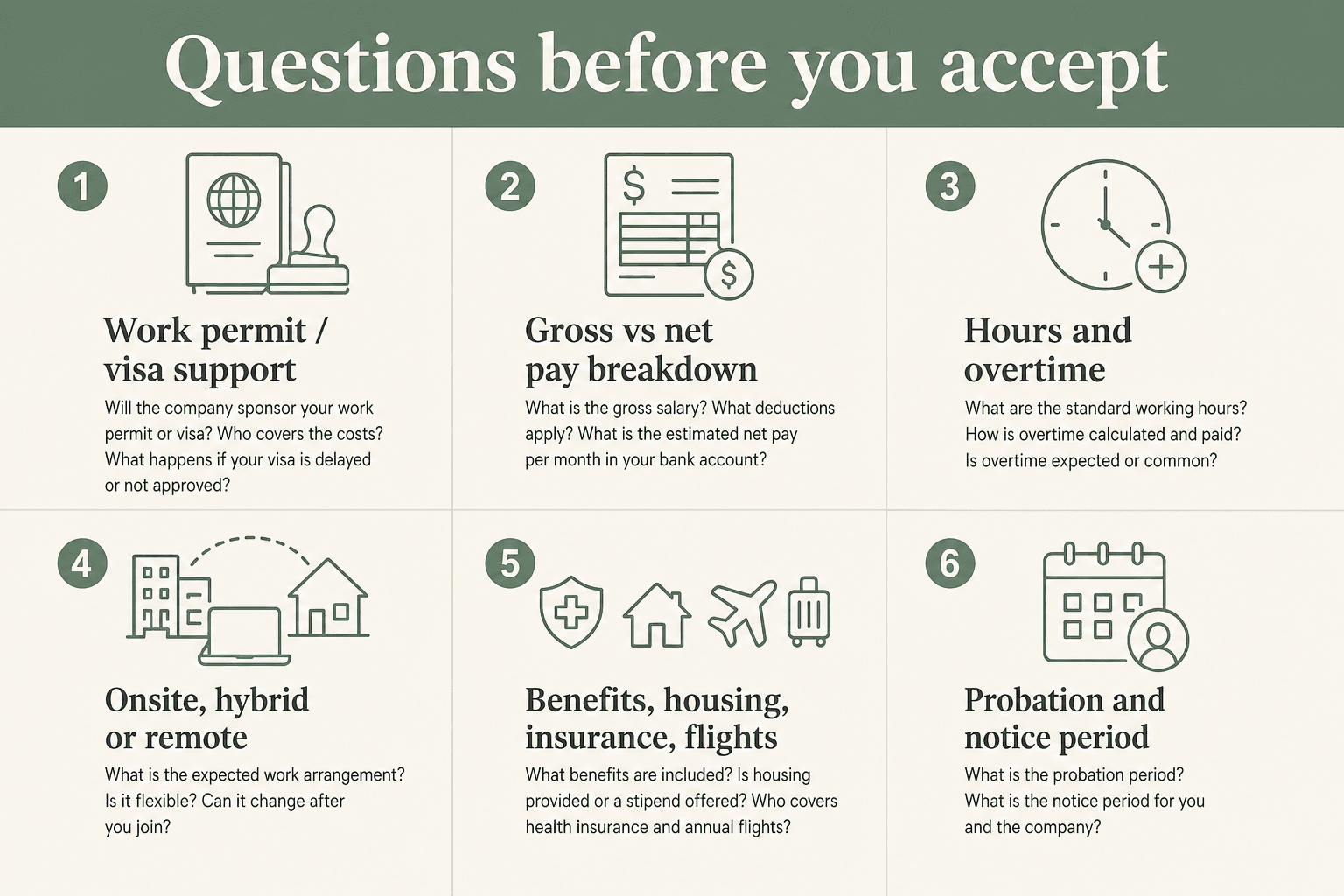
Questions to clarify before you accept
Once a role looks real, nail down terms in writing (offer letter or contract draft):
- Immigration support: Will the employer sponsor work permit / residence permit processing? Who pays which fees?
- Pay structure: Gross or net? Base, bonus, and allowances separated?
- Hours & overtime: Standard schedule, overtime frequency, comp time vs pay.
- Work setup: Onsite, hybrid, or remote—and whether that can change after onboarding.
- Benefits: Housing, relocation, private medical, flight home leave—whatever applies to your level.
- Contract basics: Probation length and notice period for resignation.
Work permit basics (do not confuse with tourism)
Legal employment generally requires the employer to initiate work authorization; you then align visa and residence status with that approval. Tourist L visas and 240-hour visa-free transit are for eligible short visits—not a workaround for full-time work. For visitor rules vs relocation, compare China tourist visa (2026 overview) and visa-free country lists with what your HR and immigration adviser quote for your nationality.
Salary and category rules shift. Cities such as Beijing and Shanghai have tightened salary-based work-permit pathways in 2026 reporting—thresholds are tied to local average wages and employer category. Treat any number you see online as a pointer only; your employer’s legal team should confirm the live requirement on the official application system.
FAQ
Can I find a job in China while on a tourist or visa-free visit?
You can network and interview in many cases, but starting work requires proper work authorization arranged with an eligible employer—not overstaying a visitor status. Book refundable flights and foreigner-accepting hotels until an offer is signed; see interview trip booking above. Confirm your nationality’s rules before you book a one-way ticket.
Is LinkedIn enough for finding a job in China?
It is a strong lane for multinationals and some regional HQs. For many local employers, add Chinese apps and at least one expat board so you are not competing in a pool they never use.
Do I need fluent Chinese?
Depends on the role. English-first teaching, some marketing, and global HQ roles exist; client-facing local teams often expect Mandarin. Search both languages on BOSS/Liepin even if you apply in English.
What is the safest way to verify a recruiter?
Match the employer domain, speak with hiring manager on company email, and refuse upfront cash requests. Cross-check the same role on the company careers page when it exists.