Culture & Tips · Dining
Chinese Banquet Etiquette 2026: Round-Table Rules That Still Matter
Metro gates scan your face; menus are QR codes—but the private dining room still runs on seating hierarchy, mianzi (face), and who pays. Sit in the wrong chair and you lose trust before the cold dishes land.
The chair with the best view in a Shenzhen skyscraper private room is usually not yours—it belongs to the chairman or guest of honor. Chinese banquet etiquette in 2026 is less about which fork to use and more about reading rank, hygiene rules, and the liquid language of tea and baijiu.
Payment apps are everywhere; mianzi (saving face) is unchanged. For corporate-specific protocol (Lazy Susan rotation, client dinners), also see our China corporate dining etiquette 2026 guide—this page covers the round-table basics every foreign guest needs.
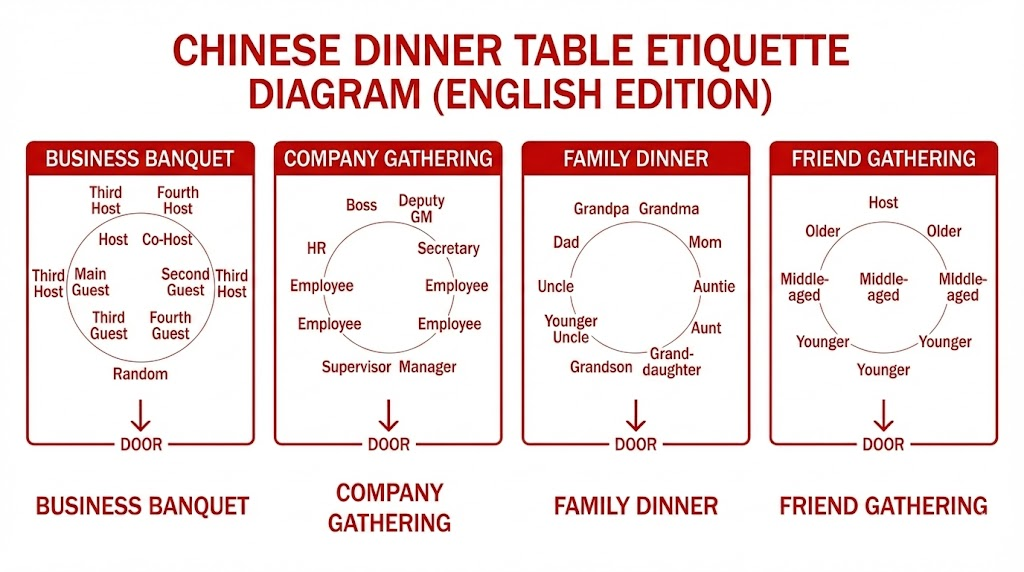
The seating map: door as north star
Do not rush to an empty chair. In Chinese banquet etiquette 2026, placement still signals standing before anyone speaks.
Zun wei (honor seat)
The zun wei is usually the seat facing the entrance or against the main wall with the widest view—reserved for the host or most senior person.
How to read the circle
- 12 o’clock (head): Host, facing the door to welcome guests.
- Guest of honor: Immediate right of the host (prestigious side for visitors).
- Second guest: Immediate left of the host.
- 6 o’clock (bottom): Logistics lead—often on a tablet managing QR orders so the host never touches the menu.
Tui rang (ritual refusal)
Stand until the host points to your seat. Locals often perform tui rang—hesitating to show humility before accepting. I once watched a Shanghai executive refuse the zun wei three times before sitting. It felt theatrical, but it established a tone of mutual respect for the entire negotiation.
Foreign guest default
Unless you are the paying host, assume you are not at 12 o’clock. Wait for the gesture. Accept with one modest refusal, not a debate.
Utensil protocol: 2026 hygiene standards
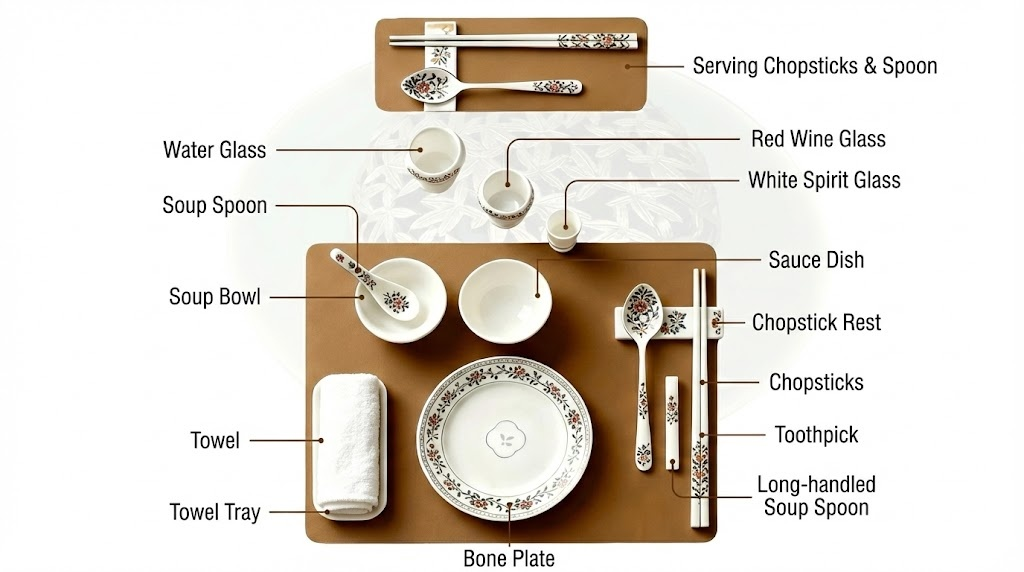
Gong kuai (public serving chopsticks) are mandatory in reputable venues. Personal chopsticks on shared platters are both a hygiene breach and a social misstep.
Taboos to avoid
- Vertical chopsticks: Never stick chopsticks upright in rice—funeral-incense symbolism.
- “Digging for gold”: Do not fish through a shared dish for the best piece; take what is nearest.
- Bone plate (gu die): Small side plate is for shells and bones only—not food you plan to eat.
Bouncing between food cities (Chengdu, Guangzhou, Beijing) for banquets? Hold high-speed rail early on Trip.com trains. You can read our guide on how to book trains on Trip.com so you are not stuck at the station. Punctuality is valued highly here.
Toasting and tea: liquid language
Tea and alcohol lubricate the relationship layer, not just the meal.
- Tea 70% rule: Fill cups to ~70%—the rest is “friendship.”
- Alcohol: Often filled to the brim to show sincerity (pace yourself).
- Finger kowtow: When a senior pours tea, tap the table twice with index and middle finger—silent thanks without interrupting talk.
- Glass height: When clinking with seniors, your rim stays lower. Tea toasts count if you do not drink spirits—height rule still applies.
- Ganbei escape: Clink lower and say nin sui yi (please drink as you wish) if you cannot empty the glass.
The bill “battle” and digital payments
Paying confers mianzi. Sitting silent while the host pays can read as social unawareness—even when you intend politeness.
2026 digital tactics
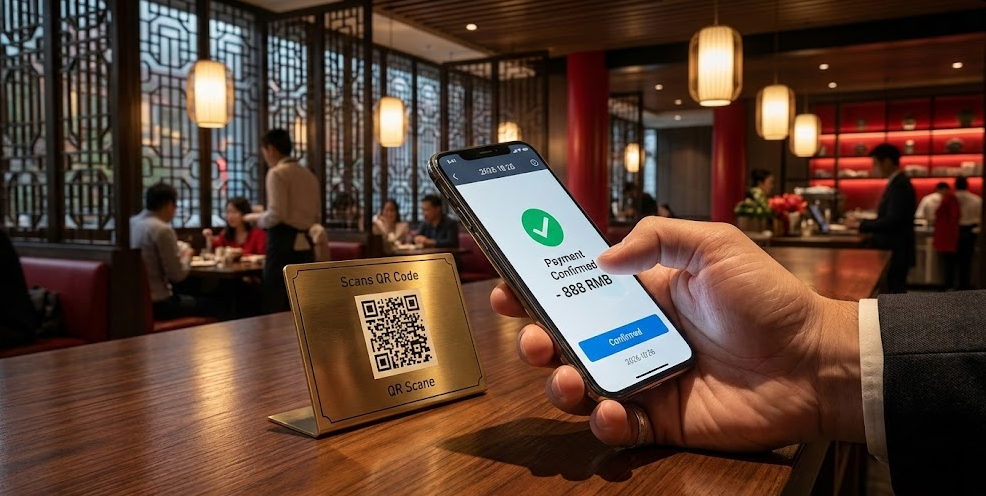
Physical bills are rare. Most private rooms settle via counter QR or staff tablet. Savvy guests excuse themselves near dessert, pay at the front desk via app, and return before the fruit plate—the modern win without a public wrestling match.
Get your stack ready before the banquet
- Link early: Alipay with foreign cards and WeChat Pay setup before you fly.
- Stay connected: Activate Trip.com China eSIM or Airalo—restaurant Wi-Fi often lags when everyone scans at once.
- Banking abroad: Large banquet charges can trigger fraud blocks. A VPN helps reach home banking apps on hotel Wi-Fi. It’s also essential for accessing geo-restricted banking apps if you need to verify a transaction.
Policy note: Visa-free entry rules, payment limits, and VPN access change by region. Verify with official sources and our 240-hour transit guide before you travel.
Choosing your battle: banquet dynamics
| Feature | Large formal banquet | Small private dinner |
|---|---|---|
| Pros | High prestige; networking; many signature dishes | Intimate; easier etiquette; flexible timing |
| Cons | Rigid hierarchy; drinking pressure | Less face gained; smaller network effect |
| App payment | Fast; supports “bathroom break” pay tactic | Deep private rooms may have weak signal |
| Counter payment | Reliable confirmation | Less discreet; public bill fight |
7-step banquet playbook
- Arrival: 3–5 minutes early; wait outside the private room for the host.
- Seating: Stand until directed; never self-seat at the honor position.
- Utensils: Public serving tools for every shared dish.
- Toasting: Lower glass rim; small sip is fine.
- Bill: Offer visibly; if you lose, send a digital hongbao later—do not split cash on the spot.
- Fruit plate signal: Sliced fruit or closing tea means wrap-up—do not leave before the host stands.
- Exit: Confirm your ride in DiDi or taxi app before final goodbyes. See how foreigners use taxis in China.
Bottom line
Master the round table and you signal guanxi literacy—not just food curiosity. Book flights and hotels near dining districts so you are not late to the room that sets the tone for everything after.
FAQ: Chinese banquet etiquette 2026
What if I am bad with chopsticks?
High-end venues often have Western cutlery. Trying chopsticks first still reads as respect; switch discreetly if you are struggling.
Is refusing alcohol rude?
Not if you participate in the toast with tea or juice and keep your glass lower. Cite health or allergy with calm confidence—never lecture the table.
How much should I contribute if I lose the bill fight?
Do not split cash at the table—it reduces the host’s face. Thank them, offer to host next time, and send a modest WeChat hongbao that evening if appropriate.
Do I tip in China?
Tipping is not expected on the mainland and can confuse staff. Service charges are often included at upscale banquets.
What is the fruit-plate signal?
When fruit or closing tea arrives, the banquet is ending. Prepare to leave only after the host stands.
What gift should I bring?
Quality loose-leaf tea or spirits work well. Avoid clocks, umbrellas, and other taboo symbols—see our Chinese gift etiquette guide.
When can I leave early?
Wait for a natural pause, whisper to the host, and exit discreetly. Never announce a hard deadline at the table.