Destinations · Second-tier cities · 2026
China Dark Horse Cities for Foreign Travelers (2026)
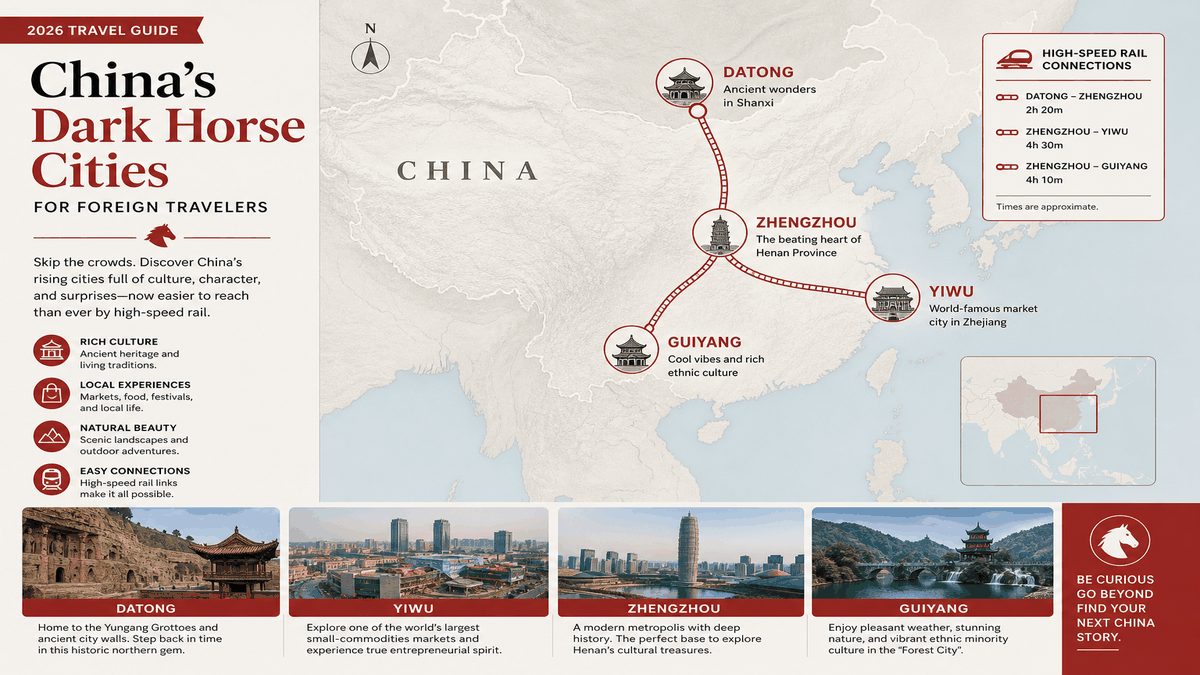
Beijing–Shanghai–Xi’an still dominate first trips, but Datong, Yiwu, Zhengzhou, and Guiyang offer lower crowds, sharper prices, and sights that reward travelers who can ride high-speed rail and book hotels that accept foreign passports.
Bottom line: second-tier cities are easier to reach than most foreign travelers assume once you add one or two high-speed rail legs to a visa-free itinerary. Pick one “anchor” sight per city, stay near a rail station or metro line, and filter hotels for passport registration before you pay.
Why second-tier cities matter in 2026
China’s inbound tourism wave has concentrated foreign travelers in a handful of megacity hubs. That means marquee sights in Beijing and Shanghai can feel crowded on weekends and around domestic holidays, while provincial capitals and industrial cities often run quieter ticket windows and lower hotel rates on comparable dates.
Visa-free entry (where your passport qualifies) and expanded high-speed rail make multi-city loops practical without a full “grand tour” budget. The trade-off is real: English signage is thinner, ride-hail pickup pins fail more often, and not every hotel accepts foreign guests—plan those frictions before you ticket.
For ground transport basics, start with our China transportation guide for foreigners.
Datong: Yungang Grottoes without the capital crush
Datong (Shanxi Province) is the classic “dark horse” for Buddhist rock art. The Yungang Grottoes UNESCO site sits a short taxi or bus ride from the city center, with hundreds of carved niches that rival the fame of Dunhuang for many first-time visitors.
Pair the grottoes with the Hanging Temple (Xuankong Si) at Hengshan if your schedule allows a half-day excursion—cliffside architecture that photographs well in morning light. Datong’s restored old town is partly rebuilt; treat it as an evening stroll rather than a “ancient village” expectation.
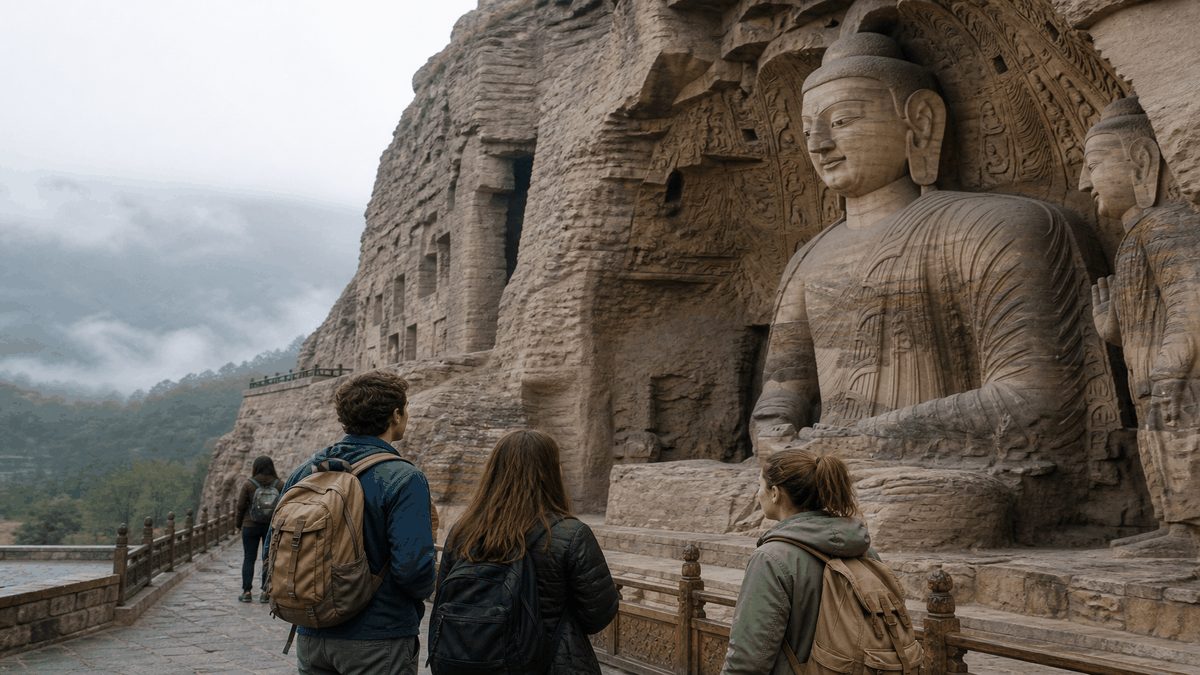
Datong logistics snapshot
- Rail: Datong South (Datongnan) on the Beijing–Xi’an high-speed corridor; many travelers connect from Beijing in roughly half a day depending on train class.
- Stay: hotels near the south station or city center reduce taxi time to Yungang.
- Season: spring and autumn are generally milder; winter can be cold and dry in Shanxi.
Yiwu: the world’s wholesale bazaar, honestly labeled
Yiwu is not a scenery destination—it is a trade-city experience. The Yiwu International Trade City (Futian Market) sprawls across districts of wholesale showrooms where buyers source everything from hardware to holiday decorations. Foreign visitors who enjoy supply-chain tourism, product design, or sheer scale find it memorable in a way no temple can replicate.
English is more common in buyer-facing zones than in many inland cities, but you are still navigating a working market, not a curated museum. Budget time for security checks, district maps, and fatigue—walking the full complex in one day is unrealistic.
Zhengzhou: central China hub to Shaolin and the Yellow River
Zhengzhou (Henan) is often treated as a rail interchange, but that is exactly why foreign travelers should know it: the city sits on north–south and east–west high-speed lines, making it a low-friction base for day trips to Shaolin Temple at Songshan and, with more time, Longmen Grottoes near Luoyang.
The Henan Museum in Zhengzhou is a strong rainy-day option for bronze-age and Silk Road context. Along the Yellow River, riverside parks are more about local weekend life than dramatic canyon scenery—useful for an evening walk, not a full-day anchor.
Guiyang: Guizhou gateway to cooler highlands
Guiyang, capital of Guizhou, is increasingly popular with domestic travelers for food, mild summer temperatures relative to the Yangtze oven, and access to karst country. Foreign visitors use it as a launch point toward Huangguoshu Waterfall, Miao and Dong village circuits, and highland hiking—usually with a driver or organized day tour because village transport is sparse.
Spicy Guizhou cuisine (sour soup hotpot, rice noodles) is a draw on its own. Night markets and pedestrian streets are lively; payment apps still matter—see our payment guide if you have not set up Alipay yet.
| City | Best for | Typical add-on | Rail hub |
|---|---|---|---|
| Datong | Yungang Grottoes, Hanging Temple | Beijing or Xi’an loop | Datong South HSR |
| Yiwu | Wholesale trade city, sourcing culture | Shanghai or Hangzhou | Yiwu Station |
| Zhengzhou | Shaolin day trip, Henan Museum | Luoyang Longmen Grottoes | Zhengzhou East HSR |
| Guiyang | Summer base, Guizhou food, waterfalls | Village tours (driver) | Guiyang North / East HSR |
High-speed rail and foreigner-friendly hotels
Second-tier success depends on booking trains early around domestic holidays and choosing hotels that complete foreign guest registration without drama. Popular routes involving these cities can sell out ahead of national holiday windows and Spring Festival travel.
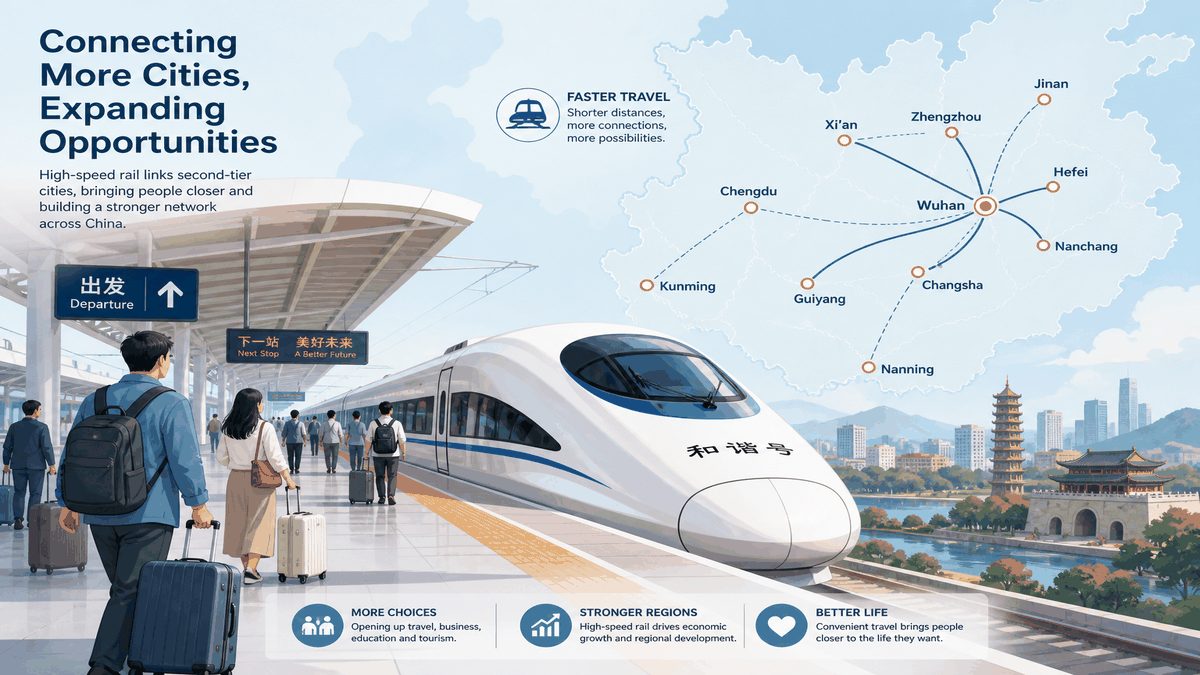
- Trains: book on a bookmarked Trip.com China trains tab; step-by-step help in our China train booking guide.
- Hotels: filter for properties that accept foreign passports and international cards—foreigner-friendly hotel checklist.
- Stations: many cities have multiple HSR stations (East vs South vs North); match the station name on your ticket to the map pin in Amap before you board a taxi.
FAQ
Are these cities safe for solo foreign travelers?
Major tourist zones in these cities are generally routine for international visitors, but petty theft and scam touts can appear at busy stations and markets. Use licensed taxis or ride-hail, keep passport copies separate from the original, and follow our safety overview for context.
Do I need cash in second-tier cities?
Mobile pay dominates, but some small vendors and rural day-tour stops may prefer QR wallets. Set up Alipay for tourists before arrival; carry a small amount of yuan as backup.
How many days per city?
A practical minimum: 2 nights Datong (one full grottoes day), 1–2 nights Yiwu (market-focused), 2 nights Zhengzhou (Shaolin day trip), 2–3 nights Guiyang (city plus one waterfall or village day). Adjust for jet lag and holiday crowds.
Can I string all four into one visa-free trip?
Possibly, if your passport qualifies for 30-day visa-free entry or you use another published route—but the loop is long. Check eligibility in our visa-free country list and count calendar days carefully.
Is English widely spoken?
Less than in Beijing or Shanghai. Download offline maps, save hotel addresses in Chinese, and use translation apps. Yiwu’s buyer zones are an exception where you may hear more English in trade contexts.
Some links on this page go to Trip.com with partner parameters. They do not change the price you see at checkout. Start China Travel may earn a commission on qualifying bookings.