Visa & entry · US passports · 2026
Can Americans Travel to China Without a Visa in 2026?
Short answer: not for a normal round-trip vacation. US ordinary-passport holders are not on China’s unilateral 30-day visa-free list. They are eligible for 240-hour visa-free transit when the trip is true transit to a third country or region.

Verdict for US passport holders
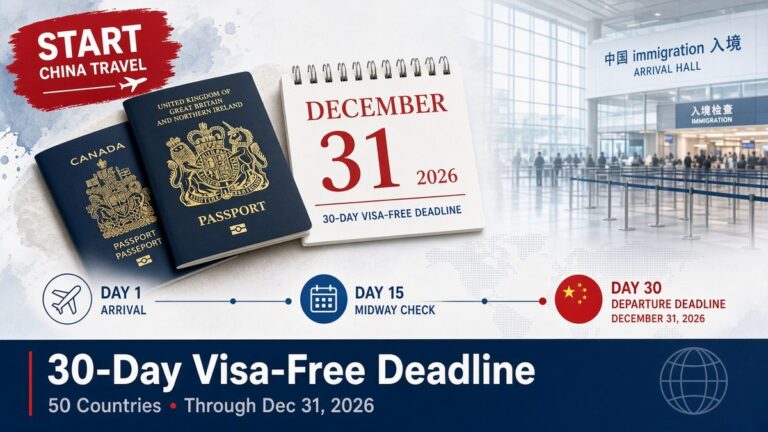
Two different policies get mixed up online. One is unilateral visa-free stay (up to 30 days). The other is visa-free transit (up to 240 hours / 10 days). Americans sit on different sides of those lists.
| Your trip shape | Usual path for US ordinary passport |
|---|---|
| Round-trip tourism (enter and leave China, home country both ends) | Apply for a Chinese tourist (L) visa before travel |
| Genuine transit to a third country/region, stay ≤240 hours in permitted areas | May use 240-hour visa-free transit (confirm ports, tickets, and stay area) |
| Airside connection ≤24 hours, do not leave the restricted transit zone | 24-hour transit rules may apply more broadly—still confirm with the airline and port |
| Work, study, journalism, or other restricted purposes | Correct visa category first; transit/visa-free lists do not cover these |
Why “China is visa-free now” does not mean Americans
China’s unilateral visa exemption (up to 30 days for tourism, business, family visits, exchange, or transit) covers a published list of countries. The NIA English compilation dated 17 February 2026 lists Americas countries such as Argentina, Brazil, Canada, Chile, Peru, and Uruguay—not the United States.
Full country list and stay counting rules: China visa-free list 2026 and 30-day visa-free countries. Policy hub: Visa & entry.
Official source to re-check before you book: NIA — List of Countries Covered by Unilateral Visa Exemption Policies.
Do not invent a US 30-day visa-free stay
Forum posts and AI summaries often conflate Canada/UK 30-day exemption with US eligibility. For US passports, treat “visa-free China vacation” claims as wrong until NIA or MFA publishes the United States on the unilateral list.
240-hour visa-free transit (where Americans are listed)
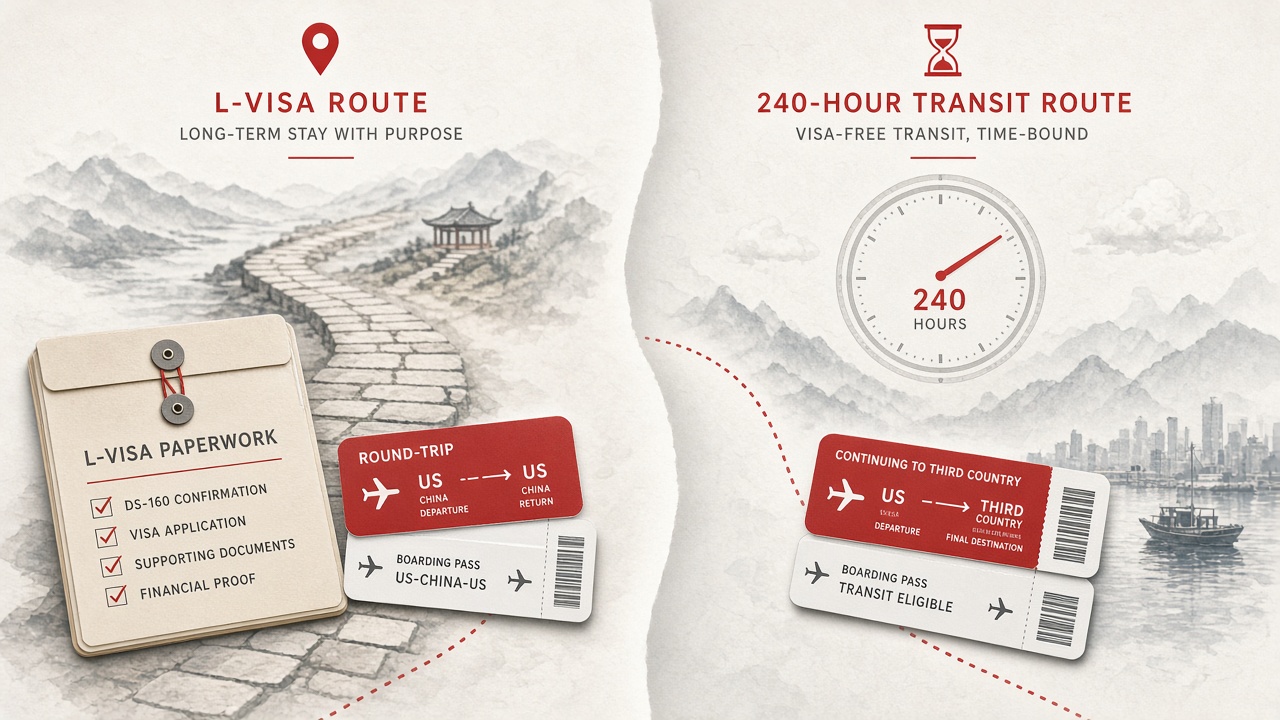
NIA’s English visa-free transit interpretation (updated 20 August 2026 on the page we used) states the 240-hour policy covers nationals of 57 countries including the United States, entering through designated ports, staying in permitted areas for no more than 10 days, with ordinary passports and onward tickets with confirmed seats and departure dates to a third country or region.
Deep dive on rules and cities: 240-hour policy guide, hub page 240-hour visa-free transit, and which cities / ports allow entry.
Official source: NIA — Visa-Free Transit Policies.
Hard conditions travelers miss

- Third country or region — a same-country outbound ticket (for example US→Shanghai→US) is the classic fail case for using transit as a tourist visa substitute.
- Confirmed onward seats — open returns and vague “I will buy later” plans are risky at check-in and at border inspection.
- Permitted stay areas and ports — stay inside the published geography; work/study/news still need the right visa.
- Ordinary passport — travel documents that are not ordinary passports follow different rules.
Hong Kong / Macau as “third region”
Many travelers use mainland China + Hong Kong or Macau routings. Whether a specific itinerary qualifies depends on the ports, tickets, and how border officers apply the third-country/region rule. Build the ticket chain first; do not assume every HK hop automatically “counts.” When unsure, get the L visa.
When you need the L tourist visa instead
Choose the L visa path when you want a normal China holiday without structuring the trip as transit: multiple cities, flexible return home, or no third-country onward ticket.
- China tourist visa 2026 for US citizens
- Step-by-step US L visa application
- Hub: China tourist visa guide
At the airport after landing: entering China as a foreigner and digital arrival card.
Book flights that match the rule you are using
Airlines and ground staff check onward tickets before you board. Align the booking with either (a) L visa + flexible China itinerary, or (b) transit with a clear third-country exit.
Route and airline context: best airlines flying to China 2026. Broader US visit planning: Can Americans visit China in 2026?
FAQ
- Can US citizens visit China visa-free for 30 days like Canadians?
- Not under the unilateral exemption list compiled by NIA as of 17 February 2026. Canada is listed; the United States is not. Recheck NIA/MFA before travel—lists change.
- Can I use 240-hour transit for a 9-day Beijing–Shanghai vacation then fly home to the US?
- That pattern usually fails the third-country onward ticket requirement. Transit is not a substitute tourist visa. Use an L visa for that trip shape.
- Is the United States on the 240-hour transit list?
- Yes, on the NIA English transit policy page we cited (20 August 2026 update on that page). You still need an eligible port, permitted stay area, and confirmed onward ticket.
- Where do I start if I need the L visa?
- Start with our US step-by-step guide, then confirm forms and appointments on the Chinese Visa Application Service Center site that serves your US region.