Seasonal travel · Summer 2026
Cool Summer Escapes in China (2026)
Shanghai and Chongqing can feel brutal in July and August. Zhangjiajie’s misty peaks, Guizhou’s highland villages, and Kunming’s plateau “spring city” climate offer relief—if you book cable cars, village transport, and rain gear with realistic crowd expectations.
Bottom line: “Cool” in China summer usually means elevation, forest shade, or plateau air—not beach weather. Zhangjiajie trades heat for humidity and stairs; Guizhou trades heat for mountain roads; Kunming is milder but still has rainy bursts. Check live forecasts before you pack.

Why these destinations beat the lowland oven
East China’s Yangtze corridor often runs hot and humid from late June through August. Domestic travelers respond by heading to mountains and southwest plateaus—which means summer can still be busy, just in different places than the Bund or West Lake.
For month-by-month trade-offs nationwide, see best month to visit China for good weather. This article narrows the lens to three regions that foreign travelers can reach on standard visa-free or visa itineraries with high-speed rail and domestic flights.
Zhangjiajie: forest peaks and cable-car logistics
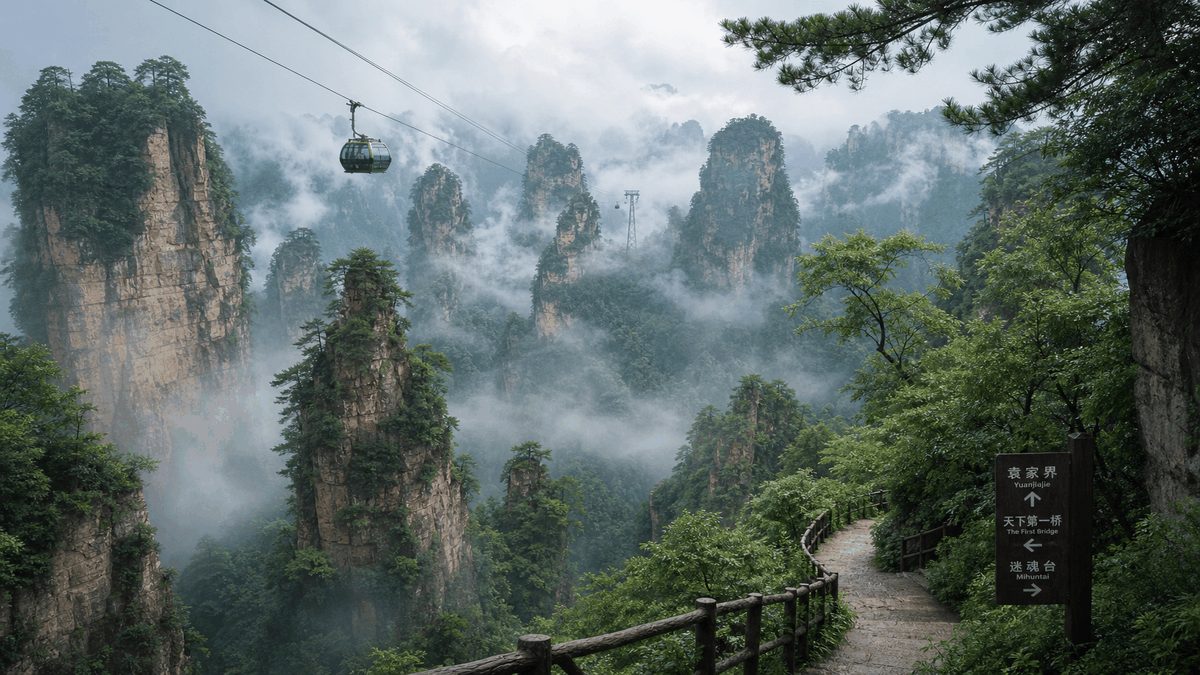
Zhangjiajie (Hunan) is famous for sandstone pillars that inspired the floating-mountain imagery in Avatar. Wulingyuan Scenic Area is the core draw: forest trails, glass walkways, and cable cars that save knees but not queues.
Summer brings mist, greenery, and rain showers that can obscure views—or create dramatic photos when clouds lift. Temperatures in the park are often more comfortable than Changsha or Wuhan lowlands, but humidity and stair climbing still wear you down. Start early, carry a light rain shell, and assume cable-car lines spike mid-morning.
Zhangjiajie planning links
- Route and cable-car strategy: Avatar / Hallelujah Mountain logistics
- Ticket windows and hours: Zhangjiajie ticket price and hours
- Attraction passes and experiences: Trip.com tours and tickets (compare against official park channels before paying)
Staying in Wulingyuan town near the forest-park gates often beats Zhangjiajie city for early entries; city hotels can be cheaper but add transfer time.
Guizhou: highlands, waterfalls, and village circuits
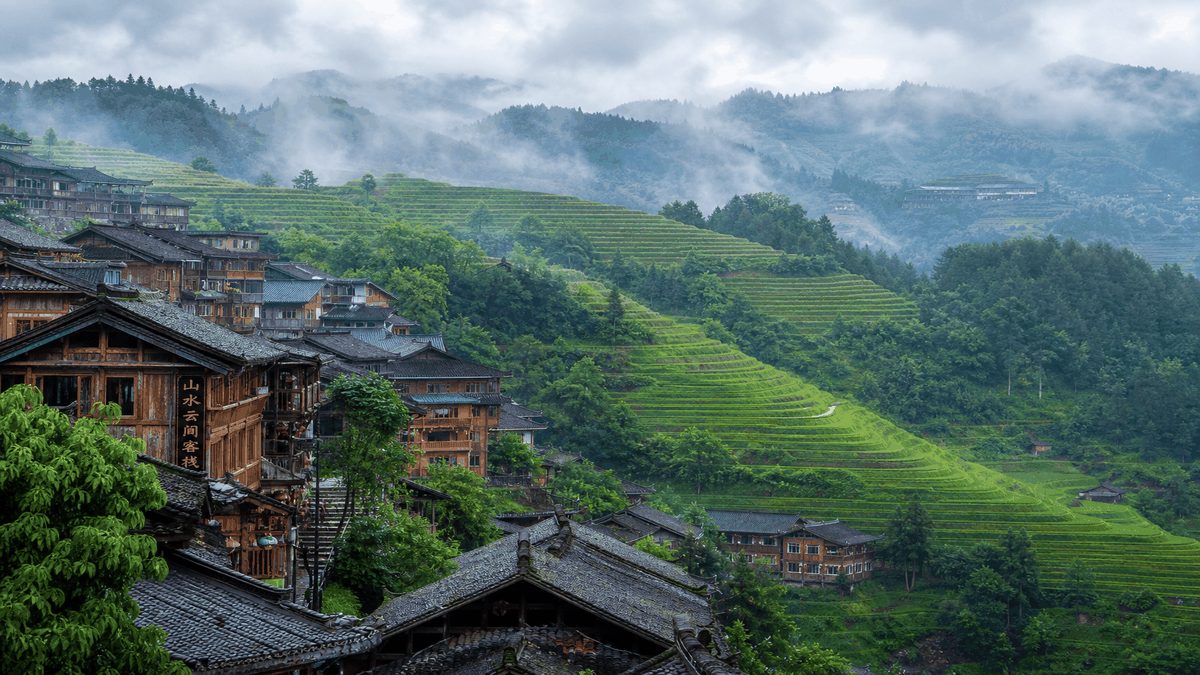
Guizhou Province markets itself on karst landscapes, minority culture, and summers that feel milder than coastal megacities. Guiyang is the usual rail and flight hub; from there travelers day-trip toward Huangguoshu Waterfall, Libo, or village clusters such as Xijiang Qianhu Miao Village.
Village trips often mean winding roads and limited English—many foreign visitors hire a driver or join a small group for one or two days rather than relying on sparse rural buses. Food is a highlight: sour-spicy hotpot and rice noodles suit rainy evenings.
Kunming: the plateau “spring city”
Kunming (Yunnan) sits near 1,900 meters elevation. Summer days are often warm but not scorching compared with lowland China, with afternoon rain bursts common during the wet season. It works well as a base for:
- Stone Forest (Shilin) — karst formations on a long day trip
- Dianchi Lake — waterfront parks and sunset views when air quality cooperates
- Deeper Yunnan legs — Dali and Lijiang are reachable by rail or short flights if you extend the trip (compare weather separately; Lijiang is higher and cooler at night)
Kunming’s flower markets and night stalls suit food-focused travelers. UV is stronger at altitude—hat and sunscreen matter even when temperatures feel mild.
Side-by-side summer snapshot
| Destination | Summer advantage | Main friction | Minimum stay |
|---|---|---|---|
| Zhangjiajie | Forest shade, dramatic peaks | Cable-car queues, rain, stairs | 2–3 nights |
| Guizhou | Highland air, waterfalls, food | Road time to villages | 3–4 nights |
| Kunming | Plateau mild days | Afternoon rain, UV | 2 nights (longer if exploring Yunnan) |
Weather hedge: none of these places are immune to heat waves or downpours. “Cooler than Shanghai” is not the same as “cold.” Pack breathable layers and waterproof shoes for all three.
Booking trains, hotels, and park tickets
Summer is peak domestic travel season. High-speed trains to Zhangjiajie West, Guiyang North, and Kunming South can sell out on weekends; park tickets may use timed entry during busy periods.
- Rail: Trip.com China trains plus our train booking guide
- Hotels: Trip.com hotels; confirm foreign-guest registration via foreigner-friendly hotels
- Timing: avoid stacking these destinations against national holiday windows unless you enjoy crowds
FAQ
Which is coolest in July—Zhangjiajie, Guizhou, or Kunming?
Kunming and Guizhou highlands often report milder daytime highs than Zhangjiajie’s humid forest basin, but microclimates vary. Zhangjiajie can feel pleasant on misty mornings and sticky by afternoon. Compare forecasts for your exact dates rather than relying on averages.
Can I combine all three in one trip?
Possible with 10–14 days and domestic flights or long rail legs, but rushed. A tighter plan: Zhangjiajie plus either Guizhou or Kunming—not both—unless you accept mostly transit days.
Is summer the best time for Zhangjiajie photos?
Summer greenery is lush, but autumn clarity can beat July haze for long views. If photography is the main goal, read our Zhangjiajie ticket guide and consider shoulder months in the weather guide.
Do I need hiking boots?
Sturdy grip shoes matter more than heavy boots. Zhangjiajie has long stair sections; Guizhou villages may be slippery when wet. Broken-in trainers with good traction are fine for most travelers.
Are these regions visa-free for my passport?
Depends on nationality. Many European and several Asia-Pacific passports qualify for 30-day unilateral entry in 2026; others need visas or 240-hour transit. Confirm in our visa-free list before booking.
Some links on this page go to Trip.com with partner parameters. They do not change the price you see at checkout. Start China Travel may earn a commission on qualifying bookings.