
Visa & Entry
China Visa-Free List 2026: Confirmed Countries & NIA Rules
Over fifty nationalities can enter China for tourism or short business without a consular visa under the latest unilateral 30-day framework—when NIA stamps match your passport and purpose. Everyone else still routes through L/M visas or 240-hour transit where eligible.
Visa-free does not mean paperwork-free. Border posts expect biometric clearance, onward or return tickets within the allowed window, and PSB registration when hotels cannot file you automatically. Treat the list below as a planning map—then confirm the exact stamp rules with the National Immigration Administration (NIA) or your Chinese mission before non-refundable tickets.
Mandatory disclaimer: Eligibility, permitted activities, and regional limits for transit schemes can change on short notice. This page is not legal advice.
Confirmed unilateral visa-free countries (30-day entry)
The NIA has communicated extensions of unilateral visa-free treatment through 31 December 2026 for partner countries in multiple regions. Standard entry length for this track is up to 30 days per eligible visit when the border officer admits you under that category—always read the stamp.
Europe
France, Germany, Italy, Netherlands, Spain, Switzerland, Ireland, Hungary, Austria, Belgium, Luxembourg, Norway, Finland, Denmark, Poland, Iceland, Slovakia, Portugal, Greece, Cyprus, Slovenia, Sweden, Bulgaria, Romania, Croatia, Estonia
Asia & Gulf
Japan, South Korea, Singapore, Malaysia, Thailand, Bahrain, Kuwait, Oman, Saudi Arabia
Pacific
Australia, New Zealand
Americas
Brazil, Argentina, Chile, Peru, Uruguay
Need the pillar overview in one place? Pair this article with 30-day visa-free countries and the main Visa & Entry hub.
United States, Canada, and United Kingdom
Travelers from the United States, Canada, and the United Kingdom generally still need a standard L (tourist) or M (business) visa unless they qualify for transit or other published exceptions. For routing ideas without a full tourist visa, start with how to plan a trip to China visa-free, then layer 240-hour visa-free transit if your passport and ports qualify.
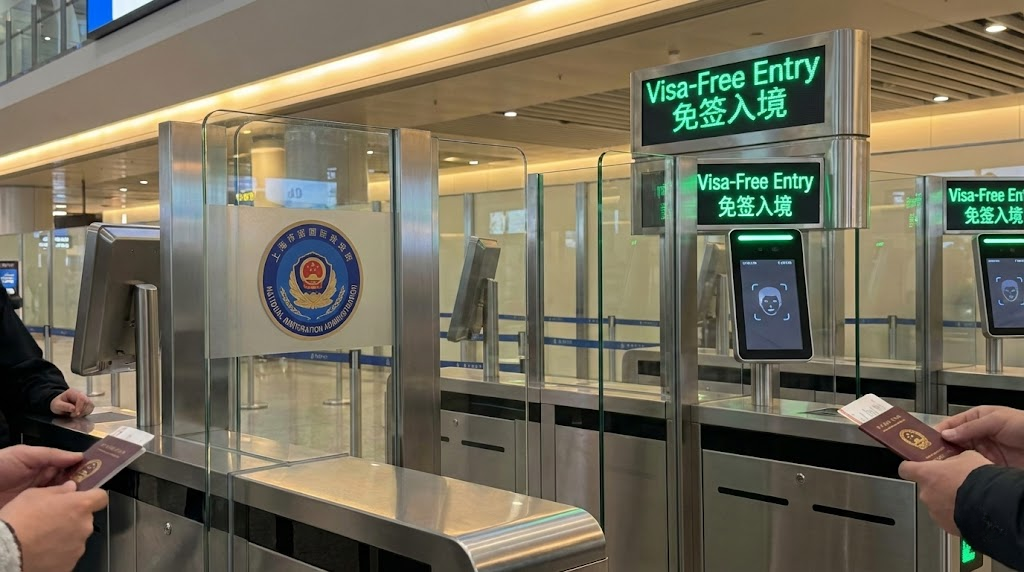
240-hour transit without a visa (TWOV)
If your nationality is not on the 30-day unilateral list, you may still use 240-hour (10-day) visa-free transit at designated ports when you meet the third-country rule: a genuine Country A → China → Country C itinerary, with C different from A in the sense border officers apply the rule.
- Valid: London → Beijing → Tokyo.
- Invalid: London → Beijing → London.
For TWOV purposes, Hong Kong, Macau, and Taiwan are commonly treated as separate destinations from mainland China—still verify your exact routing against current NIA circulars. Stay inside the administrative cluster tied to your entry port; crossing unauthorized boundaries on a transit stay is an enforcement risk. Port index: which cities allow 240-hour visa-free entry.
Digital readiness: payments and connectivity
Mainland China runs on QR wallets and app-based services. Link a foreign Visa or Mastercard inside Alipay and WeChat Pay before you fly; larger cross-border charges sometimes carry a small percentage fee—see our Alipay 2026 guide and WeChat Pay setup.
Connectivity & VPNs
The Great Firewall blocks many Western sites on local SIM profiles. Most travelers buy a China eSIM on Trip.com or Airalo before departure. Read VPN legality for tourists, then install Surfshark while you still have clean app-store access—hotel Wi-Fi alone is a weak sole strategy.
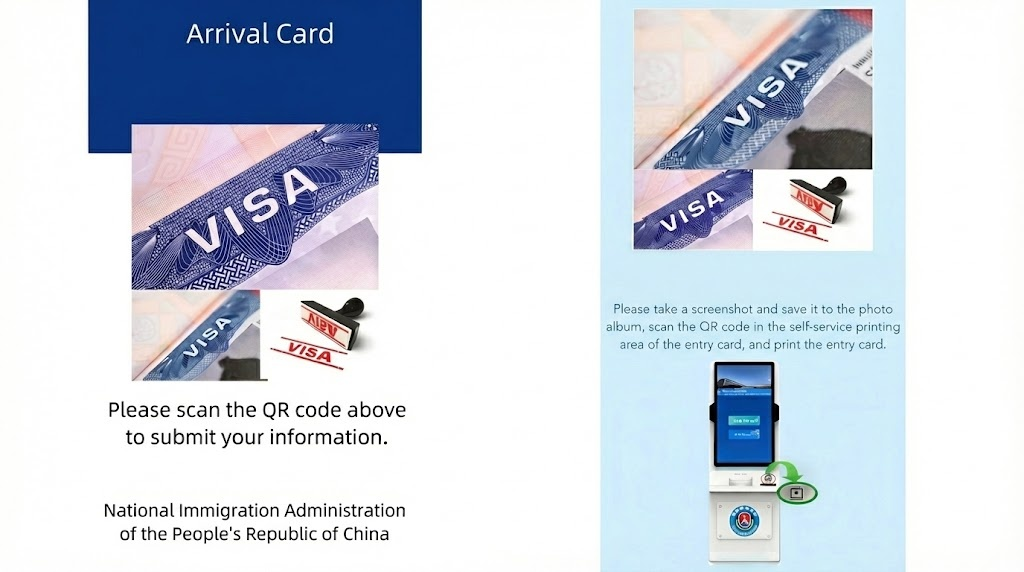
Biometrics, arrival cards, and identity checks
Visa-free lanes still mean facial capture and document inspection. Keep your passport machine-readable, carry proof of onward travel within the permitted window, and screenshot or save arrival-card confirmations only as a supplement—officers may still want to see the official submission record on their side.
High-speed rail, hotels, and PSB registration
HSR in 2026 typically uses passport-based e-ticket gates—no paper ticket to collect if your profile matches. Book popular dates early on Trip.com China trains (inventory often opens on a rolling window; see our Trip.com train guide).
Hotels must hold a license to register foreigners. Use Trip.com hotels with the international-guest filter and read Policies → Guests accepted before you pay—walkthrough: foreigner-friendly hotel steps.
Critical mistakes
| Risk | Impact | Prevention |
|---|---|---|
| Visa overstay | Fines, detention, re-entry bans | Calendar alert 48 hours before stamp expiry; exit or switch to a lawful visa category. |
| Payment failure | No metro QR, no ride-hail, limited food options | Verify Alipay/WeChat before departure; carry one backup physical card. |
| TWOV cluster breach | Enforcement at HSR or highway checks | Map your port’s allowed region before booking domestic legs. |
| PSB registration gap | Fines at exit audits | Confirm hotel registration slip; visit PSB within 24 hours on private stays. |
Pack the full digital stack against our Ultimate China Travel Packing List 2026.
Trip.com booking shortcuts
Flights: Trip.com flights · Hotels: Trip.com hotels · Trains: Trip.com trains · Home: Trip.com
MOFA and state media occasionally publish English-friendly summaries of visa-free extensions. Cross-check any YouTube summary against the Chinese embassy site for your country before you ticket.
FAQ
Is there a fee for visa-free entry?
No separate visa sticker fee—admission is determined at the border. You still pay for flights, hotels, and any airport services.
Do infants need passports?
Yes. Every traveler needs their own valid passport; minors may need guardians present for biometric capture.
What if my flight is delayed past the entry window?
Speak with airline and NIA staff immediately; keep printed itineraries and live PNR access so officers can verify the new plan.
Can I extend a 30-day visa-free stay?
Not by “extending” the same entry category in place—plan an exit and re-entry only if a new lawful basis exists, or apply for the correct visa before travel.
Is 240-hour transit available to every nationality?
No. It applies to a defined list of countries at specific ports, with routing and regional confinement rules.
Can I work on visa-free entry?
No. Paid employment requires work authorization such as a Z visa and residence permit pathway—visa-free categories are for short visits only.
StartChinaTravel earns commissions from some links on this page (Trip.com, eSIM, VPN partners) at no extra cost to you. See How we test for sourcing standards.