Culture & Tips · Digital
WeChat Rules in China 2026: Guanxi, Hongbao & Group Politics
Grab a group Hongbao in Chengdu and vanish without a sticker? You are not rude by Western standards—you are invisible by Chinese ones. WeChat is a social contract measured in likes, scan order, and reply speed.
In 2026, WeChat is not a chat app—it is hierarchy in pixels. Your Moments likes, who scans whose QR code, and whether you thank a red packet define whether you belong or ghost through the machine.
Digital guanxi: relationships measured in bits
Banquets still matter, but your network is built on WeChat Moments (pyq) and how fast you respond.
The hierarchy of the “like”
A like on a boss or key client’s post is digital attendance—not enthusiasm. Comments are riskier: only mutual friends see them, so a joke can land in a room of colleagues you forgot were connected.
- Safe play: Like most posts from seniors.
- Risk play: Jokes in comments visible to unexpected mutuals.
For why silence hurts more than a bad joke, see saving face (mianzi) in China.
Contact-adding etiquette
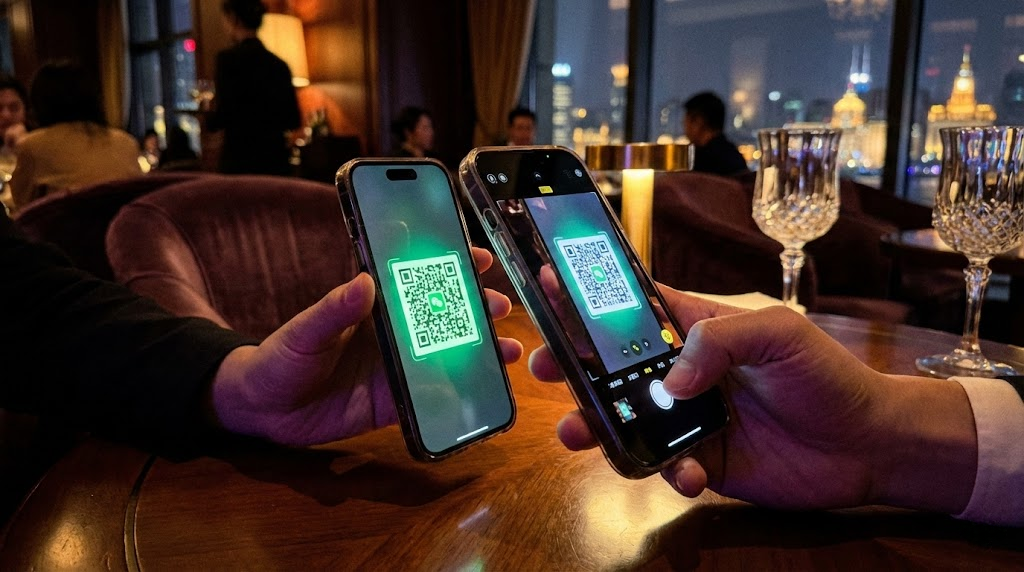
- Subordinate rule: Junior party opens the scanner and scans the senior’s code (service staff, students, vendors).
- Superior rule: Boss or client displays their QR.
- Friend request note: Never leave the default “I’m [Name].” Use: “[Name] from [Company], met at [Event].”
You cannot scan or accept requests without data; airport Wi-Fi often demands a Chinese number. Don’t risk being offline at a critical networking moment. Activate a China eSIM on Trip.com or Airalo before you land so you are connected the moment immigration clears.
Hongbao (red packets): art and economics
Hongbao is social lubricant, not tips. Wrong amounts turn kindness into insult.
Safe numbers
- 6 (liu): smoothness • 8 (fa): wealth • 9 (jiu): longevity
- Standard thanks: ¥6.66, ¥8.88, ¥16.88
- Close friend / romantic: ¥520 (“I love you” homophone)
- Taboo: 4 (death tone), 250 (idiot slang)—see 10 cultural landmines in China
Pro tip: Pay for services with Transfer, not Hongbao. Packets are gifts; transfers are business.
Group lucky-draw packets (pin shouqi)
- If you tap, you acknowledge—emoji or “谢谢老板” (thanks boss).
- Snatching and going silent (or leaving the group) is a fast blacklist.
Payment and wallet rules vary by region and change often. Set up wallets before you travel: WeChat Pay for foreigners and WeChat registration guide.
Group chat politics
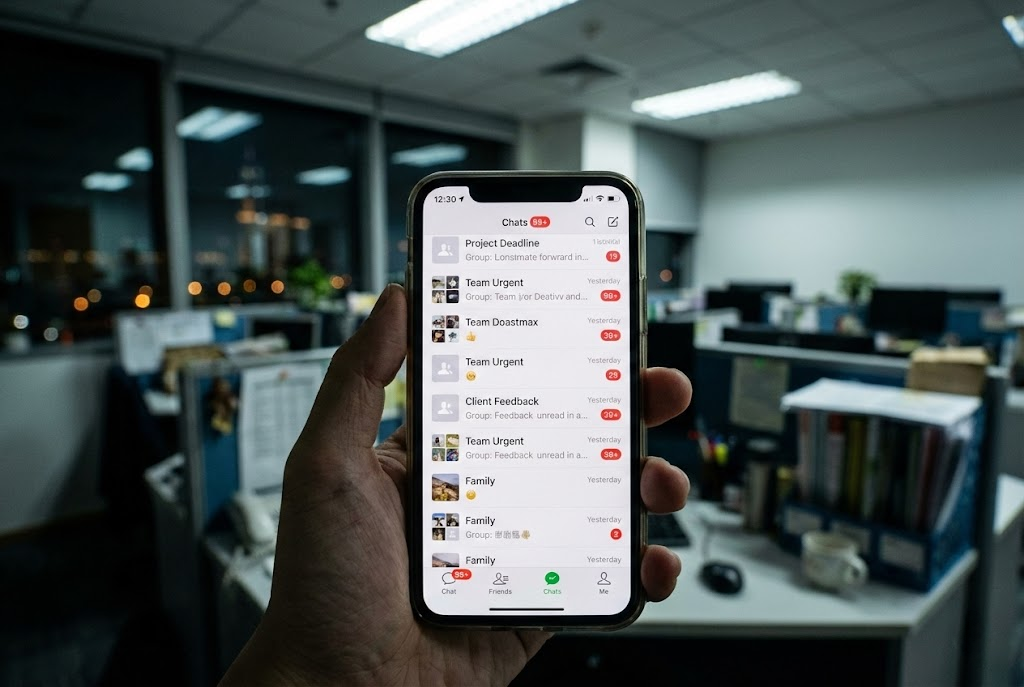
Many professionals sit in 50+ active groups in 2026. Survival is filtering, not reading everything.
- “Received” (收到): In 400-person groups, only echo if everyone else does.
- 拍一拍 (nudge): Double-tap avatar—okay for close friends; rarely on bosses (reads impatient).
- @mention: Forces notification even when muted—urgent questions only.
- After-hours messages: 9 PM client pings often expect same-evening replies in relationship-driven industries.
Survival tactic
Use Sticky on Top for your three most important work groups so urgent directives are not buried under spam.
Voice messages: the 60-second rule
Voice notes are convenient for the sender and costly for the receiver.
- When acceptable: You are the boss, elderly, or physically cannot type (driving).
- 2026 expectation: Use speech-to-text so recipients read text, not audio, in professional groups.
- Professional default: Text in; never answer text with a voice note unless you are close friends.
Privacy, blocking, and Moments
“Three days visible”
If a new contact shows only three days of Moments, that is normal privacy shielding—not a personal block.
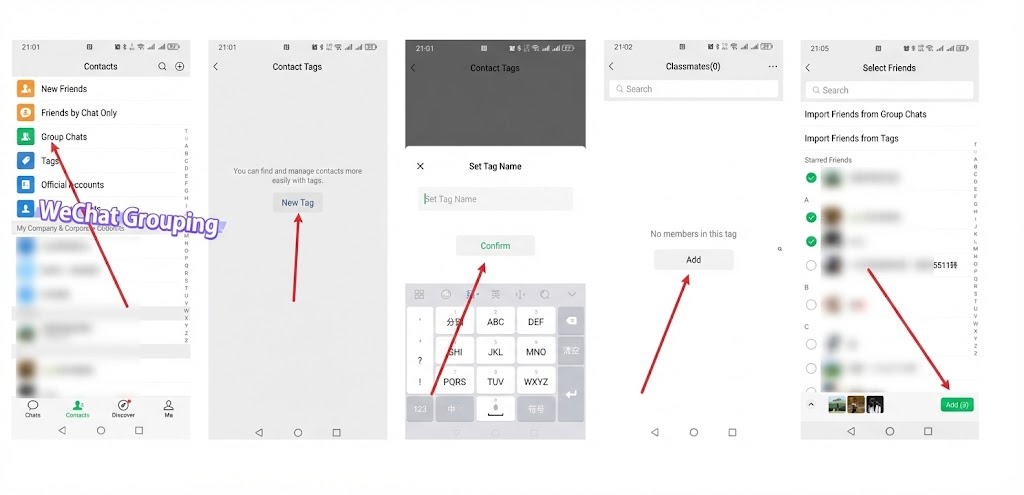
Tags (contact categories)
Segment contacts so conservative clients never see bar photos at 1 AM.
- Contacts → Tags
- Create: Work, Close Friends, Family
- When posting to Moments, select Exclude → Work.
WeChat does not block Gmail or Instagram—the firewall does. See VPN vs eSIM in China. For hotel Wi-Fi banking checks, Surfshark is a common traveler stack alongside roaming data.
Risks and mistakes to avoid
- Politics in groups: Admins are liable; accounts disappear fast.
- Sticker tone: Business chats = conservative yellow emoji sets; skip meme GIF packs (biaoqingbao).
- Recall window: Two minutes to unsend—after that, career damage is permanent.
- Travel bookings: Move flights and hotels off endless group scroll—use Trip.com flights, hotels, and trains on one bookmarked tab.
Bottom line
Master WeChat reciprocity before you master Mandarin tones. Pre-load the app, link payments, secure data on landing, and treat your digital profile like your physical one. Full prep timeline: how to prepare for China in 2026. First-hour stack: VPN, Alipay, DiDi & eSIM guide.
FAQ: WeChat rules for travelers
Can I recall a message sent to the wrong group?
Yes, within two minutes—long-press and tap Recall. After that it is permanent.
How much for a thank-you Hongbao?
¥6.66 or ¥8.88 for small favors. Larger professional thanks often shift to physical gifts or Transfer, not packets.
How do I know if someone blocked me?
No notification. A red exclamation and “Friend verification required” usually means deleted, not blocked—context matters.
Must I reply to voice messages immediately?
Not instantly, but replying to text with voice in professional chats reads rude unless you are close friends.
Can foreigners send Hongbao with international cards in 2026?
Merchant pay often works with linked foreign cards; Hongbao balances frequently need a Chinese-funded wallet. Rules shift—follow our WeChat Pay setup guides before you fly.