
Culture & Tips · Social
Why Local Friends Go Silent: Saving Face in China (2026)
Three days of WeChat stuck on “Read” in Chengdu or Shanghai is rarely a network bug. More often it is mianzi (face) damage—your host restoring balance without a confrontation you both would have to survive.
You have not only made a mistake—you have signaled low social awareness. Once that friction lands, warmth rarely returns to the old level. Saving face in China means protecting harmony over winning arguments.
Mianzi: the invisible social credit of 2026
Mianzi (面子) functions like a tangible social credit score. If you “take face” from a host, you devalue their standing in their own circle. Most friction happens when visitors prioritize being honest over being harmonious.
Hierarchy trap
Younger internationalized circles in Tier-1 cities bend rules—but for most families and traditional groups, the senior-most person expects deference. Ignoring an elder to chat only with peers stalls relationship growth.
Public correction
Correcting a host’s suggestion or pointing out a factual error in front of others is a fatal move. Bonds survive when you wait for a private moment to suggest a “misunderstanding,” not an “error.”
WeChat as health monitor
In 2026, reply speed and tone are primary indicators. The shift from instant voice notes to formal, delayed text often means you have been moved to a low-priority bucket. For group-chat politics and hongbao norms, see WeChat guanxi rules.
To ensure your preparation matches local expectations before you land, follow our 2026 step-by-step timeline for beginners.
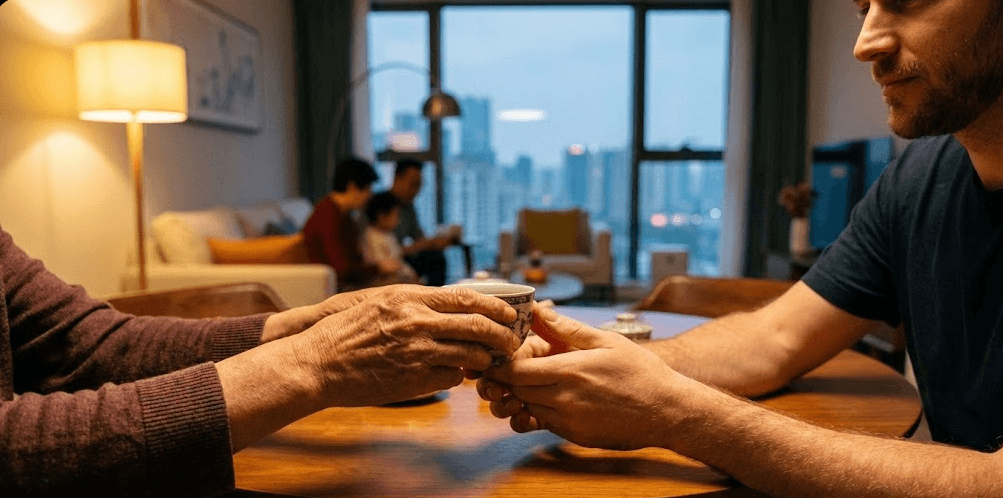
Gift etiquette 2026: ritual over price
Gift-giving is less about price and more about showing you understand status. In professional or compliance-sensitive circles, an overly expensive gift can backfire—returns weeks later via an assistant often mean distance, not gratitude.
- Selection: Regional items from home carry meaning. Ideas that travel well: China travel packing list 2026 (gift section) and our Chinese gift etiquette guide (avoid clocks, umbrellas, and other taboo symbols).
- Modesty ritual: Expect two polite refusals. Stopping after the first embarrasses the host by treating modesty as a real no.
- Both hands: Gifts and business cards are exchanged with two hands. One hand reads as dismissive.
First banquet? Book a low-pressure cultural experience via Klook and read Chinese banquet etiquette 2026 before you sit down.
The welcome dinner: where relationships are audited
The welcome dinner is a high-stakes test of social awareness. Seating, toasting, and payment are noted immediately.
- Seating: The honor seat faces the door—do not self-seat there. Wait for placement. Corporate hosts: corporate dining etiquette 2026.
- Toasting: Toast top-down; your glass rim stays lower than seniors’. Touching from above reads as a superiority claim.
- Digital pay: Bills settle in mini-apps. Failing to join the bill fight—or having Alipay/WeChat fail mid-struggle—embarrasses everyone. Pre-link Alipay and WeChat Pay 24 hours before any meal you might host.
Risk note: Payment failures during a public “war for the bill” are socially worse than technical. Policy and card limits vary—confirm with your bank and embassy before travel.
Your logistics signal your worth
Hosts quietly grade your hotel tier, connectivity, and payment readiness. These logistics read as respect—or as a burden they must manage.
- Hotels: Properties that routinely check in foreign passports reflect preparation. Filter on Trip.com hotels and follow 7 essential steps for foreigner-friendly hotels.
- Connectivity: Going dark because roaming failed reads as careless. Compare VPN vs eSIM; if you use a VPN, read whether VPN use is restricted for your situation.
- eSIM strategy: Follow our how to activate eSIM for China on iPhone so you never miss a WeChat “face” opportunity—such as replying to an invite instantly.
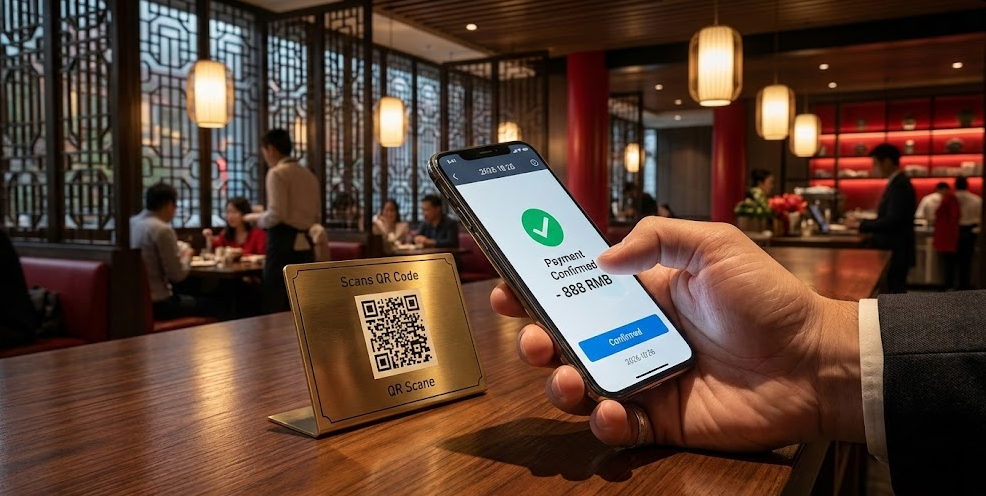
Activate data before immigration: Trip.com China eSIM or Airalo. For first-hour app order (VPN, Alipay, DiDi), see China travel first-hour setup.
Checklist: mianzi survival audit
- Both hands: Cards, gifts, tea—always two hands.
- Punctuality: Lateness takes face from the host. Book high-speed trains early (Trip.com train guide).
- Irreversibility: A public snub rarely fixes with a verbal apology alone. Rebuilding warmth takes time—and may plateau below before.
- Soft no: Never flat-refuse an invitation. Try: “I would love to, but my schedule is being adjusted by HQ/family.”
Already offended someone?
Accept the relationship may be on ice. Offer a low-pressure meal or a modest home gift—no demand for explanation. That demand costs both of you more face.
Bottom line
Ignoring mianzi is choosing to stay an outsider. Confirm flights, hotels, payments, and data before you land on one bookmarked Trip.com tab—then show up on time with both hands on the tea cup.
FAQ: saving face & mianzi in 2026
They stopped replying on WeChat—what now?
Assume ice, not outage. Send a sincere, low-pressure invite or a thoughtful small gift to their home. Do not demand an explanation.
Is fruit an okay gift?
Yes—high-quality fruit baskets are standard. Prefer even counts (avoid four). Presentation matters more than supermarket bulk.
Why do locals insist on paying when I invited them?
The payment war gives you face by making them the generous host. Pay discreetly at the counter before the bill reaches the table if you truly intend to host.
How do I toast without alcohol?
Cite rest or medical advice; toast with tea or juice. Keep the lower-rim clink—participation matters more than the liquid.
Do I need trains booked in advance?
Yes. Arriving late to a social event because tickets sold out costs significant status. Hold seats on Trip.com as soon as your date opens.
How do I pick a respectable hotel base?
Use foreign-passport-friendly filters and verify guest policies before you pay. A check-in failure on night one is a face event for everyone involved.
StartChinaTravel earns commissions from some links on this page (Trip.com, Klook, Airalo, Surfshark) at no extra cost to you. See Affiliate disclosure and How we test.