Is Using a VPN Illegal in China? The 2026 Survival Guide for Tourists
Last Updated: January 2026
Reviewed against current cross-border data regulations and post-COVID travel norms.
If you are planning a trip across the Pacific, you are likely asking the single most common question we receive: Is using a VPN illegal in China for tourists?
The internet in China is fundamentally different from what you are used to. Apps you rely on daily—Google Maps, Gmail, Instagram, WhatsApp—are inaccessible without specific tools. While the technical barrier is the “Great Firewall,” the psychological barrier is the fear of legal trouble. Below, we break down the regulations, the enforcement reality, and the specific tools you need to stay connected safely.
The Direct Answer (For the Rush Traveler)
Is using a VPN illegal in China for tourists?
Strictly speaking, the use of unauthorized VPNs exists in a legal gray area. China’s Ministry of Industry and Information Technology (MIIT) bans the unauthorized provision (selling) of VPN services. However, enforcement primarily targets domestic companies and individuals providing these tools, not short-term foreign visitors. For most tourists, enforcement risk is close to zero when VPN use is limited to personal communication.
The Legal Nuance: Law vs. Enforcement
To understand the risk, you must distinguish between the letter of the law and the reality of travel.
The Regulatory Stance
Article 6 of the Provisional Regulations on the Administration of International Networking of Computer Information Networks in the PRC technically prohibits using non-approved channels to access the international internet.
The Enforcement Pattern
This reflects both long-term expat experience and commonly observed enforcement patterns in major cities like Beijing and Shanghai. Authorities are concerned with:
- Profit: People selling VPNs illegally.
- Dissent: People using VPNs to spread anti-government sentiment on Chinese social platforms.
For the average tourist checking Google Maps or posting a travel photo to Instagram, the risk profile is statistically negligible. However, discretion is key. We strictly recommend avoiding any political discussions on public forums while connected.
The “Regulatory Safe Zone”: Roaming and eSIMs
For many travelers, the “is it illegal” question is irrelevant because there is a simpler, fully compliant technical solution: International Roaming.
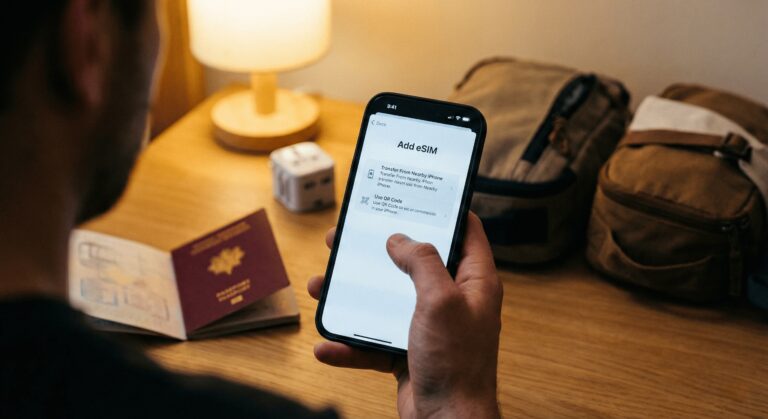
When you use a foreign SIM card (or eSIM) in China, your data traffic is routed through your home carrier or a third-party hub (often in Hong Kong or Singapore) before hitting the open internet. Because this traffic is identified as “roaming,” it is generally not subject to the Great Firewall’s filtering mechanisms.
Who is this for?
If you don’t need a local Chinese phone number for deliveries and mostly rely on Western apps (Google, Uber/Didi, WhatsApp), roaming-based eSIMs are the lowest-friction solution. They eliminate the need to toggle VPN software on and off.
- Top Recommendation: Get China eSIM
- Why: This specific eSIM operates on a roaming protocol, meaning it bypasses the firewall automatically upon arrival.

If You Require a VPN: The “Pre-Flight” Protocol
If you need to use a laptop for work or require a specific IP address, an eSIM won’t be enough; you will need a VPN. However, standard protocols (OpenVPN, etc.) are deeply inspected and often blocked by the firewall.
The golden rule for using a VPN:
- Install Before Departure: The websites for major VPN providers are blocked inside China. You cannot download them once you land.
- Use Obfuscation: You need a VPN that offers “Camouflage Mode” or “Stealth Mode,” which disguises VPN traffic as regular HTTPS web traffic.
- Avoid “Free” VPNs: Security analysts consistently warn that free VPNs monetize your data. In China, they are also the first to be blocked.
- Software Choice: Surfshark Deal
- Why: Current testing shows their “NoBorders” mode is effective at navigating the current firewall updates.
A Note on Digital Privacy and Security Checks
A common fear among travelers is that police will randomly stop foreigners to check their phones for VPN apps.
The Reality:
Based on publicly reported cases and expat community records over the last decade, random checks of foreign tourists’ phones are extremely rare in standard tourist destinations. Such measures are typically reserved for politically sensitive periods or specific restricted regions.
- Practical Advice: If you are stopped by security personnel (e.g., at a subway checkpoint), be cooperative. Do not argue. The check is usually for ID, not your app library.
Why Connectivity Matters (Beyond Social Media)
We emphasize connectivity not just for entertainment, but for logistics. China’s travel ecosystem is entirely digital. If your connection drops, you lose access to your itinerary, tickets, and money.
Critical Dependencies:
- Trains: Physical tickets are largely obsolete. You need a connection to pull up your booking ID. Book High-Speed Trains.
- Flights: Gate changes and delays are communicated via app. Book Flights on Trip.com.

Local Insight: The “Walk-In” Myth
Having a working phone is also crucial for booking tickets on the fly. However, “on the fly” rarely works for top-tier sites.
- The Forbidden City: Tickets are released 7 days in advance at 8:00 PM Beijing time and vanish in minutes.
- The National Museum: Similar strict constraints apply.
- Warning: Do not go to these sites without a confirmed QR code.
- Click here to book tickets to the Forbidden City.
Final Word: Hotel Wi-Fi Limitations
Many travelers mistakenly believe that international hotel chains offer unfiltered internet. This is generally false. Hotel networks must comply with local laws.
- Strategy: When booking, look for properties that explicitly cater to international guests to ensure they can at least process foreign passport registrations smoothly. Find Hotels on Trip.com allows you to filter for this requirement.
Frequently Asked Questions (FAQ)
-
Is using a VPN illegal in China?
The legality of VPNs in China is complex. Officially, unauthorized VPN services are prohibited and must be government-approved to operate legally. However, for individual tourists simply wanting to access social apps, enforcement tends to be light and penalties are rare.
-
What happens if a tourist is caught using a VPN in China?
For most tourists, the likely outcome if detected is a warning or request to delete the VPN app. There are few publicly reported fines or punishments for casual VPN use by foreigners, though this could change as enforcement evolves.
-
Why do Chinese authorities restrict VPN use?
China requires all VPN services to obtain approval from the government because it wants to control cross-border internet access and maintain cybersecurity, including limiting access to blocked international websites.
-
Should I download a VPN before traveling to China?
Yes. Since many VPN websites and app stores are blocked inside China, you should install and configure a reliable VPN before arrival if you plan to use one.
-
Are there alternatives to using a VPN in China for internet access?
Alternatives include travel eSIMs that route data outside mainland China or using international roaming plans, which can provide access to blocked sites without a traditional VPN.